It’s the mystique of arriving at an unknown river, gazing upon its beauty, not knowing what you will find. It’s the trepidation of walking on an unknown trail, not knowing what’s around the bend.
You can easily be reminded of the beauty of Mother Nature, the fresh air, the rumble of the river and the living forest all around you. It’s very easy to lose track of your location. There was a time I came across a huge crop of various mushrooms and thought an artist must have been here with all the beautiful bright colours. The distraction had drawn me off the trail, and it took another 15 minutes trying to locate it as I had lost my bearings. It is important to always take mental notes when leaving a trail.
When fishing, my cell phone, walking/wading staff, drinking water, and a power bar are in a ziplock bag. Getting dehydrated is not good, and when you start hiking, sometimes it leads to a 2 – 3-hour trek, of which the same time is required to hike back.
Steelhead fishing in the fall and winter is also bear time. Often, they will stay out of your way if they can hear you. When other fishermen approach me, they often find me singing or whistling a tune. Or they hear me well before they meet me, high-pitched bells sounding like sleigh bells. They are tiny brass bear bells, about 8 on a string hanging from my waist, banging against my legs as I walk. It’s amazing how far the pitch sound travels. There has been a time when the bells are chiming, and I set off dogs across the river on the local farm. You can take all the precautions and still come across a bear. Do not show fear, and slowly back off. Do not turn around. Keep your eye on the bear. He is more often scared of you as much as you are scared of him. Still, one can carry a can of bear spray, loud air horns, and bear bangers.
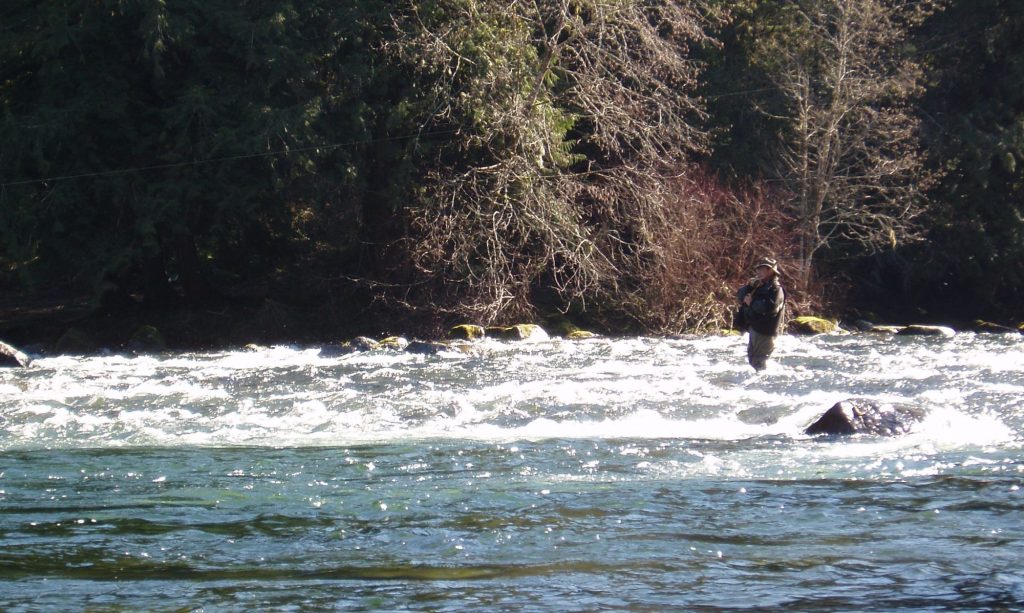
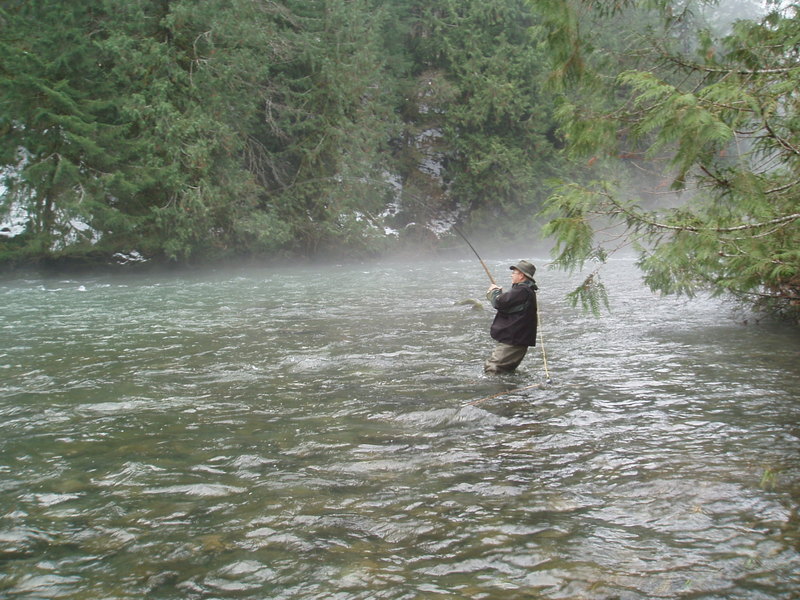
On a river often visited by bears, it’s a good habit to never clean your fish on the river bank as they have a fantastic sense of smell and will follow the smell of blood. Never leave anything you’re carrying with you at the banks. The rule of thumb is that if you can’t carry it and keep it with you, don’t bring it.
As you approach a new area that looks promising, it is important to take a moment and look at the surroundings. Analyze the water level condition and the safe routes to enter and exit the water. I always carry bright orange surveyor tape to mark my access as I come out of the bush. On new rivers, I hang 10 inches of tape on a branch to mark my exit to the trail. I remove the tape on my way out.
Respecting the river is a must; this is also why I use a wading staff. More fishermen are badly injured or drowned in shallow waters as they fall and hit their heads or break bones on the exposed boulder.
The wading staff, also known as a third leg, needs to be strong and able to carry your weight. I use an old bamboo cross-country ski pole with the snow guard removed.
The ability to read the flow of the river and determine where the likely places a steelhead will lay is gained from experience. It’s never the same as the river level rising and falling during the season, weather changes, and the Steelhead often lying in different parts of the river.
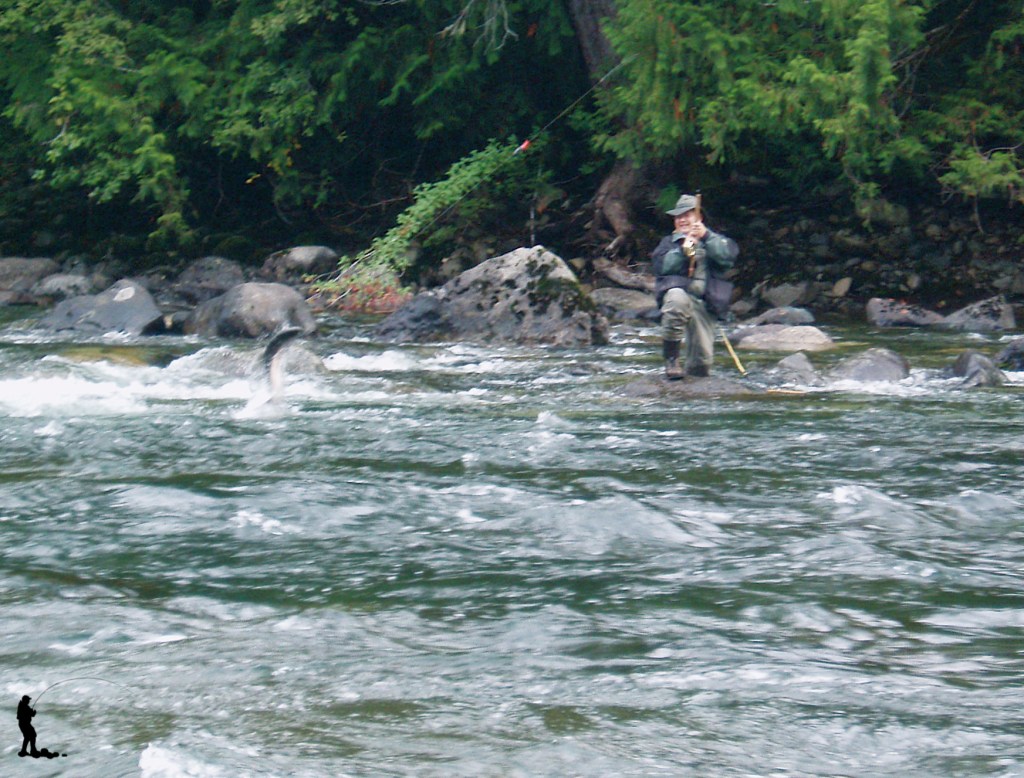
A buddy was on the other side of the river taking pictures of me when I got a solid hit as my float drifted on the other side of a large boulder. The river was moving fast. I had used my wading staff to reach that position, and it was very precarious.
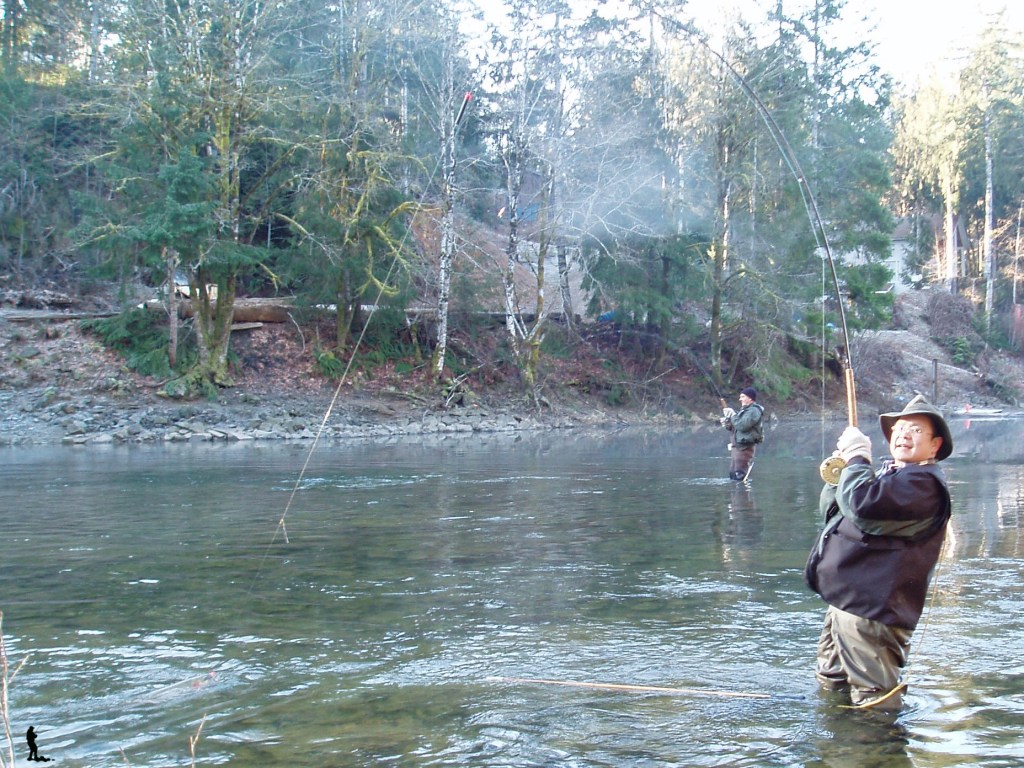
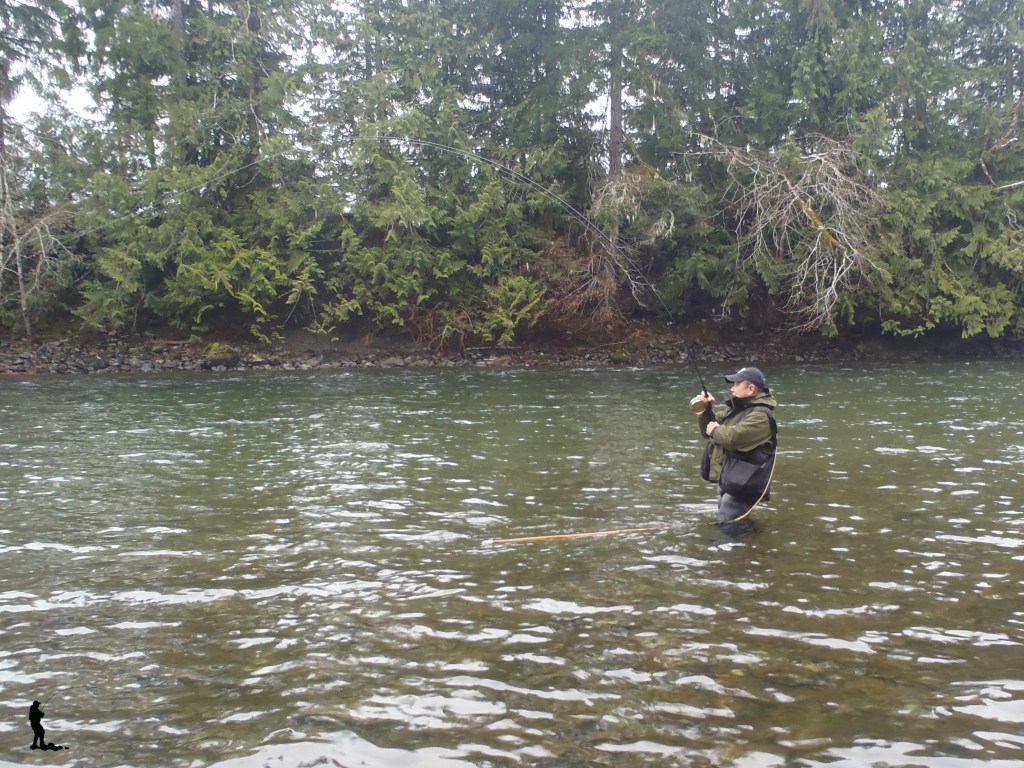
Your first cast should be the closest. Stealth is important to these wary, sly and sensitive creatures. High water often will move the steelheads closer to the bank.
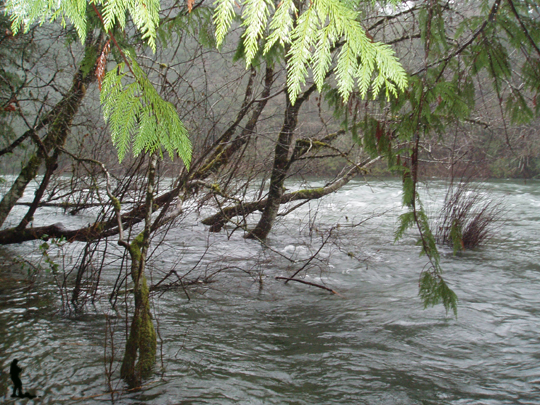
High water or what is often called flooded out is dangerous. I have in the past when I first began wading taken chances and stepped off the bank and instantly I am 4 feet deep in fast water scrambling trying to get out. It’s an awful feeling when your feet no longer can keep you grounded. I drifted into the trees and it’s like slow motion your tangled in the branches and then you start to be pulled down and you struggle just to keep yourself stable. I lucked out and was able to pull my self out. I was muddy and the top of my waders partially full of water. What stopped my waders from filling up was my waist belt. Often others feel its nuisance but it’s a lifesaver when you fall in as your waders will be full and heavy and will pull you down.
Keep your sense to be safe, it’s easy to enjoy nature at its best….
It’s rare that I am alone any more. Its always safe to be with a fishing partner. It also allows another camera to record our exploits and adventures of the day. Don’t be surprised new-bees that you don’t catch a steelhead right away. I still get skunked and its important to enjoy the journey, as there will be days that wily steelhead will beat you at the game.
That’s why it called fishing.
Discover more from castingaline.ca
Subscribe to get the latest posts sent to your email.

