
There are a lot of products out there being sold to entice a fisherman to make a purchase that promises results in catching the elusive Steelhead. All sorts of hardware like spinners, spoons, wobblers, artificial worms of many colours, artificial-looking roe, and fly representations. The list just goes on. All those methods have been proven producers in catching steelhead. The most successful that’s not often allowed is natural bait. We have earthworms, the roe of many different salmonoid species. The salmon roe can be clustered and used single or in roe bags. The rare bait is the Ghost Shrimp. It is not rare because they are few but because most avid fishermen know little of them. Where they can be found, how they can be caught, how to preserve and keep them alive, and how to present them to steelhead. They are just as mysterious as the steelhead themselves. They are often called bugs or steelhead candy because fish can’t resist them. Sandy beaches, estuaries, and muddy bays are good places to look for them. They will be in the intertidal, especially the middle intertidal range. They will not be located at the average high tide level of the beach area but usually within a 2-4 foot drop from the highest-level tide average. They love muddy sand, and you can recognize their burrow entrances as they appear like small volcanoes.
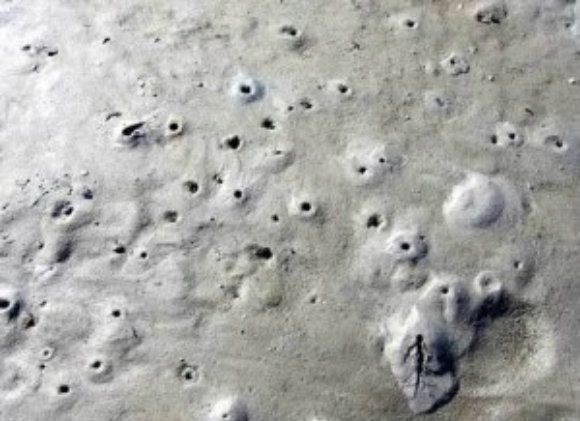
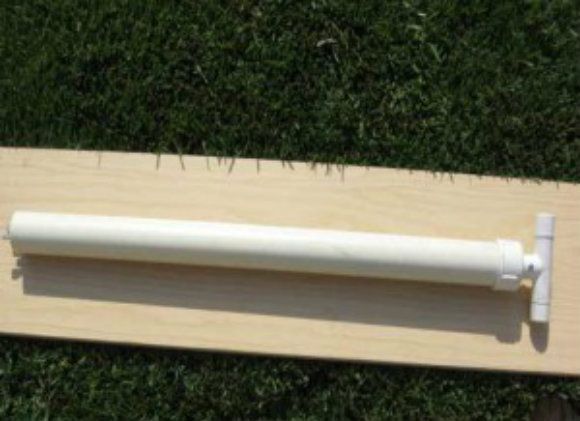
Ghost Shrimp can be found most often on the sandy beaches of western British Columbia and the east coast of Vancouver Island all the way down to California. The best method is to pump them out of the sand with a slurp pump or Ghost Shrimp pump when the sand is saturated with water. This allows the shrimp to be easily drawn out of the sand with the water and sand when you pump for them. Ghost shrimp burrows can be full of mazes and easily three feet deep or deeper. My favourite time is just when the water comes off the burrows. The sand and burrows are soft, and of course, with the water being drawn out, sand and shrimp will flow with it. When the Ghost Shrimp pump is placed in the center of the burrow and then pushed in while the handle is being drawn up, it creates a suction that will draw sand, water, and shrimp. Sometimes, two or three attempts are required. I have a bait box tied to my waist with a paper towel soaked in salt water that offers quick storage while I pump more out of the sand. Remember to peruse the burrows that you dug up as the Ghost Shrimp will come out of their collapsed burrows, or ones that are missed in the discarded sand piles will climb out. Of all the shrimp I find, I don’t keep males; those that are too small and females with eggs are put back under cover so the birds will not eat them. This allows the shrimp beds to continue to flourish. Once I collect what I need, I rinse all the sand off them and store them in a clean plastic bucket on a bed of paper towels soaked in seawater with another paper towel over them – the bucket is then stored at the bottom of the fridge.
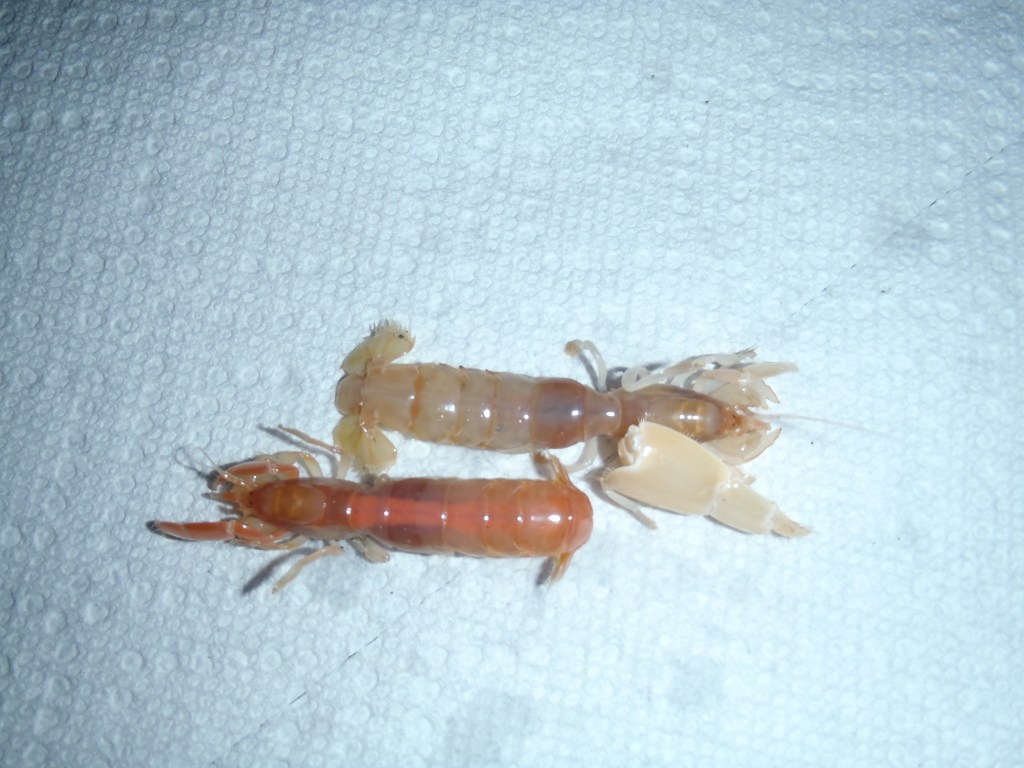
I use them the next day, but if delayed, you must remove all damaged or dying shrimps, as they will poison the rest with decay. Ghost shrimp can grow up to 4 1/2 inches, but I prefer small red females. The males are the largest and are white. Be careful of the large claws when handling them. The claw power can apply a mean bite and draw blood. When collecting them, I occasionally add ten males with their large pinchers. In British Columbia, the maximum you can have on you is 50, and you must have a saltwater fishing license. Now, for Steelhead, larger does not mean better. I favour using 2 “ 2 1/2 inches in length. These crustaceans belong to the crab family and are a delicacy to many types of fish in the ocean – salmon and steelhead included. Ghost Shrimp are often a favourite of surf casters fishing in California. Keeping them on the hook is the most challenging skill. Some will sew the hook through the tail by using spider wrap, rubber bands, and egg loop knots. They are very delicate, and you can lose them easily on a cast. The best-proven method for me is a very thin copper wire that I wrap around the shrimp’s tail with the fishing line, keeping it straight and firm with the hook embedded lightly through the thorax using a #4 Gamagatsu hook. Ghost Shrimp are great on their own, but I often fish a little corky or bead sliding above the tail on the main line. The corky will hold the ghost shrimp above the bottom, and the bead lets it sink faster. I will often lengthen my leader to the float long. I want to see the float indicate the weight is bouncing on the bottom. Often, the hit is when I let the float swing in the current. Another event is when the float indicates my weight is touching the bottom. I will lightly pick up the line and move the float to avoid hanging up on the bottom. This little action on the ghost shrimp also seems to induce a strike from the steelhead. This method creates hang-ups, so I use 10 lb. or 12 lb. leaders for an easy break-off. One of the most interesting things is if I think I had a hit and upon retrieving my line, I notice that the head of the shrimp is gone – that confirms it was a steelhead! I will immediately throw out the oozing tail that is left, and often, they will hit again.
Discover more from castingaline.ca
Subscribe to get the latest posts sent to your email.

