Another article from me in June’s edition of Island Fisherman Magazine. https://islandfishermanmagazine.com/ get your issue
Every angler has experienced a short strike, whether fly fishing, casting and retrieving, jigging, or trolling. It may be a bump on your retrieve, a piece of your trolling bait missing, or even worse, a fish that appears hooked for a few seconds before disappearing without explanation.
BY Gil d’Oliveira
Short strikes, a common frustration shared by anglers of all levels, can present as a slight bump on your retrieve, a portion of your trolling bait missing, or, perhaps most disheartening, the fish that seems securely hooked for a brief moment before managing to escape.
Definition Short Strike
The term’ short strike’ refers to a situation where a fish bites the bait or lure, but the hook is not fully taken into its mouth. In other words, the fish has yet to fully commit to biting the lure, resulting in a failed hookup.
Why do these things happen? Maybe the fish changed their minds mid-strike due to an unfamiliar taste, a strange lure, bait action, or electrical fields. It is a subject of ongoing discussions.
Research has shown that fish are attracted to positive charges and repelled by negative charges. This sensitivity to electrical fields can influence their behaviour, including their response to lures. For instance, the electric current emitted by the motor of your floating boat or float tube could affect the fish’s decision to strike.
Trailer Hooks
The concept of trailer hooks, a potential game-changer in your fishing arsenal, is not unfamiliar. Adding a second hook or positioning the main hook further from the lure can significantly increase your chances of landing many short-striking species.
Trailer hooks account for the market’s largest manufactured volume of spinner lures. Hardbody crankbait lures for bass, walleyes, and pike.
In addition to the main hook, the spinner lures will have a Siwash hook with a hook keeper, so the trailer hook remains horizontal and free-swinging.
A crankbait lure has a hook attached to the middle of the lure and a hook attached to its tail, which swings trailing lower than the lure.
Fly anglers have successfully used the trailer hook technique when fishing with articulated flies or tube flies. This technique positions the hooks farther back from the fly’s main body.
Types of trailer hooks for salmon
When an angler is trolling for salmon and discovers that the tail section of the anchovies or herring he was trolling is missing, this indicates a short strike. The anglers can feel a subtle or hard strike when using lures, but no solid hookup occurs. Those are short strikes.
The anglers on the west coast of British Columbia trolling for salmon have successfully used the trailer technique to compensate for short strikes with huge success.
The salmon angler compensates for the short strike by attaching a secondary hook, either a single or triple hook, 2 to 5 inches below the leading hook. Anglers in British Columbia call this a tandem hook setup.
The secondary hook is attached to the herring’s tail or swings freely past the tail. Single tandem hooks swing freely with hootchie lures or large salmon Bucktail flies.
Types of short bites for the beach fisherman
Anglers who cast lures or flies are familiar with short hits. It could sometimes seem as if the lure is suddenly being pulled lightly or a hard pull when retrieving the lure, but the hook never actually sets. The salmon may attack the lure in another scenario, resulting in a few headshakes followed by nothing.
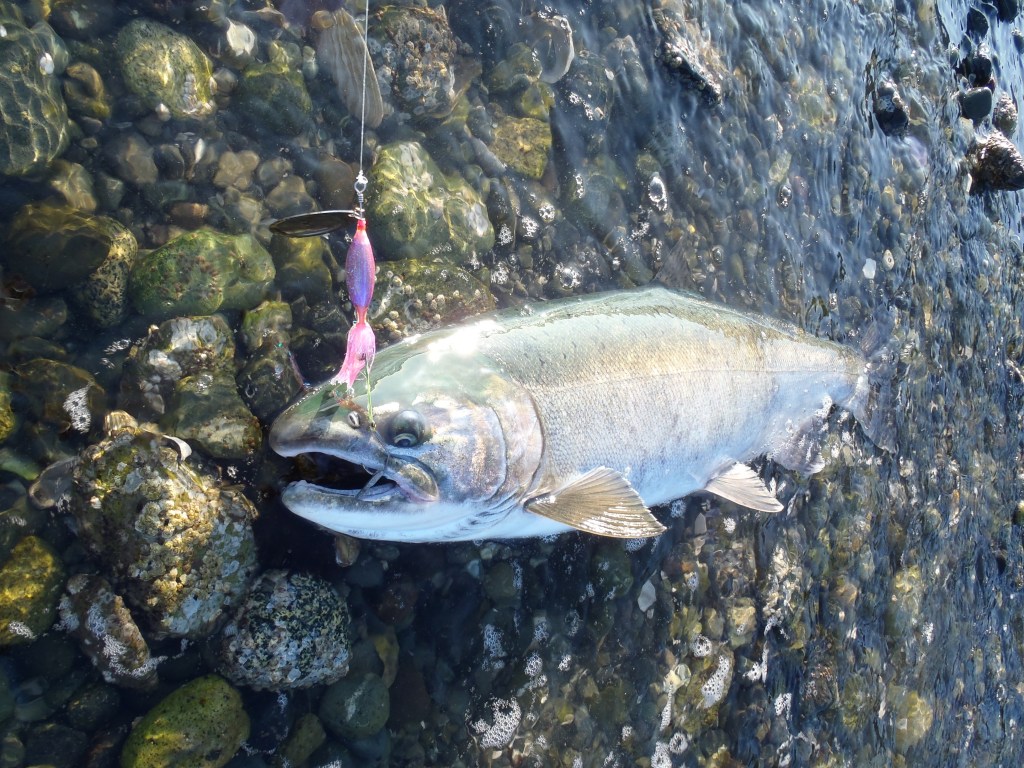
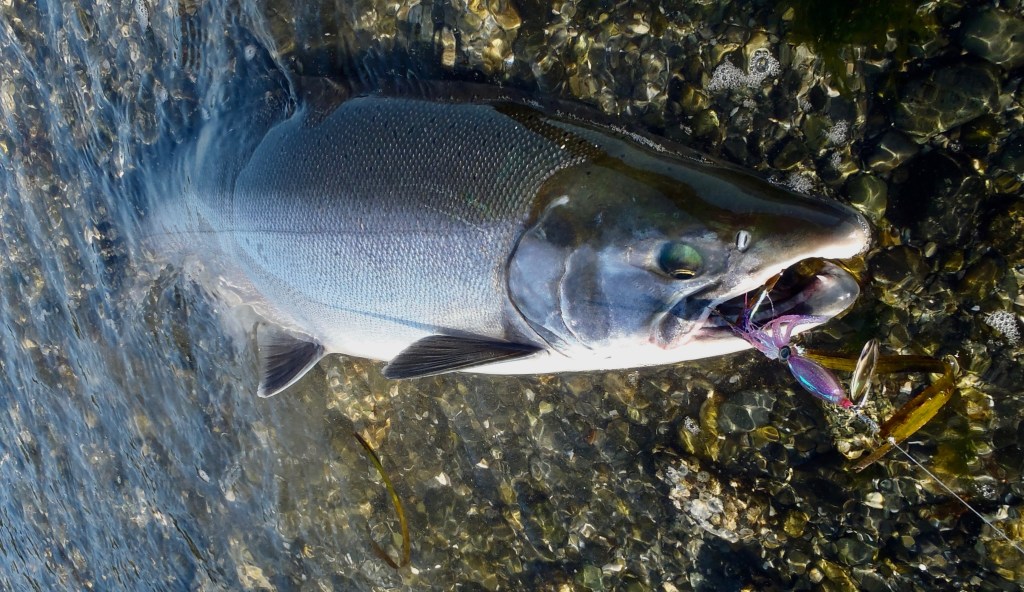
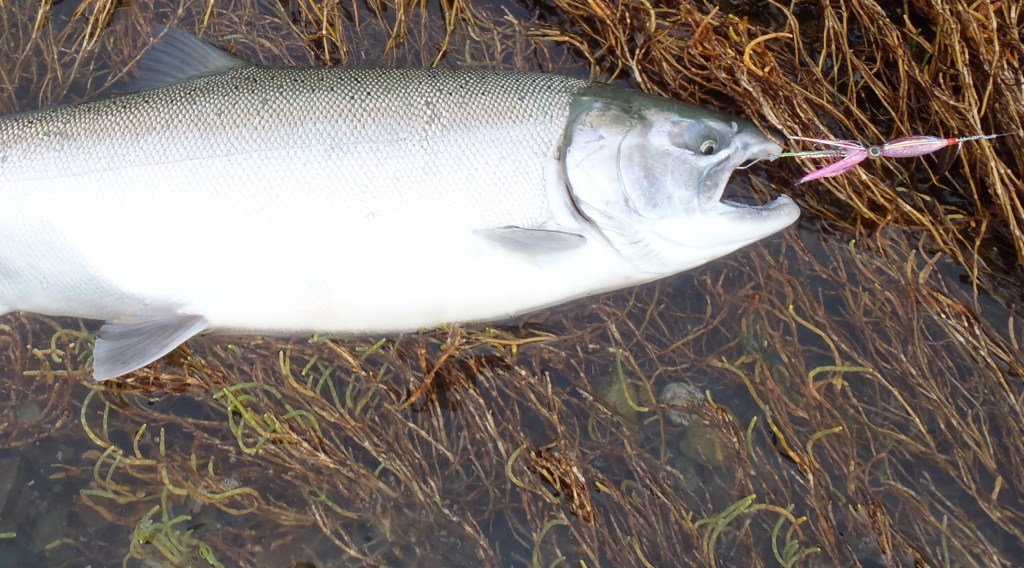
Rest assured, I have often encountered this phenomenon when fishing for salmon on the east coast of Vancouver Island beaches. However, my catch rate significantly boosted once I started utilizing the trailer hook. I could land a higher percentage of salmon, even when they were lightly hooked, thus avoiding being torn out. This technique has proven to be effective and reliable.
Attaching an additional hook to spoon lures for casting anglers is unnecessary. However, the position of the manufacturer’s hook is altered. The hook is re-positioned one hook length further back from its manufactured position.
How to set up
Remove the manufacturer’s hook and the split ring from the spoon or spinner to set up a trailer hook. The split ring allows the hook to swing back and forth but cannot turn 360 degrees. This limited movement can put a lot of stress on the hook, potentially leading to a lost fish. To illustrate this, hold the lure upside down with the hook and rotate it left and right to see how the restriction of free movement occurs. When using a trailer hook, it is necessary to remove the split ring.
Due to this restriction, anglers will lose salmon due to a lite penetration, tearing out the hook.
Another impressive display involves taking an apple and placing the manufacturer’s hook into it. While holding the lure, we spin the apple back and forth. If we continue spinning, the hook will eventually rip out of the apple. If you try the same experiment with a Dacron trailer hook, you will find that the apple remains no matter how hard you spin it.
From my experience, the best line to create a trailer hook is Tuff fly line backing Dacron 30 pounds. It is thick, stiff, and will hold the hook away from the spoon lure.
Thinner braided lines cannot keep the hook from the lure when cast and will fold into themselves and tangle. The thick Dacron also results best if the lure has sharp edges. It is best to have the hook and trailer line lengths equal. The recommended method is folding 30 lb Dacron once and knotting its ends with a double overhand knot. After the trailer line is looped through the lure, the folded end is looped through the eye of the hook.
Additionally, I recommend using a smaller turned-up eye hook than the manufacturer’s #1 or #1/0 hook.
The looped Dacron can extend beyond the turned-up eye and hold the fishhook straight. I will also use a permanent black marker to colour the Dacron line black.
Our salmon beach fishing results showed a significant decline in salmon losses due to short strikes. Concerning salmon survival, the hook sets made in the mouth were solid and well-placed for catch and release. Also, we did not experience tearing of the hook from the salmon’s mouth since the trailer line turned 360 degrees without resistance.
You’ll be surprised at how efficiently you can land a slightly hooked salmon using the trailer hook with a 13-foot ultralight rod to absorb much of the force generated during the salmon’s fight.
Improve your catch rate with trailer hooks.
Discover more from castingaline.ca
Subscribe to get the latest posts sent to your email.

