Quote from Robert Van Pelt :
”The Original CJ Special Salmon lure is developed and designed by ardent angler Charlie Jones. Charlie hand tools and finishes his lures to a craftsman-like finish. Charlie’s passion has been delicately furnished into every lure he makes.
While testing the CJ Specials along the coastline of British Columbia, Canada, we have had a great opportunity to catch multiple species of fish, including Salmon, halibut, lingcod and other groundfish species, as well as trout, steelhead, bass, musky & pike…the CJ Special has also been very successful at catching tropical warm water species too!
With all the hoopla surrounding Charlie and his infamous lure, he spends countless hours in his workshop making new lures.”
This year, Charlie licensed his product to Robert Van Pelt, which has a contract to develop the lure range for mass production…exciting news for many anglers and Charlie.
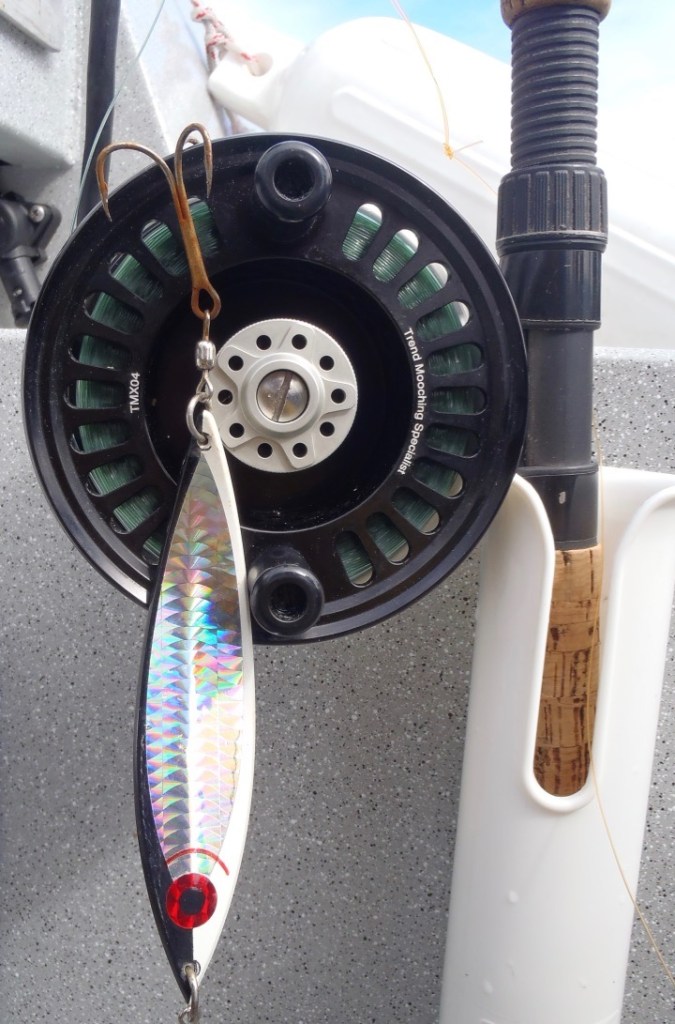
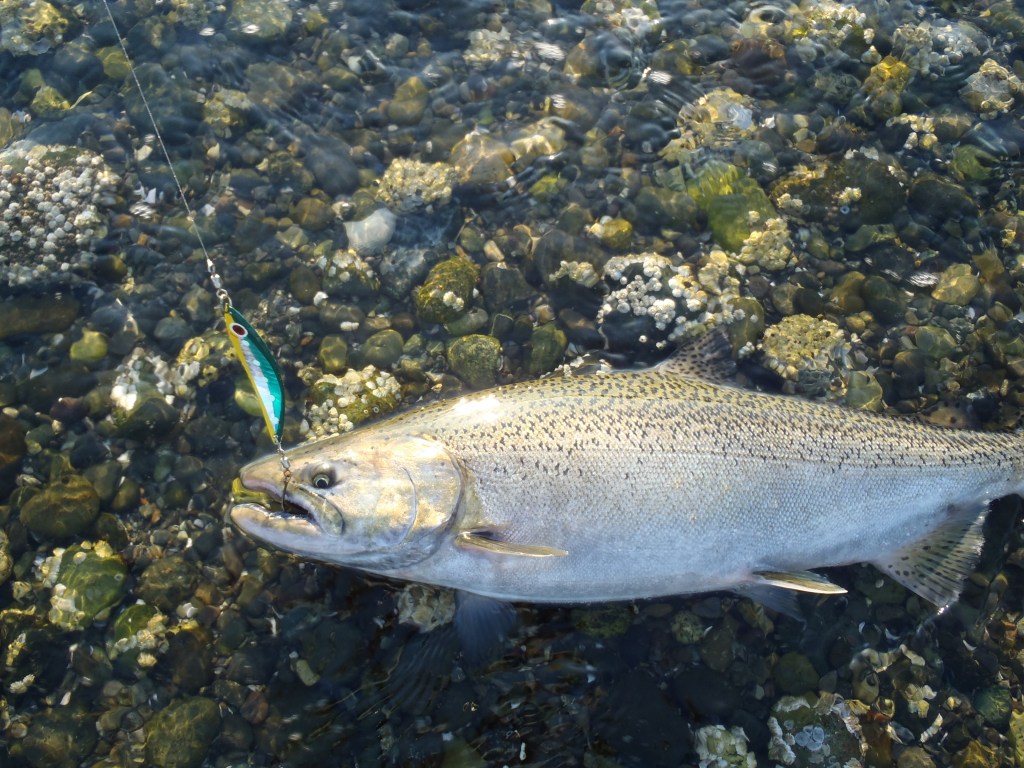
The Original CJ Special Salmon lures are back to their original roots. New additional lures this year are being produced for trolling or casting offshore.
In the early season, the Spring (Chinook) salmon are loners. They seldom school up and on the pursuit to build up their resources before they stage for spawning. They are lone hunters, and they are voracious. They are also moody. That is to say, what will work hot one day may work little or not the next day. The two main prey for them is the herring and the needlefish. On record, the herring has been a major success. So it is the herring version that is now in production and is ready to hit Pacific Net and Twine shelves.

The CJ lure is a trolling lure. Early in the season, you need an attractor to get the Salmons’ attention to the Zone. I have used the CJ lures two ways. With a flasher attached to a 4-5 foot leader to the lure. The other way is to have one or a group of attractors (flasher) on the downrigger line 5 feet out, and then the CJ lure above 8-10 feet and about 10 feet out. This method is called using the dummy flasher.
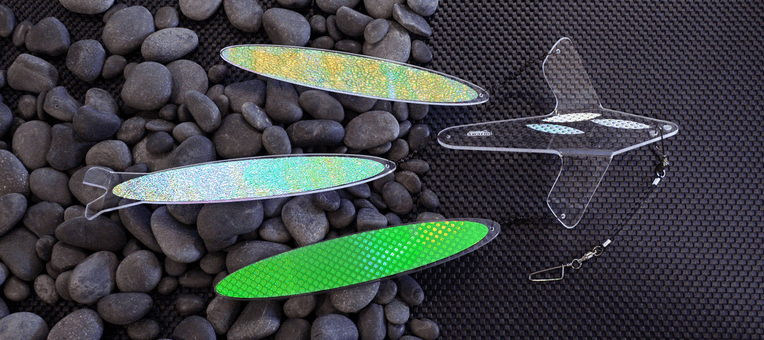
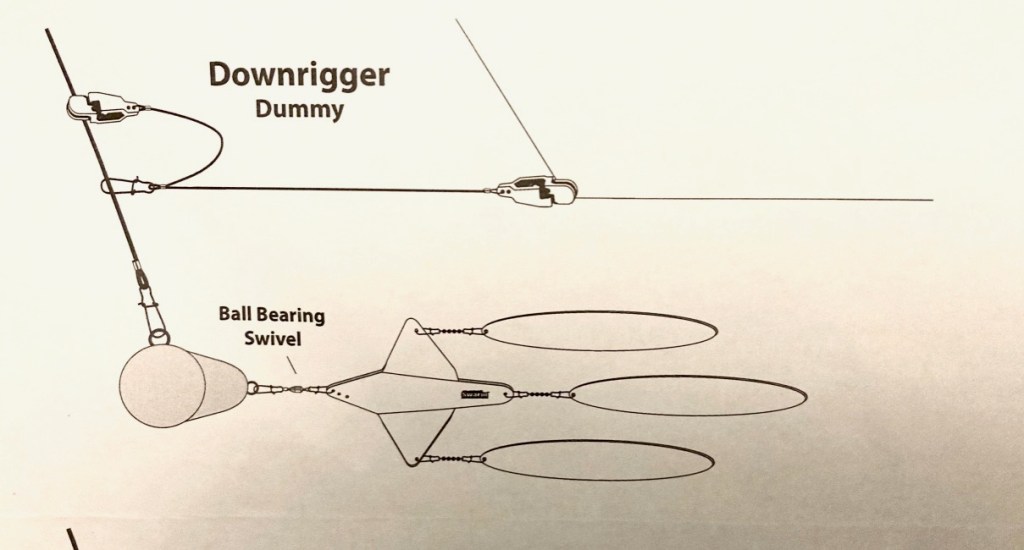
A multi-flasher system like the WiggleFin Swarm flasher will create an attraction like a bait ball. Both single and multi-systems work successfully, and the benefit is when you’re fighting the Salmon, it is the Salmon and the lure. When dropping the downrigger with these methods, it is important not to drop your gear down fast. You could wind up in a mess. That is why the distance between the flasher’s attachment and the lure attachment on the downrigger line must be farther apart than the length of the line of the flasher. You will also be amazed when a salmon on the way down takes up your offering.
When using the multi-flasher system, it’s best both down riggers have them so there will be an equal drag when the boat turns. With both down riggers geared with Wigglefin Multi Swarm flasher, 18 reflective surfaces and colours exist. How could they miss?
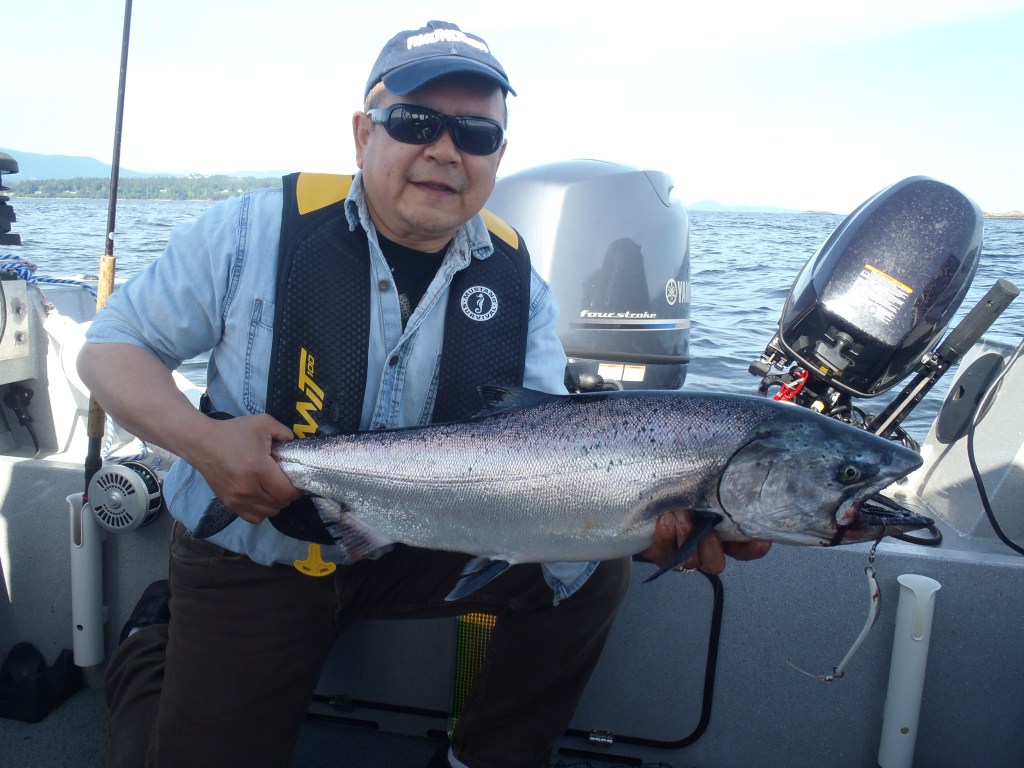
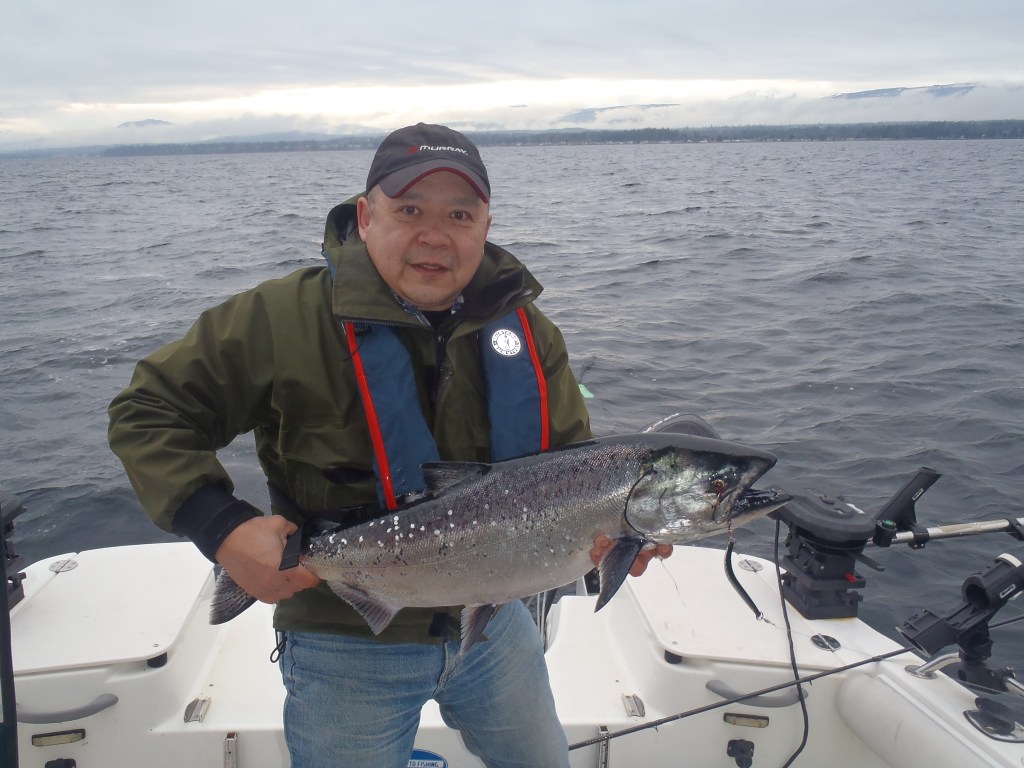
The depth of success will vary, but I have caught Spring salmon 90 feet to 170 feet. There will be a time you want to check your lure and bring it up. When you release the lure from the downrigger, let it rise to the surface on its own. By doing this, you’re going through the whole water column and improving your chances of attracting and catching a salmon at a different depth.
Using the CJ Special Salmon Lures, I have found the optimum speed is 2-3 miles per Hour. Occasionally, the boat speed can be wrong if you’re judging by your speedometer. There is the current or the movement of water as the tides shift. For example, low tide is 4.7, and high tide is 16 feet. That is a huge shift, and the currents will be fast. Trolling with the current, in this case, would be very difficult to attain the lure’s action at its optimum performance without going very fast as against the current, you would have to drop your speed considerably. All of my buddies will use the speedometer, but when this occurs, they will judge their optimum trolling speed by the rods’ end and the fishing line’s angle as it enters the water. They call it old school.
When fully in season or there is abundant Salmon, they also work well on their own with no flasher. Coho’s have hit them 10 feet from the boat just as your trying to drop the downrigger. Sometimes that’s a problem when targeting Springs (Chinook), and the Coho won’t leave it alone.
I have even had success casting off the beaches with the little herring. ……….. But that’s another report ………. Stay tuned.
Discover more from castingaline.ca
Subscribe to get the latest posts sent to your email.

