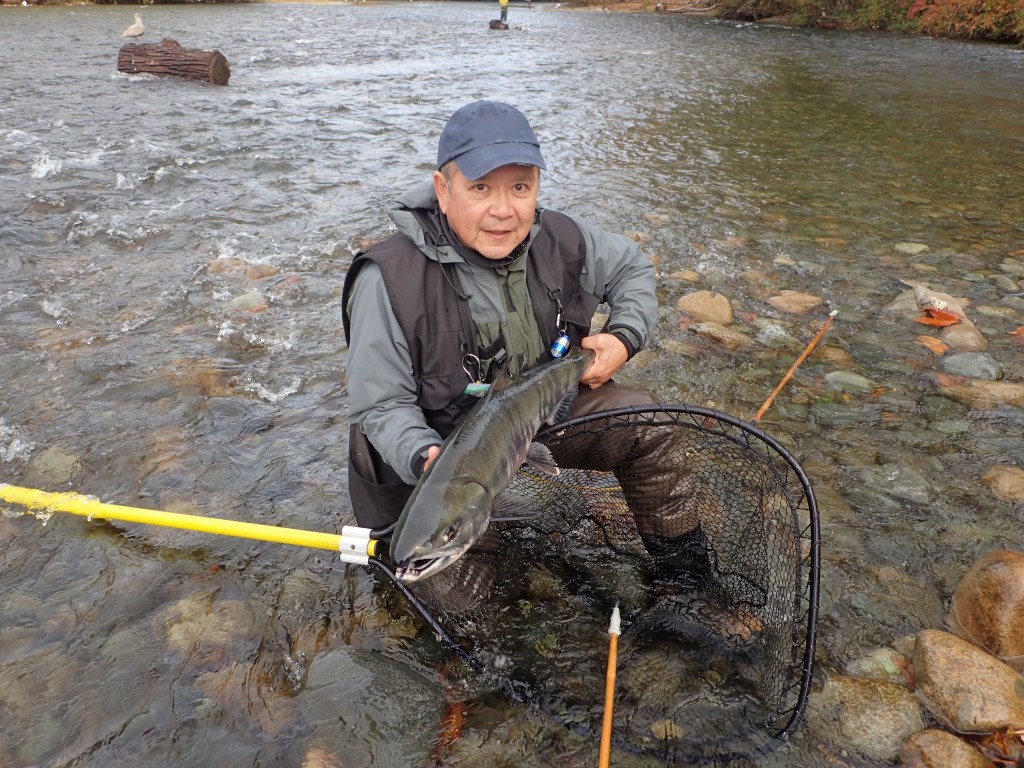
The salmon’s skin is protected by mucous and scales, which prevent fungi, bacteria, and ectoparasites from attacking it. Unlike knotted or mesh netting that will create friction, rubber allows a safe catch and release to ensure the species’ survival.
A rubber net does not tangle with gear, and if it is sized correctly for an angler’s target, it will reduce salmon struggle quickly and safely.
If the angler wants to handle the fish, he should wet his hands and support it horizontally with two hands. Lifting the salmon by the tail is never a good idea, as this can result in dislocation and sometimes bone damage.
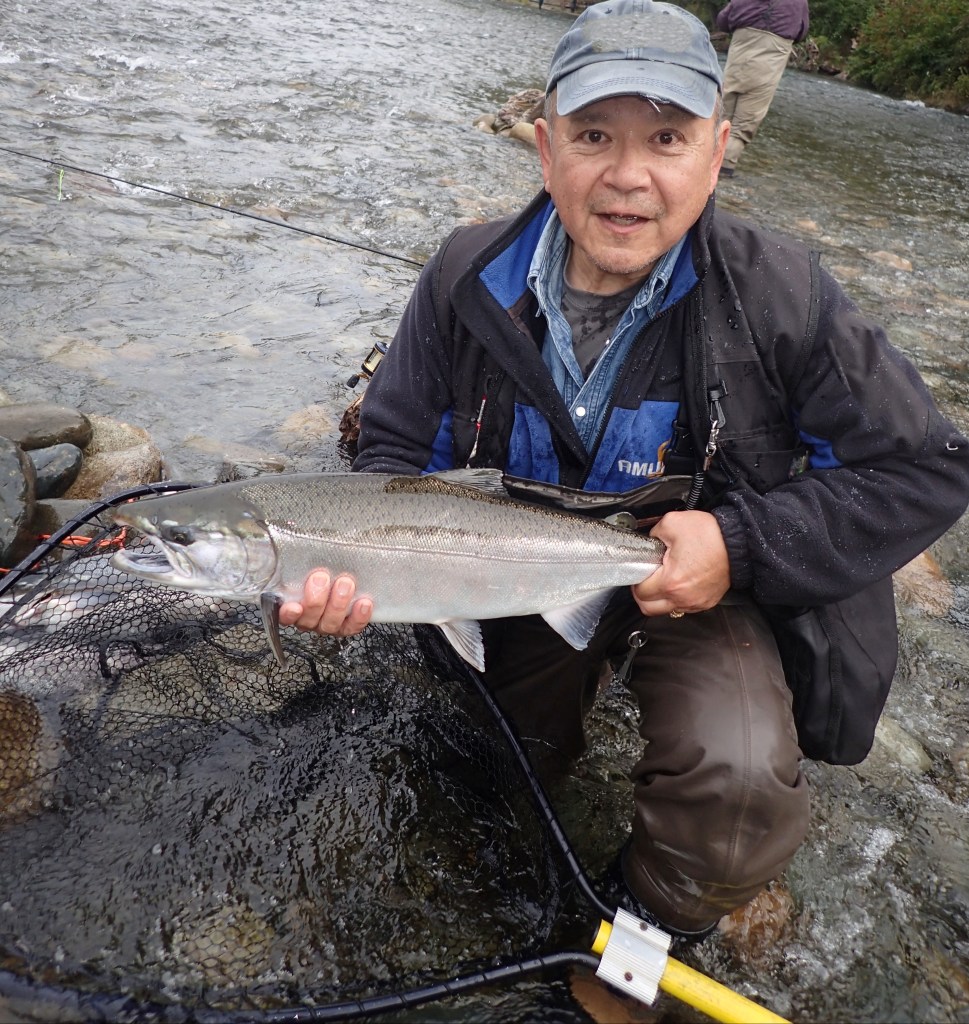
One of the small cons of a rubber net is its increased drag when dragging through the water. If the angler waits until he can scoop upwards instead of chasing the salmon with the net, they will have more success. The benefit of the salmon’s survival with the catch and release outweighs any downside.
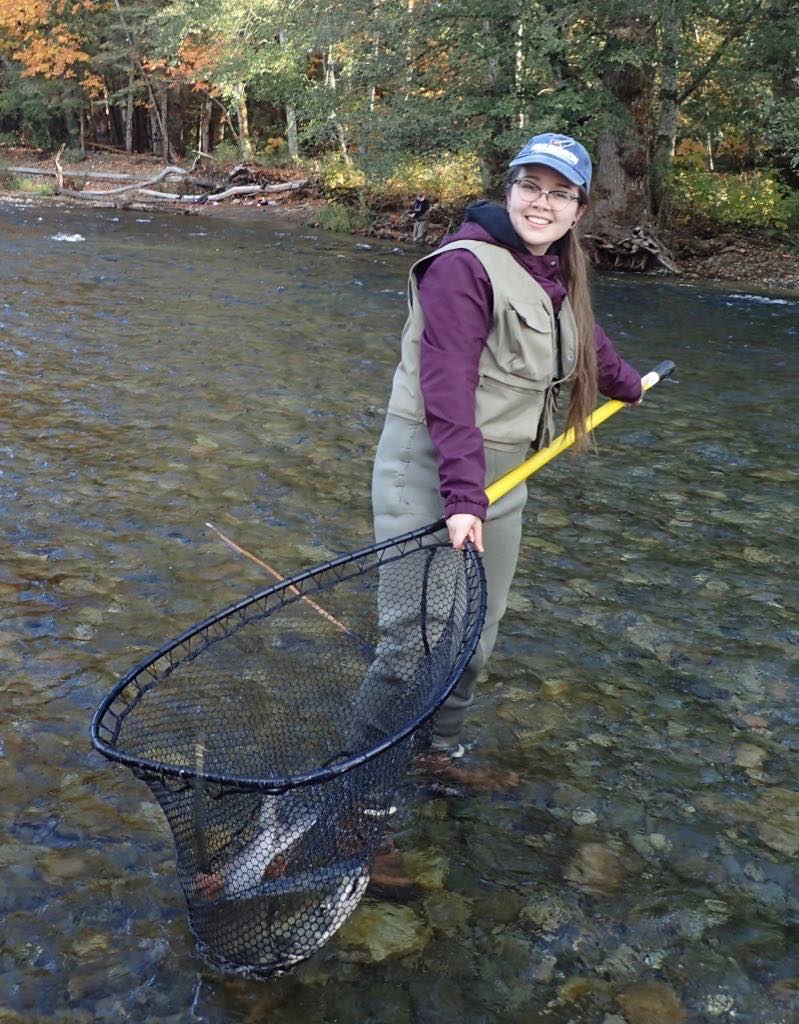
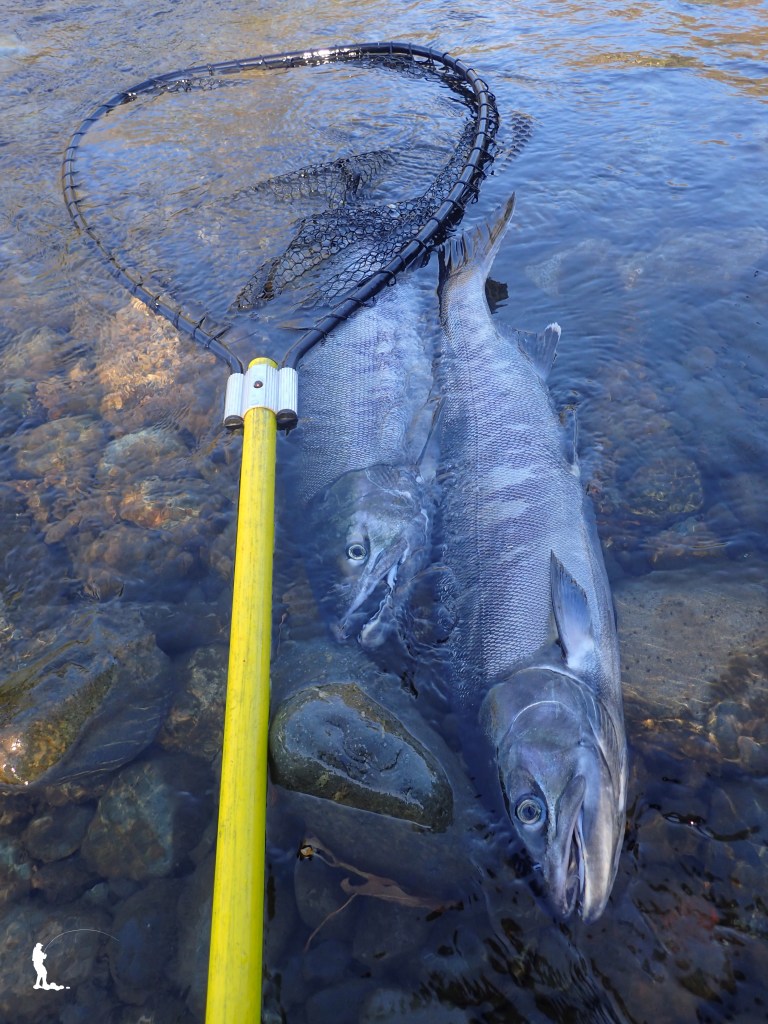
In my personal experience, the bigger the net, the easier and quicker it is to scoop and subdue the salmon from bruising itself, allowing the hook to be removed and a safe, quick photo taken.
I find long retractable handles easier to use, store, and transport. One benefit of the Lucky Bait Strike retractable handle is that it can also be a wading staff when collapsed.
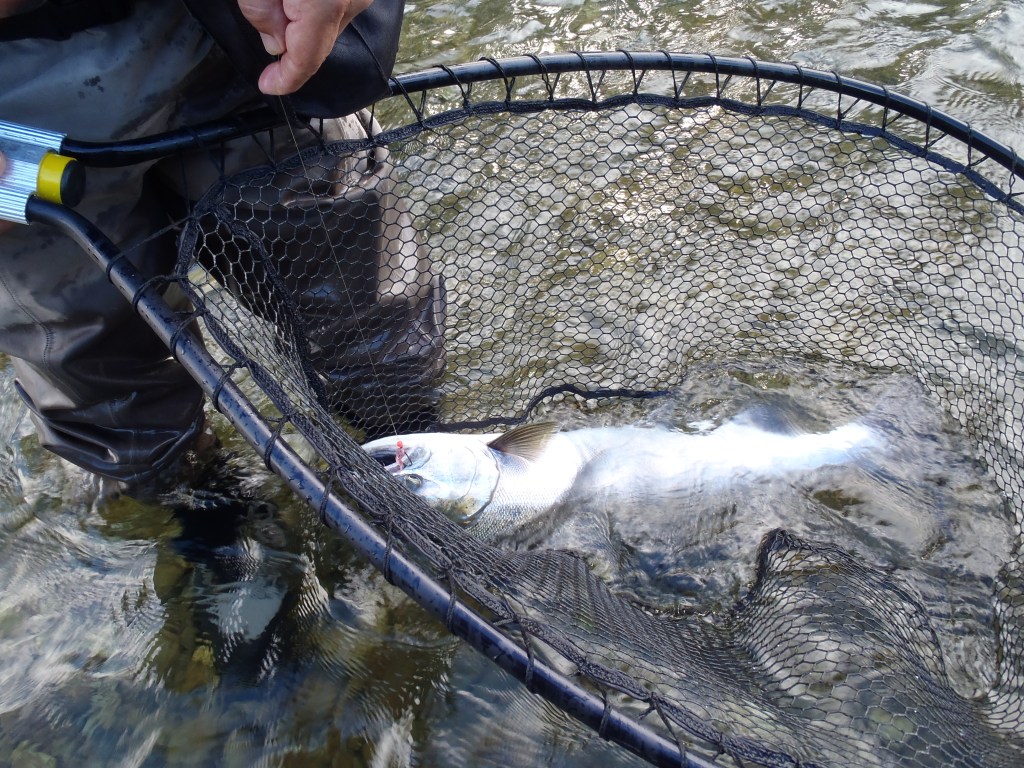
Ensure the survival of our catch. Quick and safe netting and unhooking allow the salmon to return to their native river.
Discover more from castingaline.ca
Subscribe to get the latest posts sent to your email.

