We on Vancouver Island are fortunate to have access to many rivers where we can catch all Pacific Ocean salmon species. In the fall, pink salmon arrive, followed by sockeye salmon, spring salmon, Coho salmon, and chum salmon.
To catch salmon, the gear anglers will use three types of gear: a soft presentation, a hard presentation, and a natural presentation.
Using natural bait or added scent is often restricted, so know the current regulations for the flow you intend to fish.
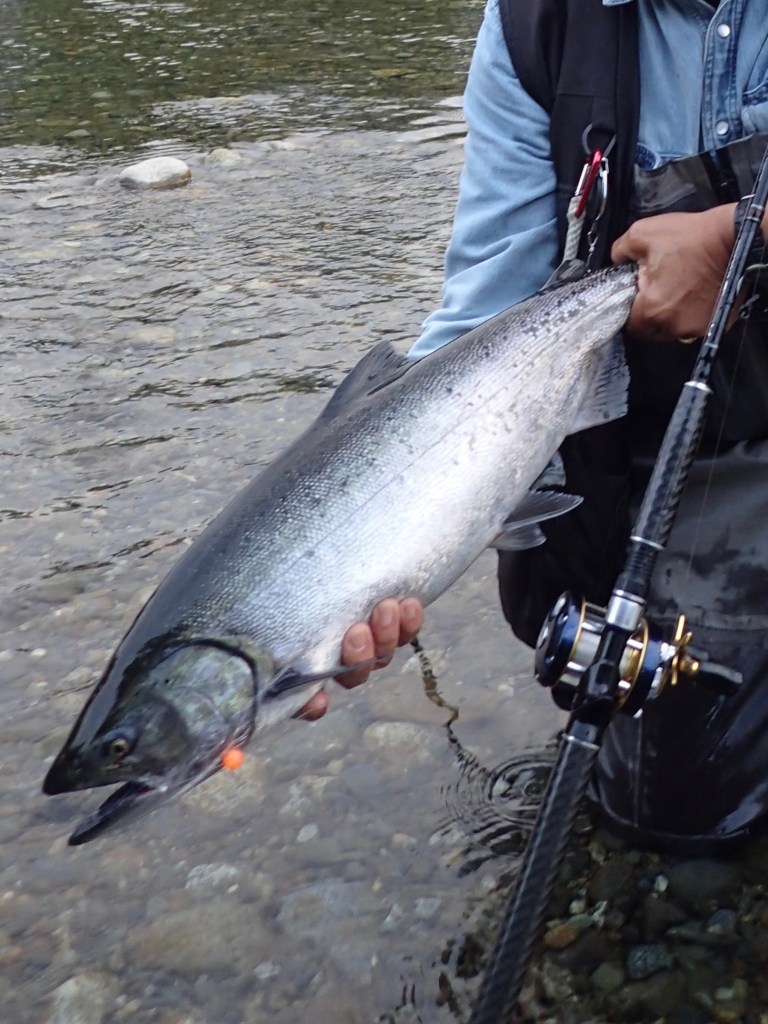
The hard lures include spinners, spoons, beads, spin-n-glo, lil-corky, jigs, etc.
The soft lures include plastic worms, swim baits, soft beads, curly tails, wool, etc.
Traditionally, salmon eggs are used as bait, single eggs in roe bags or as cut skeins. The skeins are butterflied and cured to be cut into clumps while fishing or pre-cut in proportion during the curing process for the bait loop on the hook.
Some creative anglers will use a combination like a hard jig with a soft, squirrely tail, worm, or feathers and fir added. For the natural bait, anglers will add to the roe and shrimp or add scent.
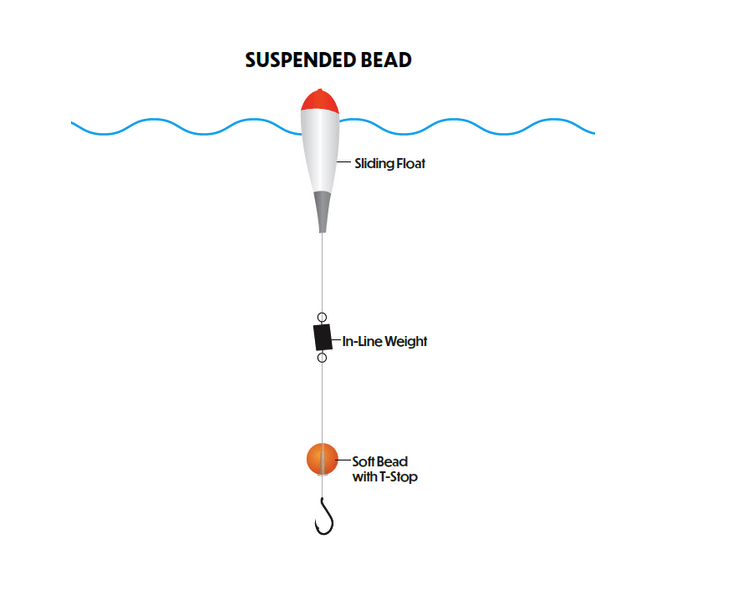
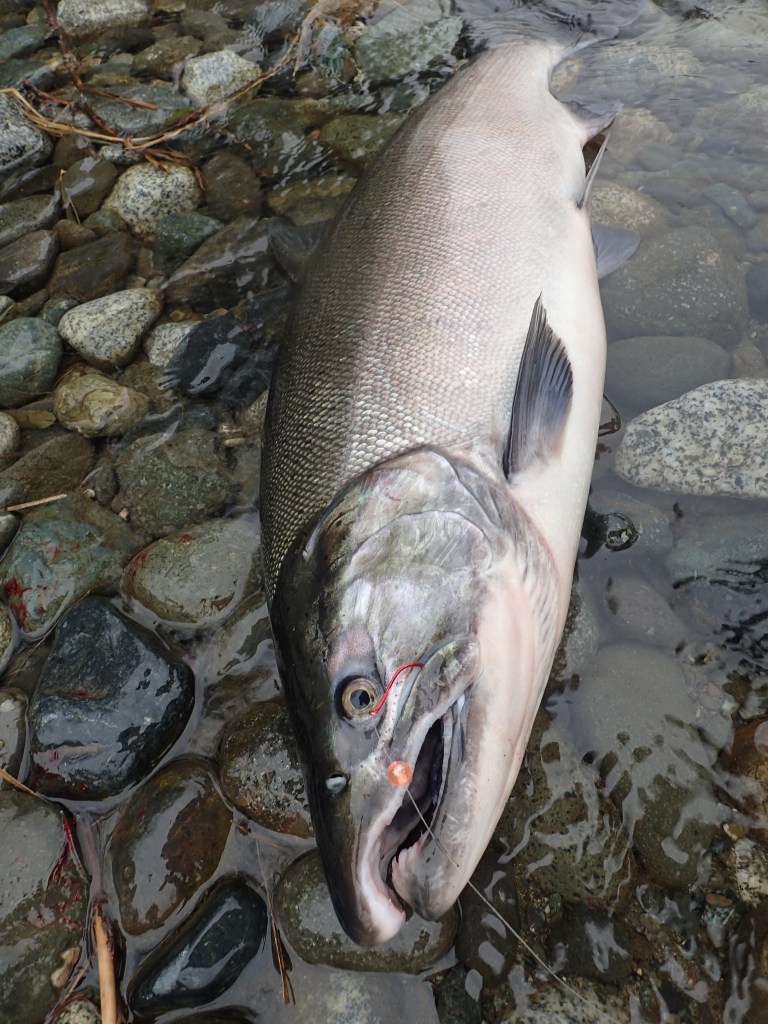
Pro Tip: We used a float drifting technique called short floating. This positions the float so that the bait or bead is presented mid or 3/4 depth of the river water column. Our leaders are short, varying from 2 to 2 1/2 feet.
Fishermen are so used to having their bait tapped on the bottom of the river with long leaders that our success with this technique of short floating surprised many anglers near us.
ProTip: The bead will inevitably shift along the leader due to entanglement, unsuccessful strikes, and remnants of previously lost fishing lines. Resetting the bead position for the subsequent cast is crucial to preventing harmful deep hooking and ensuring their survival.
By watching the float, an angler can easily determine when the float drops, flickers, stops, drags, or slows down in the drift. This frequently demonstrates a salmon touch, and the fisherman should be ready and immediately set the hook.
The conventional hook placement occurs on the outer jaw when the fish mouths the bead two inches above the hook. It minimizes the risk of foul hooking along their body since the salmon is rising to consume the bead. Additionally, it decreases the fatality rates associated with hooks in vital regions, such as the inner mouth and gills.
Pro Tip: Mending your line to successfully set the hook is important. This means picking up the bow ( slack ) in the fishing line that the current creates during the drift and having a more direct line to the float for a quick set.
The increase of an angler’s success lies in the many optional gears he or she brings, particularly at the season’s onset. Numerous factors, such as flow conditions, water clarity, cleanliness, high and low water levels, and the finicky nature of the species, contribute to this.
At the beginning of this season, on a river on the West side of Vancouver Island, the salmon had preferred smaller offerings such as an 8- or 10-mm bead, 1/4-ounce twitching jigs, and small nickel-size roe bags or cutred roe clumps. I’m unsure why, but the 1/4-ounce twitching jigs only worked briefly, while spinners did not get a touch this year for us.

They favoured larger cut roe skeins and bigger 14 mm beads as the season progressed. Over time, the roe bait on the hook will diminish to only a handful of pale white eggs and a significant amount of skein. Playfully nicknamed “snot,” it is recommended not to immediately remove it. Instead, experiment with a few casts, as Coho salmon tend to be attracted to it and may bite.
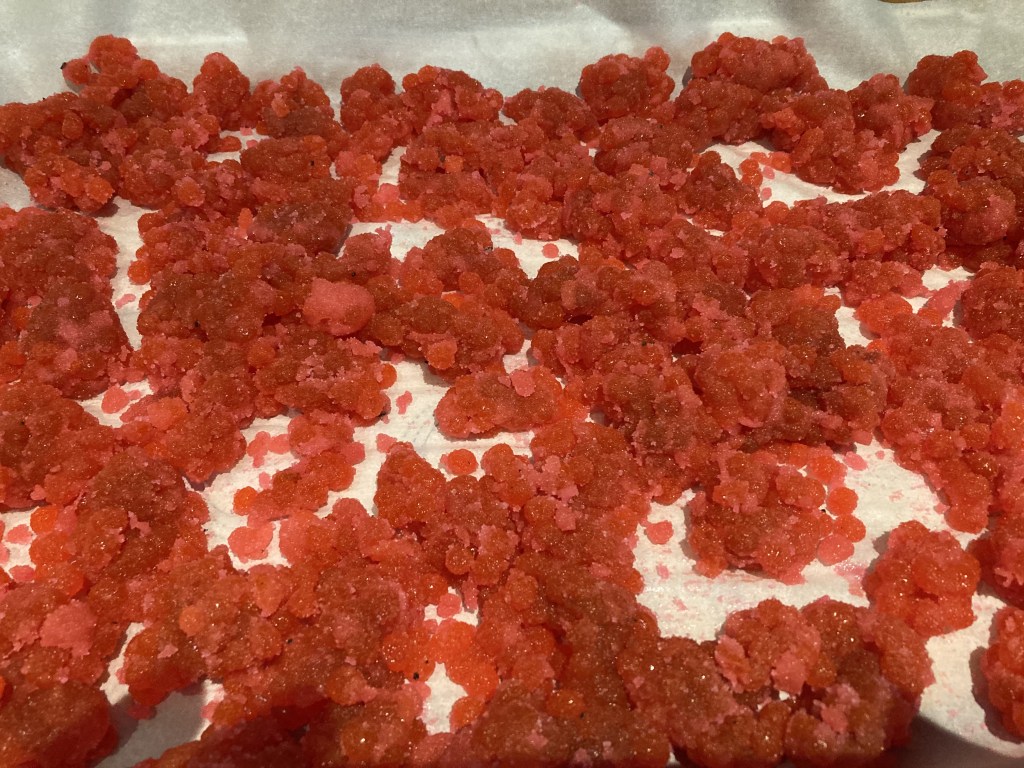
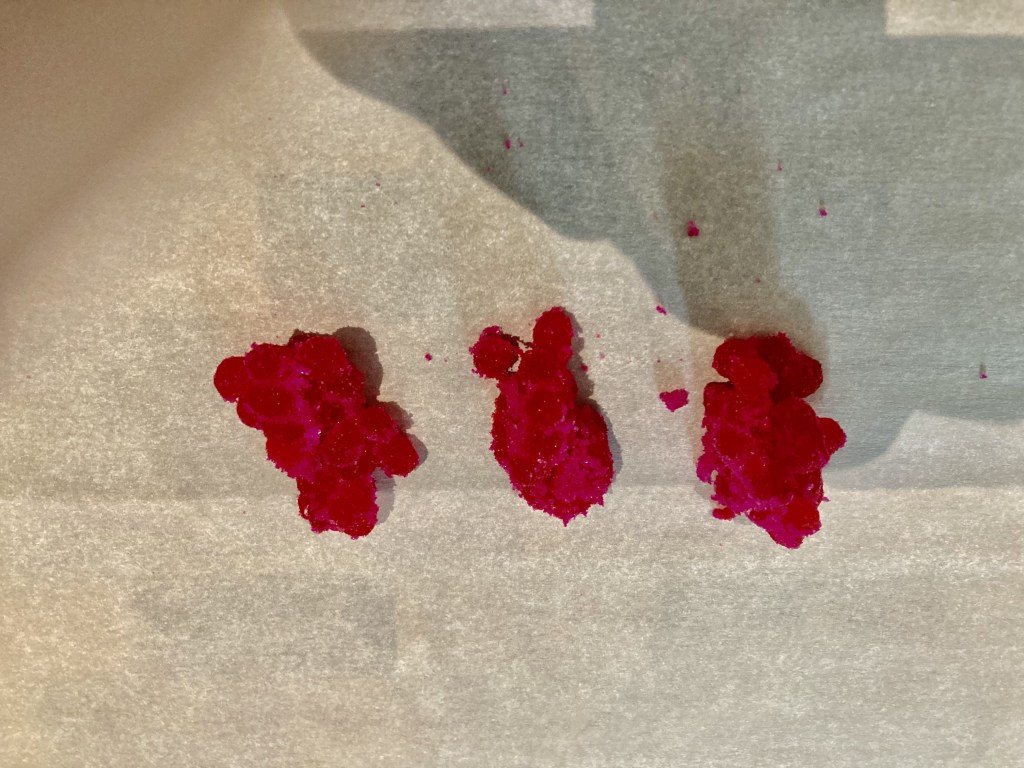
I started using Pro-Cure Flame Orange with roe, but I only had a few successful catches. However, when we switched to Double Neon Red Pro Cure, the salmon couldn’t resist. Eventually, they lost interest, so we tried the large 14 mm soft beads from BnR Tackle in Flamingo and Natural colours. Surprisingly, the #14 mm Flamingo colour outperformed the roe many days. During the day, the salmon would often turned off and on between the roe and bead.
ProTip: Because they were turning off and on between roe and beads, when they turned off on the beads, we slid the bead to the top of the leader under the weight and then added roe to the bait loop hook. When they turned off on roe, we cleaned any skein left on the hook and slid down the bead to 1 1/2 to 2 inches above it.
Based on my experience, a skilled angler who truly grasps the dynamic nature of fishing conditions will effortlessly adapt to them. I always come prepared with a wide range of choices, and I’m never hesitant to head back to my vehicle and switch up my gear if needed.
Discover more from castingaline.ca
Subscribe to get the latest posts sent to your email.

