Making Red Caviar ( IKURA )
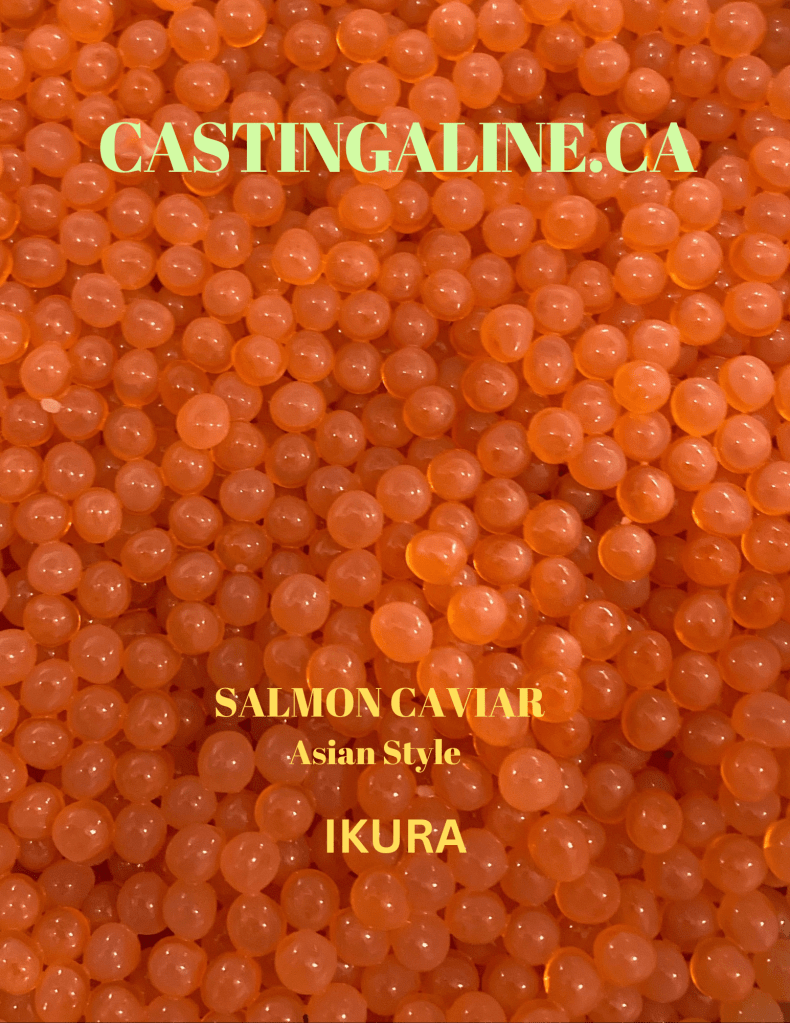
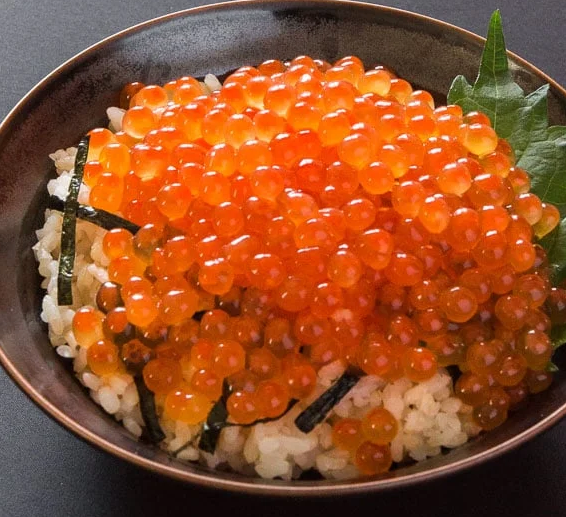
Red Caviar is a delicacy in Japanese cuisine made from the roe of various species of salmon and trout. The intense reddish hue of this type of Caviar has given it its name. In Japan, salmon caviar is known as Ikura.
Salmon caviar has a silky texture, is savoury, and is seasoned often with umami. It can be used to make sushi, as a canapé on blinis, Poke, or atop a bowl of hot rice. I prefer toast in the morning or as a garnish for Poke. Each orb will explode with a satisfying pop, flooding your tongue with its rich, briny flavour.
Osmosis.
”A semipermeable membrane that allows water or other solvents to diffuse independently. In this instance, the salmon egg’s membrane slowly absorbs the brine until it reaches an equilibrium solution level on both sides of the roes membrane. “
With the salmon spawning season in full swing, Anglers often catch female salmon, a doe, loaded with roe. If you are lucky, the salmon could be at a spawning stage where the roe disperses from the salmon as single eggs. Most often, the Roe is usually in full-formed skeins.
I will remove the skein or single eggs from the salmon and ensure the river water removes any blood and foreign particles. Then, I place the skeins in a large Ziplock bag and store them away, cooled in an ice box. If the eggs are single, I will fill the Ziplock bags with river water to protect them, as they are very delicate.
Separating The Roe
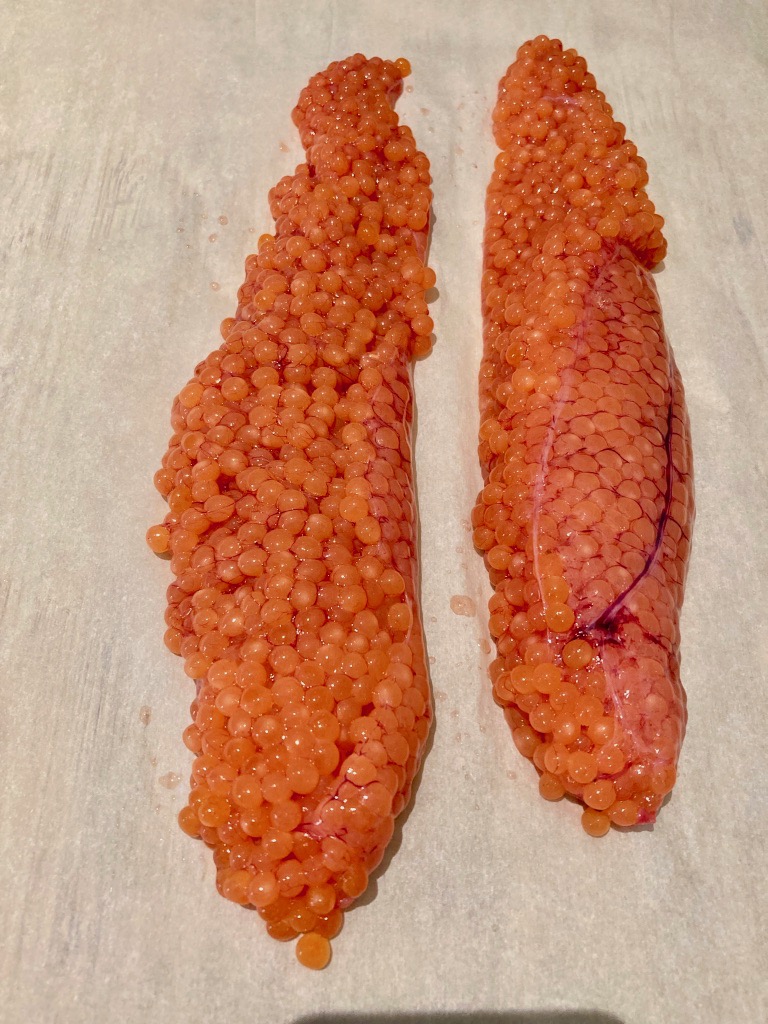
There are many creative methods. First, rinse any blood residue with the salmon skeins as much as possible. Place the skin skein down, split it, or butterfly it. Gently scrape the opened skein over a 1/2-inch opening screen to separate the roe.
I prefer to lay the skein on parchment paper, skin it down after butter-flying it open, gently separate the eggs by hand without damaging them, and gently remove them with a spoon.
In both methods, broken eggs and skein skin particles will be mixed with the eggs. After you separate them from the skein, gently rinse them to remove any unwanted particles. Unlike curing salmon roe for bait, making Caviar from your own caught salmon roe involves less salt and less aggressive processes.
Basic Recipe
The salt (non-iodine) must be completely dissolved in the brine, and the cure time for roe is usually only half an hour or one hour. The curing time will vary depending on your preference and the brine’s salt content. It’s important to drain all the brine after the cure is over.
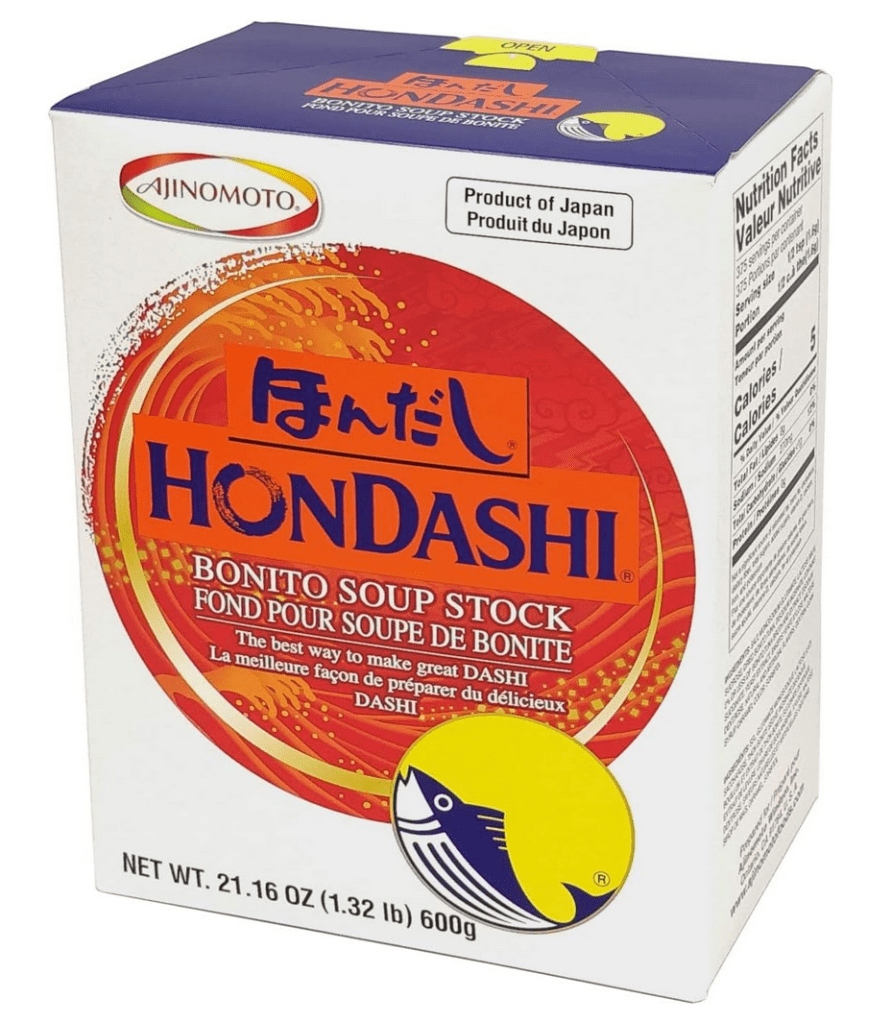
Sake and salt are typically an ingredient in Japanese cuisine. Recipes have changed over time to suit individual tastes. Some people use only soy sauce to pickle red Caviar, while others use Hondashi ( bonito soup stock )instead of Mirin or sake.
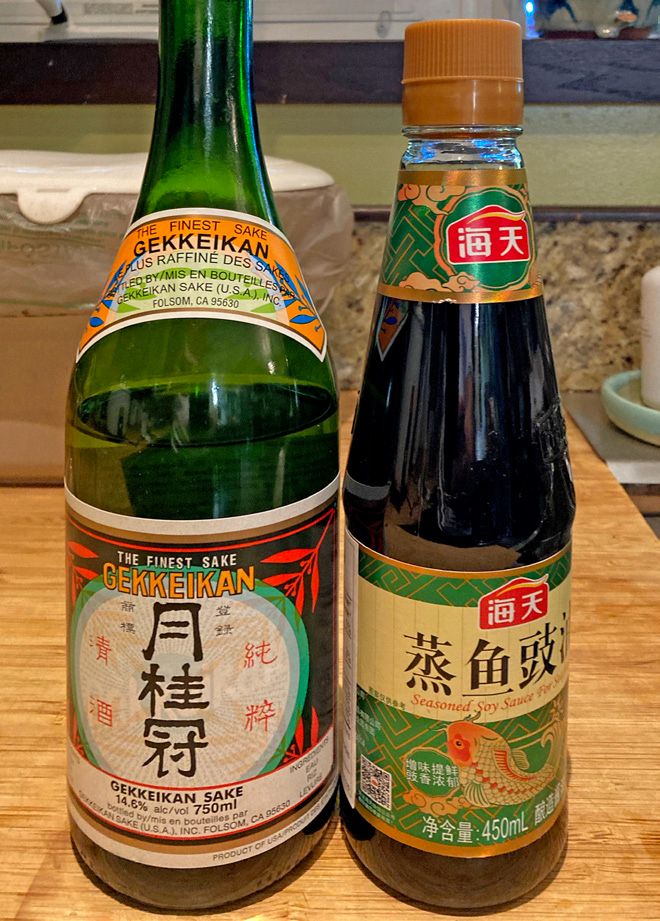
My favourite recipe has a very light taste. Hon Dashi mixed with sake, sea salt, honey, and low-sodium seasoned seafood soy sauce. Once the roe is cured, it will have a delicate taste with a soft membrane that will explode with flavour.
If eating fresh, Ikura Caviar should be stored in airtight jars in the refrigerator and consumed within a week. Caviar can be frozen for longer storage. I will fill a canning jar with roe at maximum capacity before freezing it.
Ensure that your salmon roe is labelled with the type of salmon and the processing date. Defrosting must be slow, so place the frozen Caviar in the refrigerator to thaw. Possibly due to the membrane being frozen and then thawed, or perhaps because it has aged, the roe’s membrane has a slightly firmer, crunchier texture, giving a popping pleaser when bitten.
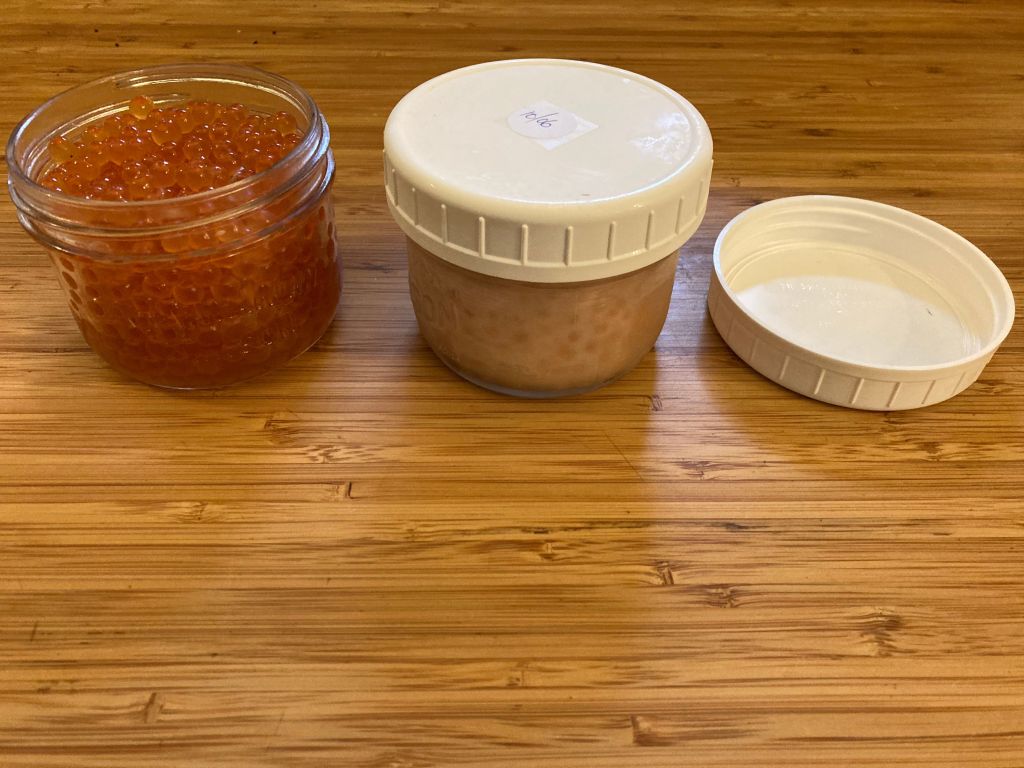
The left jar slowly thawed after six months of freezing. Right jar frozen ikura
Ingredients
- 1 ½ cups Hon Dashi
- Two tablespoons of Seafood soy sauce
- One tablespoon’s sake
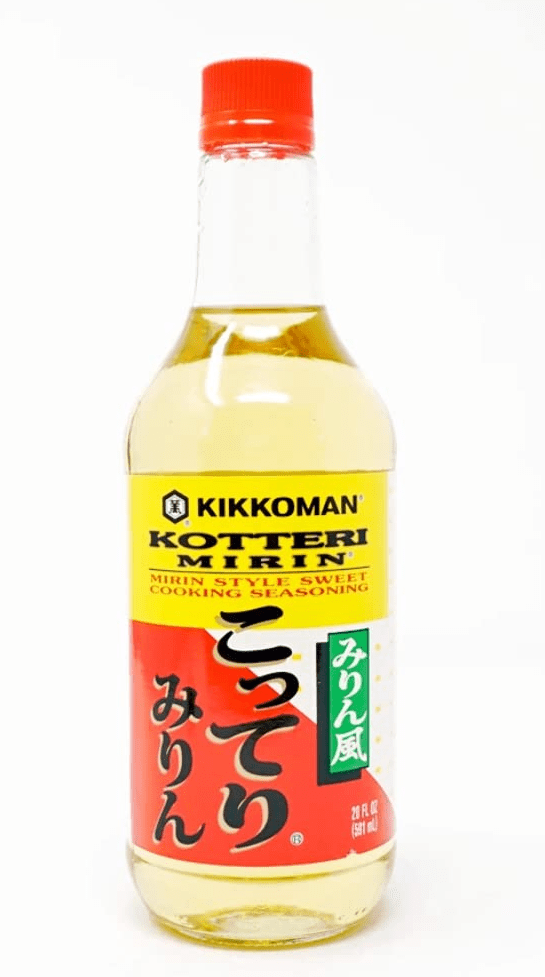
- One tablespoon Mirin (substitute Honey)
- One tablespoon of Sea salt
- Two large skeins of fresh salmon roe separated
Instruction for my recipe
- To Make the brine, I add the dashi, soy sauce, sake, Honey, and sea salt and stir until the salt completely dissolves.
- Place the roe completely submerged in the brine.
- Brine for an hour, then fully drain.
My preferences
Hon Dashi
Bonito dashi is a Japanese dashi broth made from a dried bonito fillet called “Katsuobushi.” Japanese dashi stock is made of dry bonito and has a pleasing aroma, richness, and taste.
Sake
High-quality Gekkeikan sake (Rice Wine)
Seasoned Seafood soy sauce
A light, sweet soy sauce created to enhance steamed seafood
Mirin
Mirin is a sake syrup-like sweet liquid ( no alcohol ). Along with soy sauce, it is one of the most important condiments in Japanese cuisine.
Sea salt
Sea salt is an unprocessed variety of salt produced by the evaporation of ocean water or other saltwater sources. This salt typically retains trace minerals, contributing to a unique flavour and subtle pinkish hue. Notably, it does not contain Iodine, which is often added to table salt to supplement diets.
Nutrients in salmon roe
Fish roe is a good source of phosphorus, selenium, folate, vitamins A, B12, and D, as well as antioxidants and choline, which helps the liver and nerves stay healthy. Including the fatty acid omega-3
Just one tablespoon (15 grams) of salmon roe provides
- Calories: 25
- Protein: 2 grams
- Fat: 0 grams
- Carbs: 1 gram
- Calcium: 2% of the Daily Value (DV)
- Iron: 3% of the DV
- Vitamin A: 10% of the DV
Expand your palette of tastes. The Ikura’s flavour explodes with a savoury, light salty taste as each egg is consumed.
Discover more from castingaline.ca
Subscribe to get the latest posts sent to your email.

