
Bait bans are now on many rivers, including those that ban scent. It can be a challenge that fishermen must overcome. Among the artificial presentations are spoons, jigs, spinners, worms, minnows, and synthetic copies of roe. In British Columbia, however, anglers are not allowed to add any scented residue, including synthetic scents, like anise oil and DW40
Beads shaped like salmon eggs effectively catch trout, Salmon, and steelhead. These techniques have become more popular among anglers due to the ever-increasing restrictions imposed by bait bans. Originally developed in Alaska, these techniques are very popular with anglers worldwide.

Steelybead Hard Bead #8 MM Natural & Steelybead Hard Bead #8 MM Pink
When salmon spawn, steelhead and trout tend to hold down the river as the loose eggs drift down and are gobbled up. Anglers often use beads as a lure during salmon spawning.
Pro Tip
Anglers who want to increase their chances of catching steelhead or Salmon should have a variety of artificial lures in their tackle box, as this can be helpful when the bite is slow.
Do Salmon Eat Eggs?
Several studies have examined why salmon eggs are found in the stomachs of Salmon caught in their natal streams.
According to Michigan State University, the discovery of some Pacific Salmon feeding during spawning runs is astonishing.
https://www.canr.msu.edu/news/amazing_revelation_some_pacific_salmon_do_feed_during_spawning_run
There was a belief that Salmon stopped feeding in rivers, but a recent study suggests this is not always true.
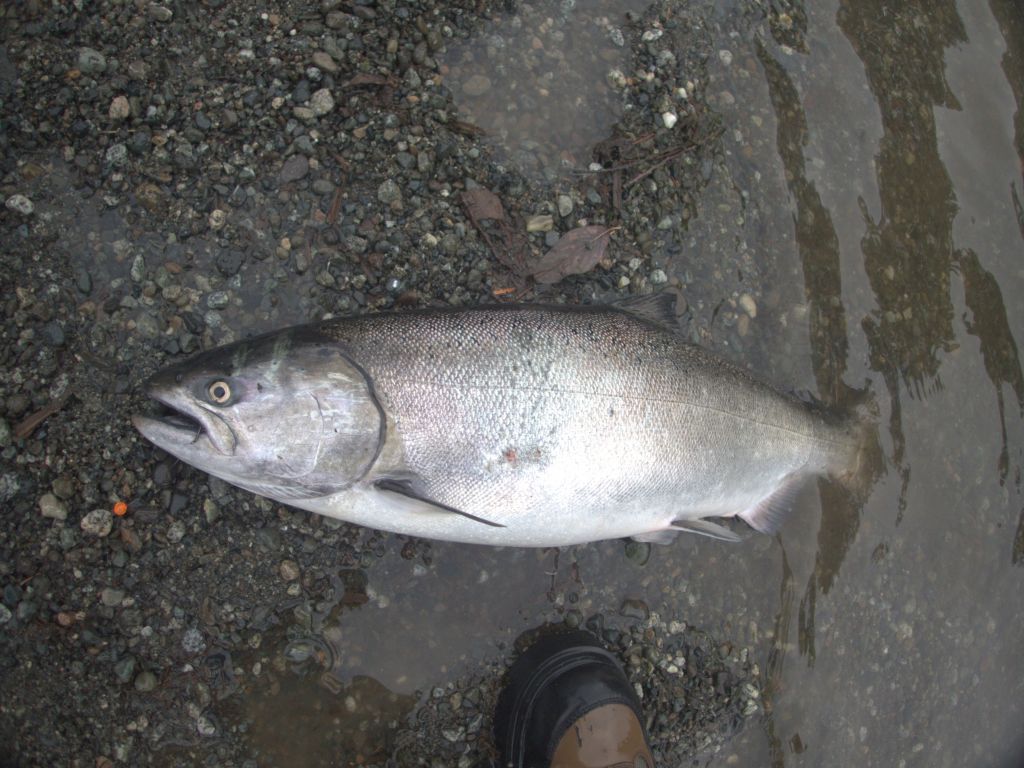
Due to their incredibly competitive nature, salmon often mouth other salmon eggs while migrating to their spawning beds.
Salmon are aggressive and territorial towards their competitors when they reach their spawning grounds.
Salmon possess an innate drive to eliminate competing eggs from their environment, ensuring the successful transmission of their genetic material to future generations.
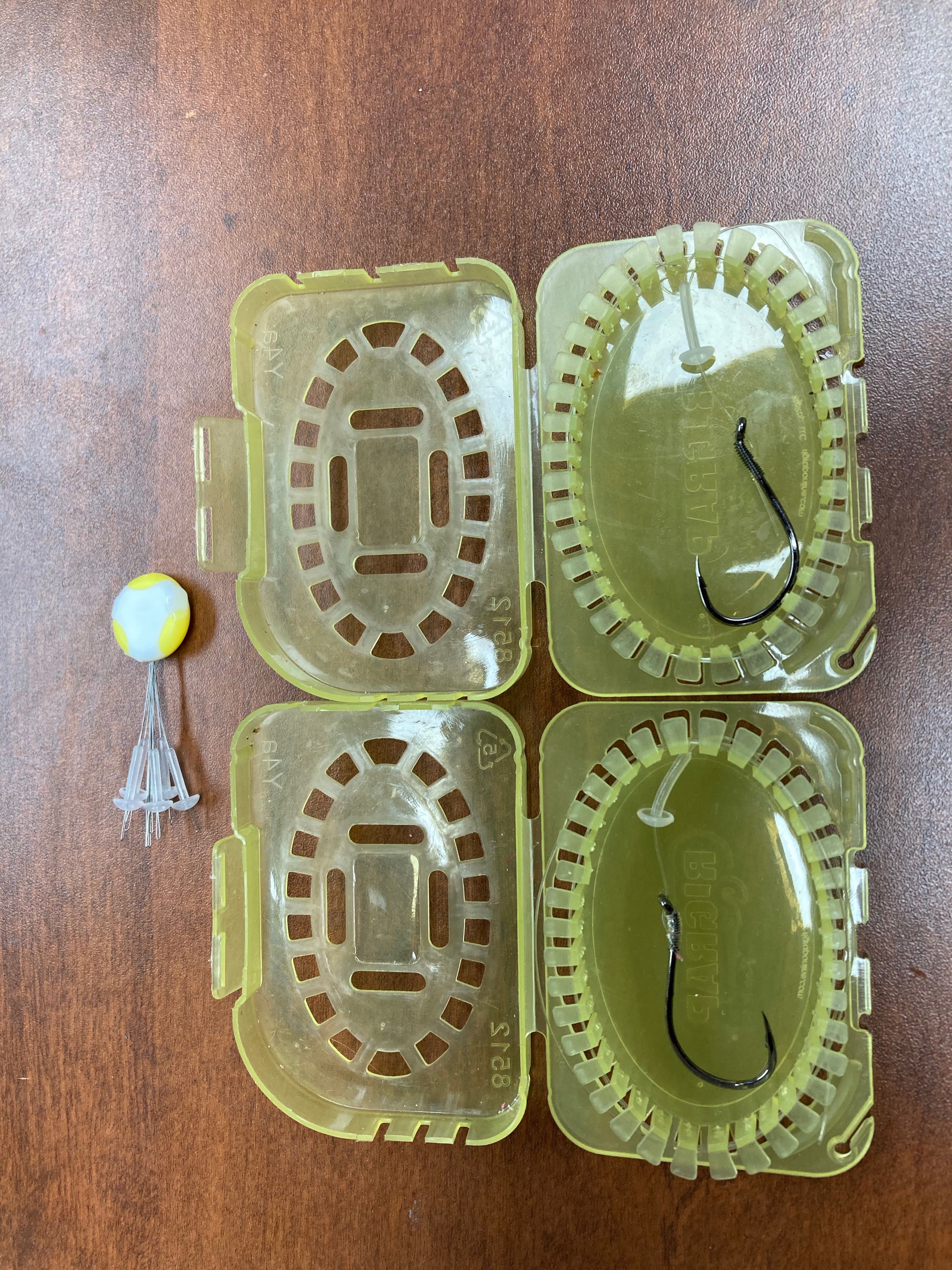

Rigrap Yellow, Leaders with “T” Stops & Rigrap Storage PCase for Large Bead Selections
Pre-assembled fishing leaders designed to replace lost equipment provide anglers with a significant edge as they pursue migrating salmon upriver. In the event of a leader breakage, a new one can be promptly substituted, complete with a pre-attached “T” Stop, and only requiring the addition of a bead to the leader. This seamless Rigrap replacement process ensures easy storage, fast access, and uninterrupted fishing activity.

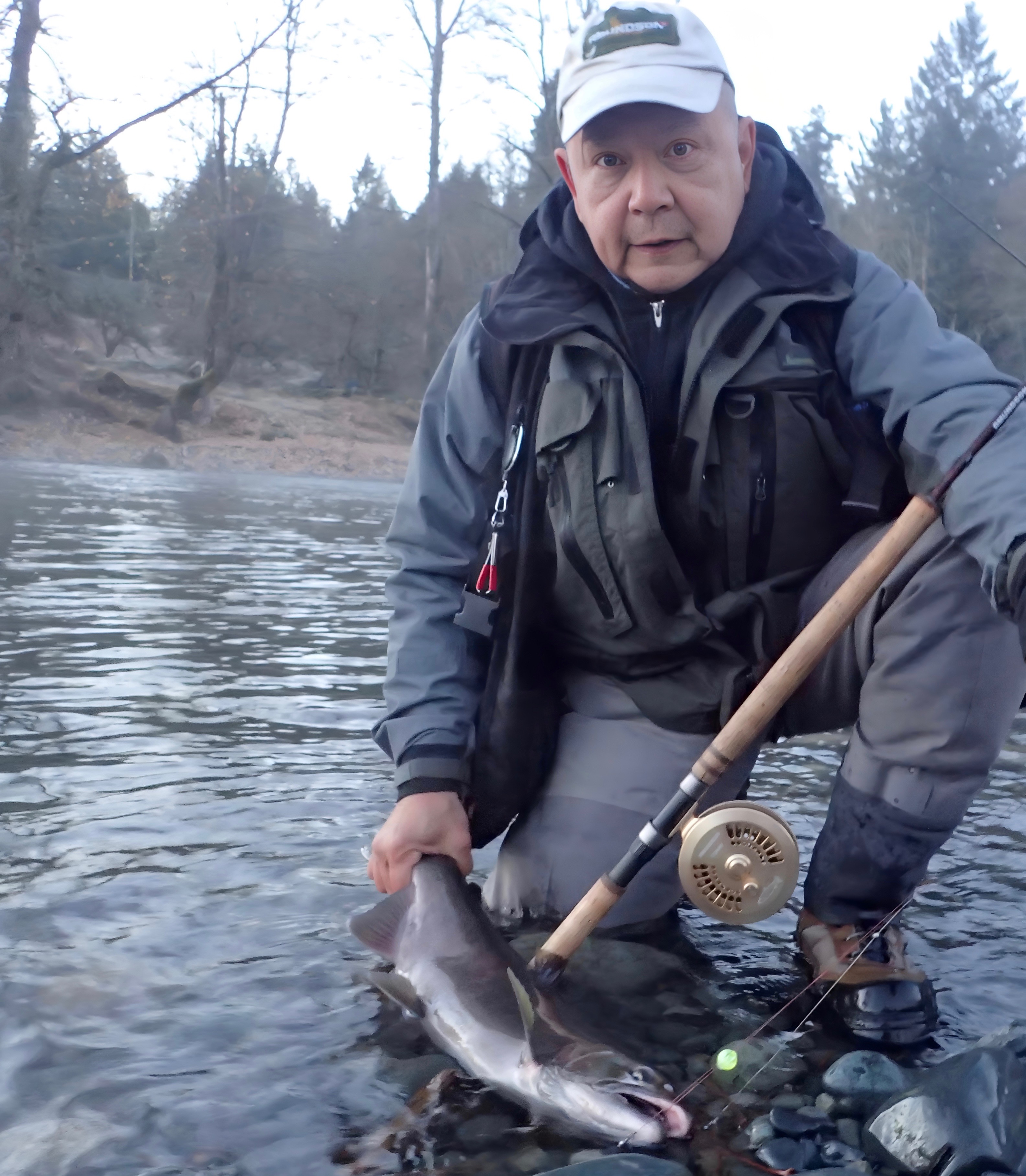
Amundson Centerpin Rod KSP13M-2 & Amundson Centerpin Reel TCP 450
Bead Selection
The debate between hard and soft beads has been going on for a long time, and here is my opinion: they are both extremely effective. Ultimately, it is up to the angler’s prior experiences and successes to decide which bead will work best for them.
Manufacturers of hard and soft beads are not limited by varying surface colour textures, making them simple to assemble with a thorough core for threading the leader.
Hard beads tend to sink quickly in the water column, and anglers believe they stay in the lower strike zone quicker. The soft beads are a little more buoyant, sinking more slowly, and that’s perfect for the angler short floating in the mid or 3/4 depth-water column. They also provide a natural egg-like texture that may make Salmon or steelhead hold on to them longer.
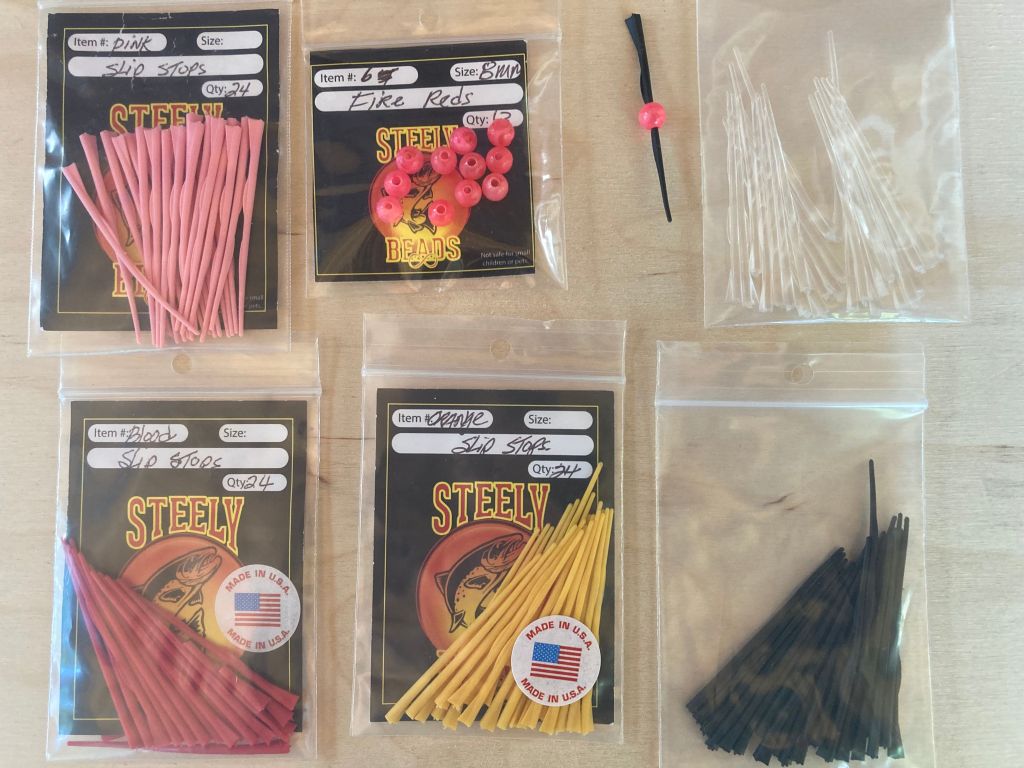
Hard Steelybead #10 MM Fire Reds & Hard Steelybead With Soft Pegs
The hard bead is true to its name and is more durable, but it is not as easy to change out as a new bead peg is required. The soft bead slides off, and the new bead is slid on and held by the original Bead “T” Stop. The “T” Stops are available in four sizes to cover 8mm to 32 mm beads.
Ultimately, it is up to the angler’s prior experiences and successes to decide which bead will work best for them. Hard and soft beads are highly efficient, and carrying an assortment of them on each adventure will increase your success.
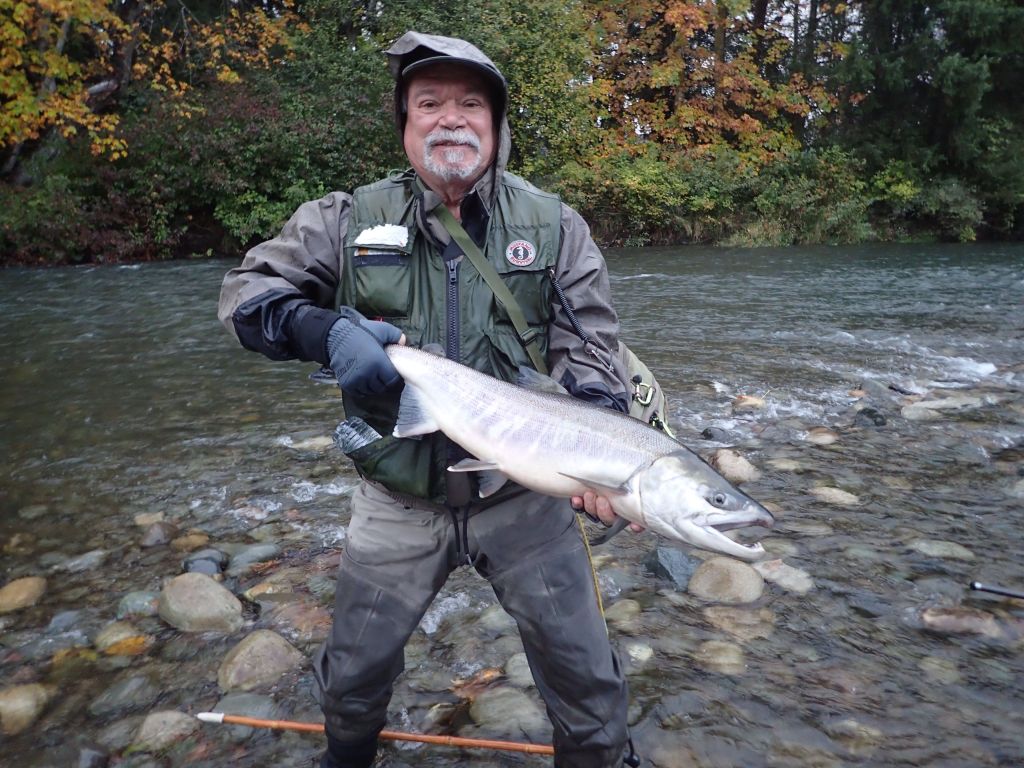
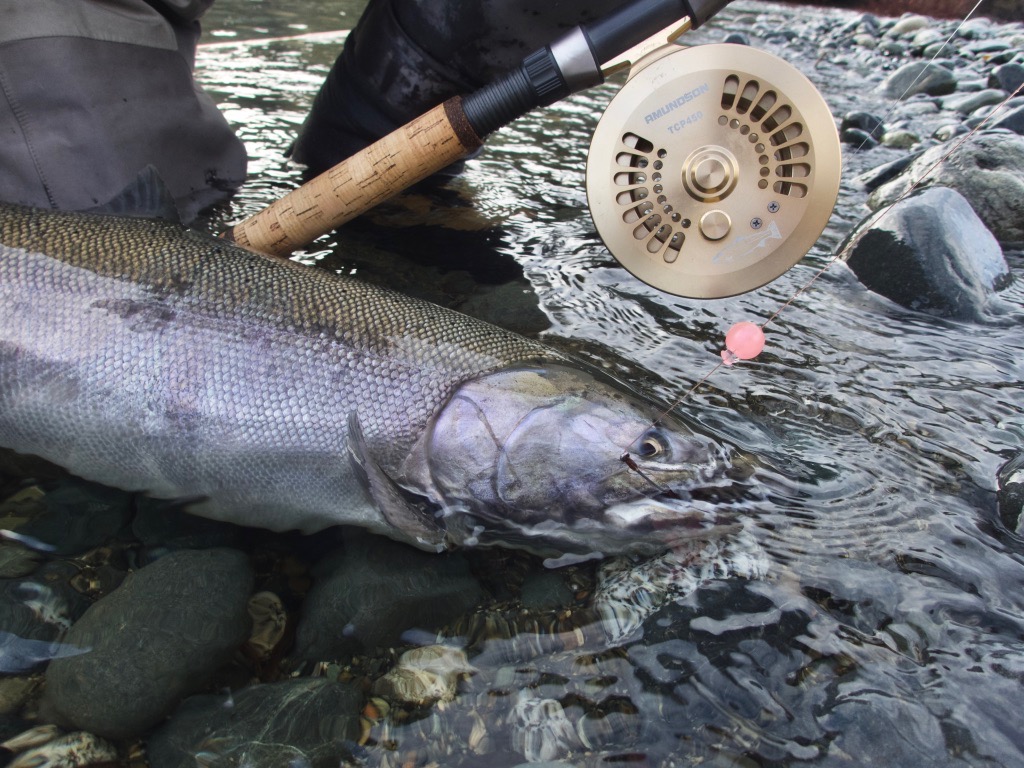
Randy Kirkpatrick Siverbrite Chum Salmon #14 MM BnR soft Bead Hot Snot & BnR Soft Bead #14 MM Flamingo
To choose a bead, determine what species are currently spawning and then match the size of the bead to their eggs. Various sizes are available, including 6mm, 8mm, 10mm, 12mm or 14mm for hard and soft beads as large as 20mm, 25mm and 32 mm.

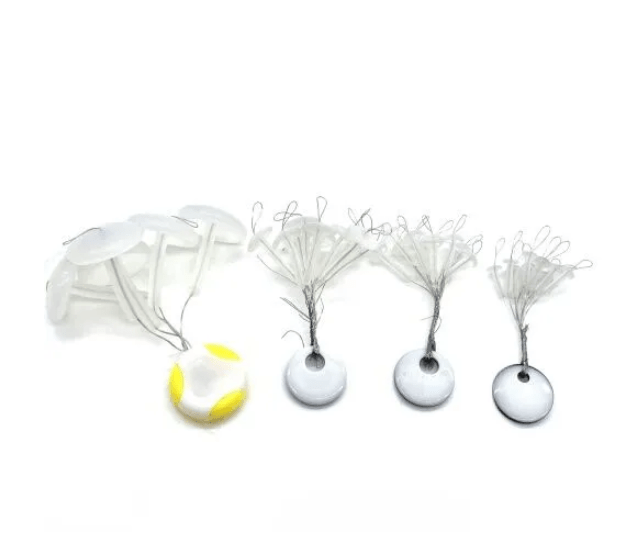
Soft bead 8mm-14mm & varying colours-Four sizes of T stops.
If heavy rain results in high river flow, anglers should choose a more intense presentation, a larger bead, and a brighter colour for visibility in silted water. Also, the flow of the river you’re fishing in will play a role in determining if the bite is good. My experience with beads is that fast and slow water creates a slipstream for the steelheads or Salmon to rest, often resulting in successful hook-ups.
Salmon roe (eggs) are vibrant during spawning; however, non-fertilized spawned eggs gradually become pale white as the season progresses.
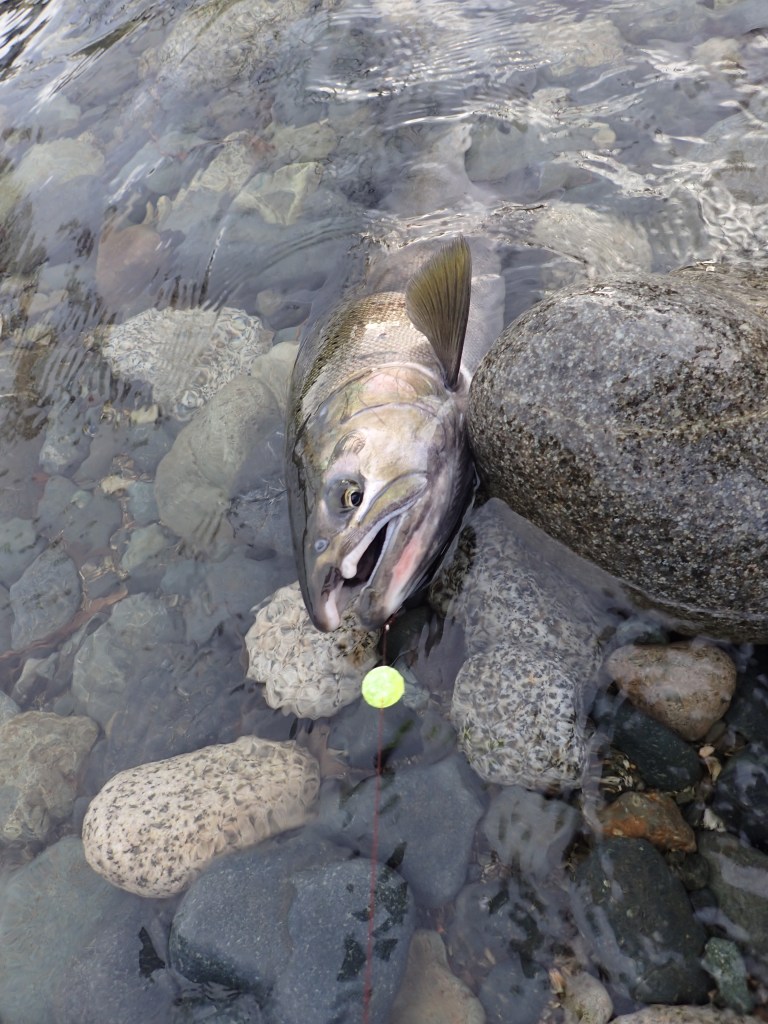
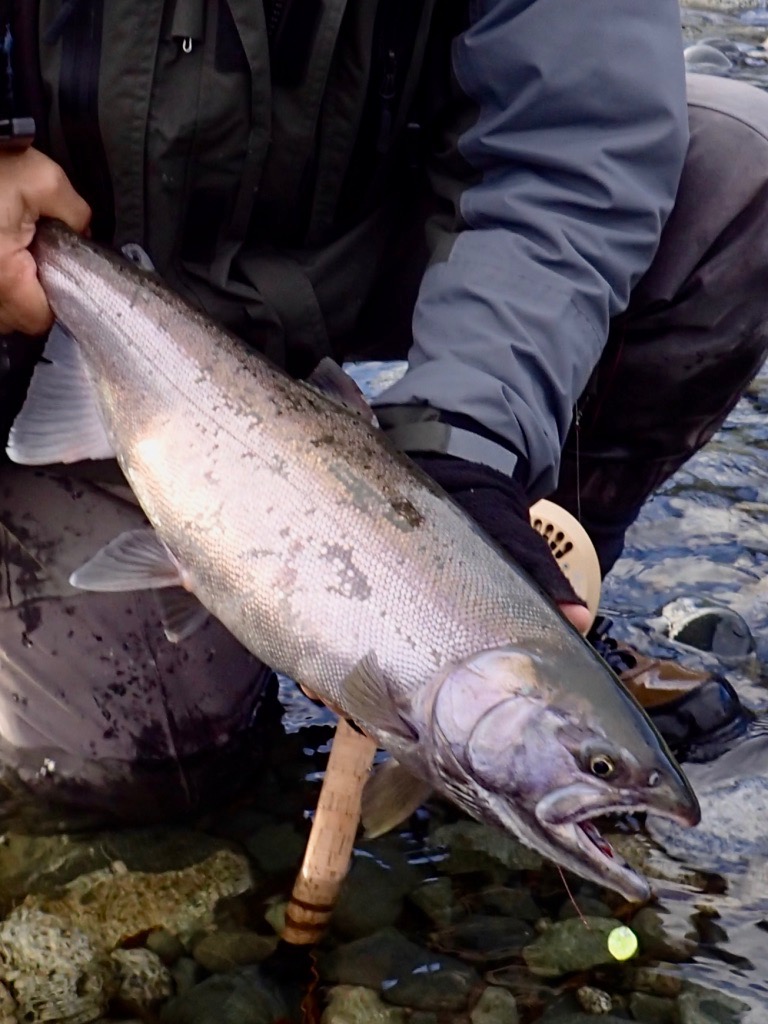
Coho Salmon BnR Soft Bead #14mm Hot Snot & Coho Salmon BnR Soft Bead #12mm Hot Snot
Blue, green, purple, and yellow beads have proven extremely successful.
As a result of this paradox, anglers are more inclined to view others’ colours positively. Anglers are more likely to be successful at fishing when they have a range of colours on them.
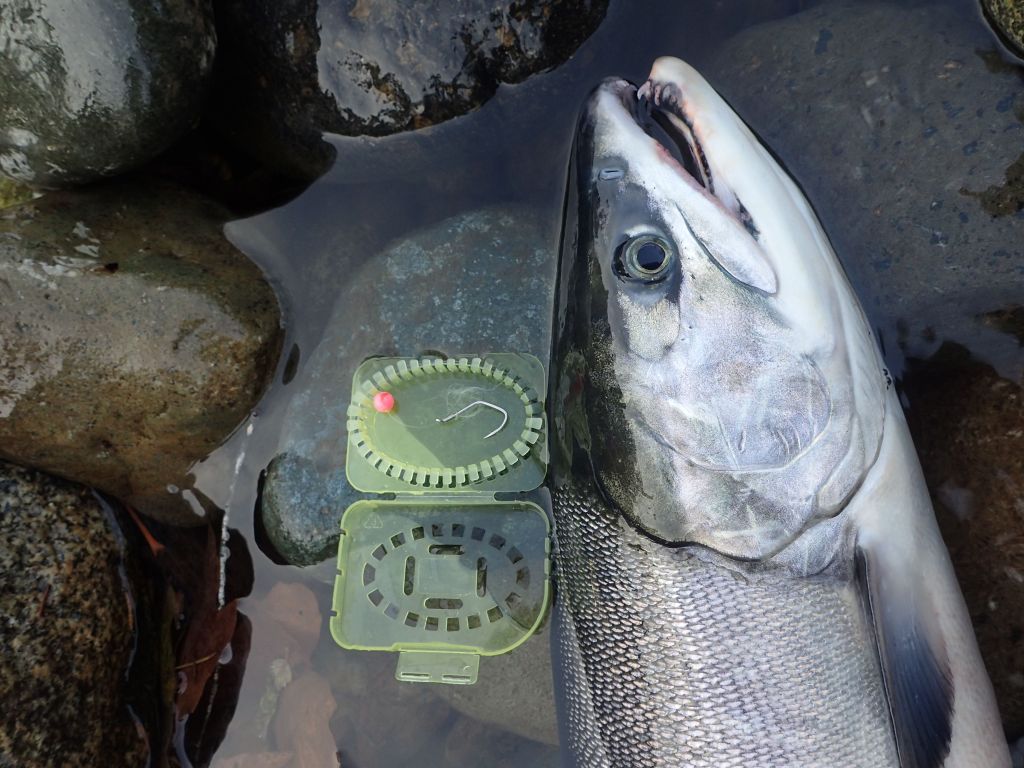
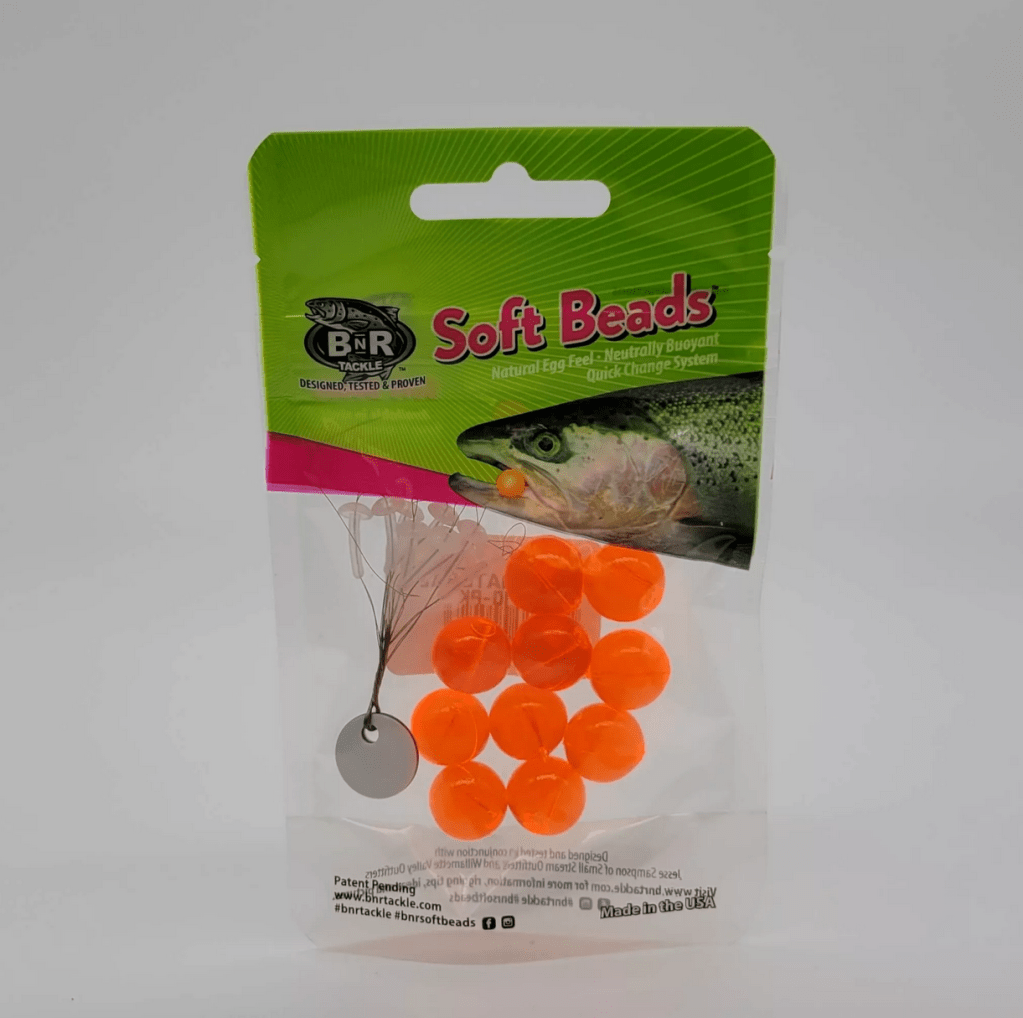
Rigrap Yellow Pre Made Leader & BnR Soft bead #8 MM Natural with “T” Stops
The Set-Up
My experience has taught me that matching the bead to the hook is essential. My preferred hook size when fishing for steelhead is a size four or two. Fishing for Salmon requires me to move up to a size one hook or a 1/0 hook. If I use large beads, 20 mm or 25 mm, I move to a 2/0 or 3/0 hook for Salmon.
Before going fishing, check the regulations in the area. In British Columbia, all hooks used in rivers must be single and barbless.
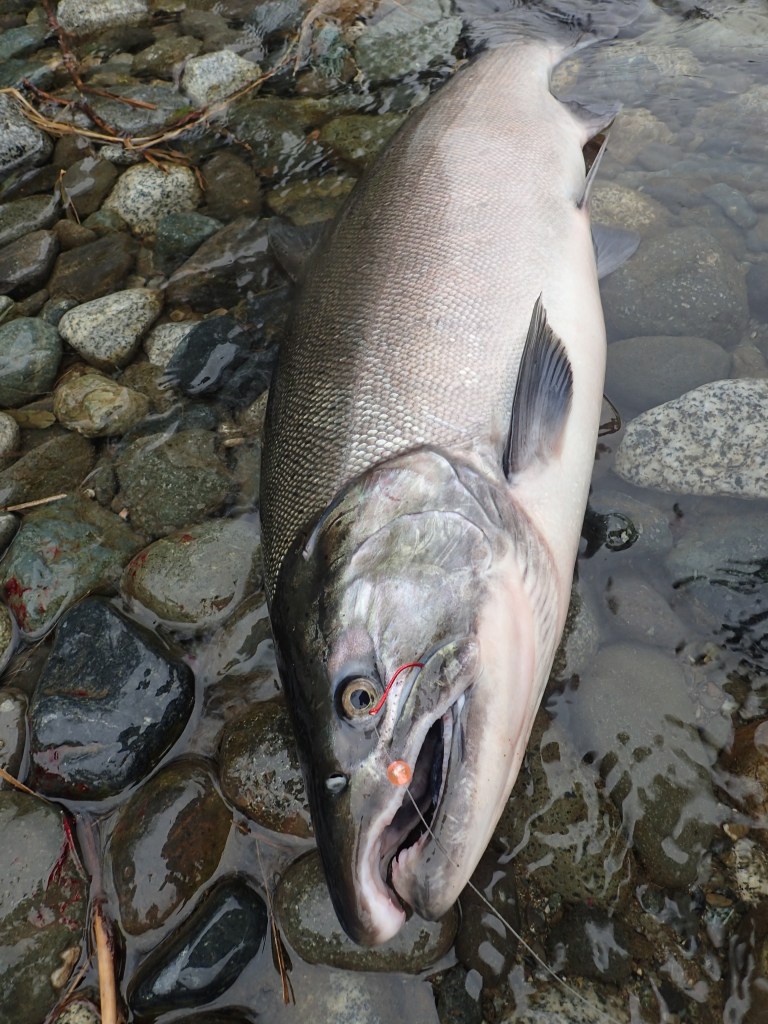
If the bead rests over the eye of the hook, the hook is likely to enter critical areas like the gills or deep hook-ups. That could prove detrimental if you catch your target and release it.
The bead should always be positioned an inch or two above the hook when it is picked up by Salmon or steelhead. This will ensure that the hook is not a deep hook set but on the edge or corner of the fish’s mouth when it picks up the bead. Several states in the United States do not allow hooks to be set outside of the mouth, so it is essential to check the fishing regulations in the area before fishing.
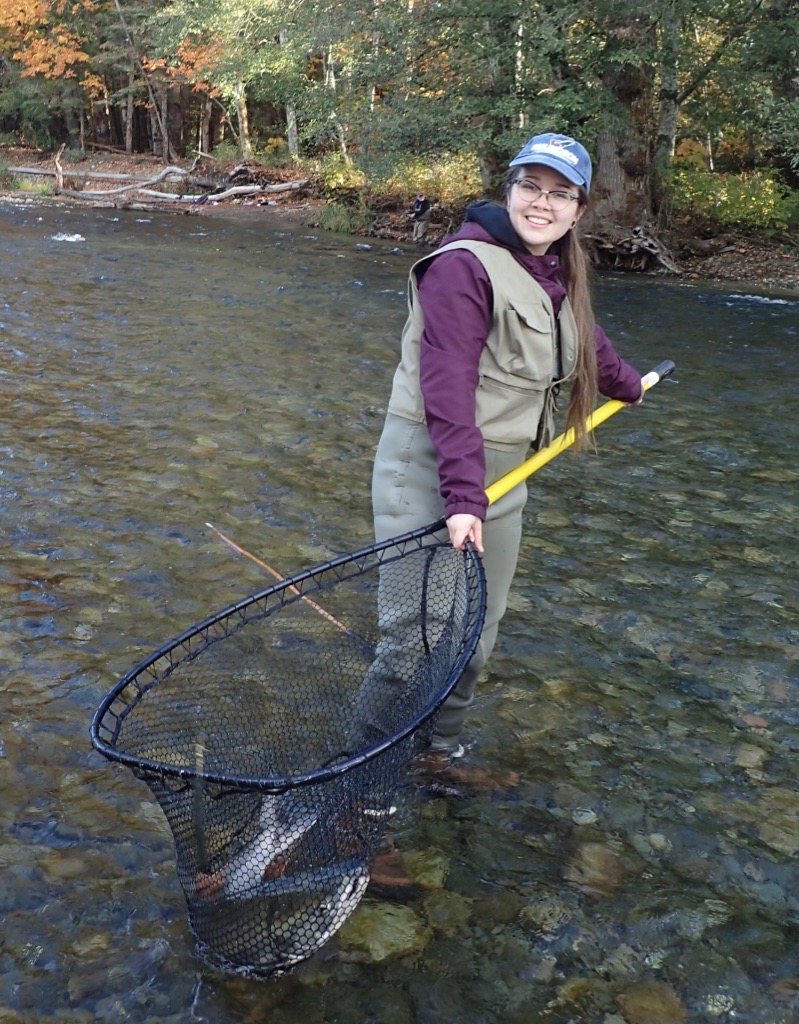
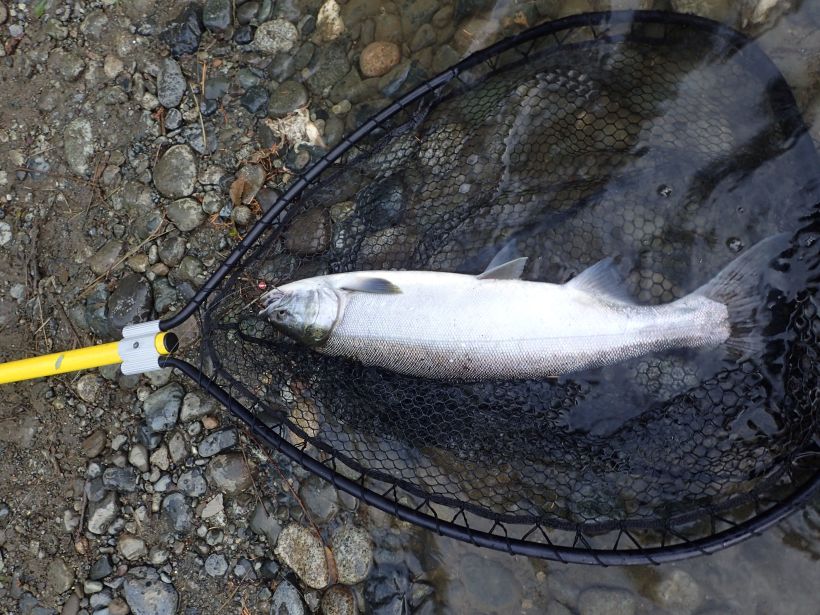
Jessica – Safe Catch & Release & Yakima Bait Works Rubber Salmon Net
Another catch-and-release tip to increase the salmon’s survival ability is using a rubber net. It will not remove the scales or the fish’s protective body mucous. Matching the net size to the fish you target is also important.
Pegging a Hard Bead
Anglers have tried various methods to keep the bead stationary above the hook. I have found that knots or loops impede the strength of the leader. You can peg the bead with a toothpick, but its hardness can weaken (compress) the line, especially when you adjust it tighter to maintain position.
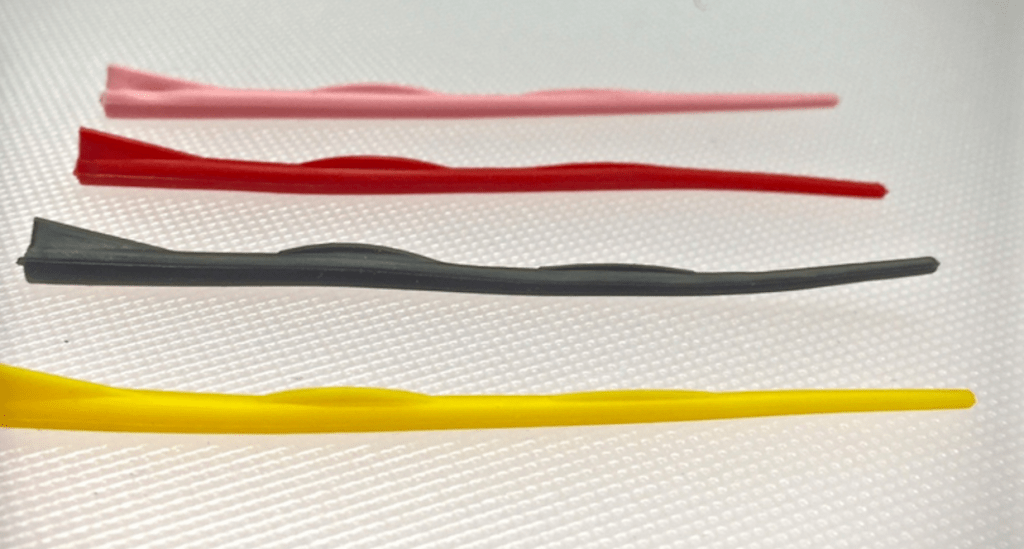
Tackle manufacturer Steelybeads makes multi-coloured tapered synthetic slip-stop pegs that can maintain pressure without straining the leader.
There are raised bumps on these pegs that fit tight to various-size openings in the beads. The leader is intact as the peg is softly pressurized against the leader when tightened. Snip off the access
Soft Beads
Hard and soft lures are susceptible to damage caused by the river, underwater structures, and the salmon teeth. Over time, the soft beads may wear down their pre-threaded core for the leader, allowing them to slip past the “T” stop and onto the hook. It is important not to dispose of these lures.
Pro Tip
First, remove the loose bead from the hook to reuse the soft bead effectively. Then, remove the leader from the swivel and insert the line into the eye of a spare hook. Carefully place the hook in a centralized position on the bead and secure it by sewing through the leader line. Next, slide the bead down to the “T” stop and reattach the leader to the swivel.
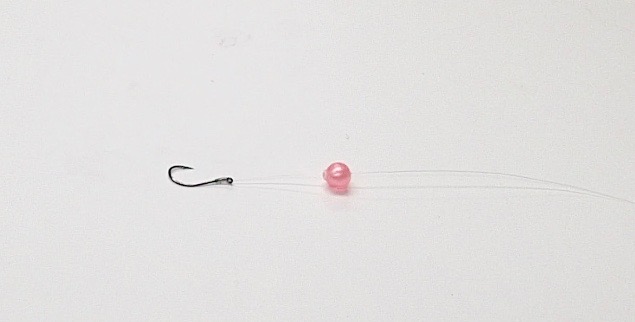
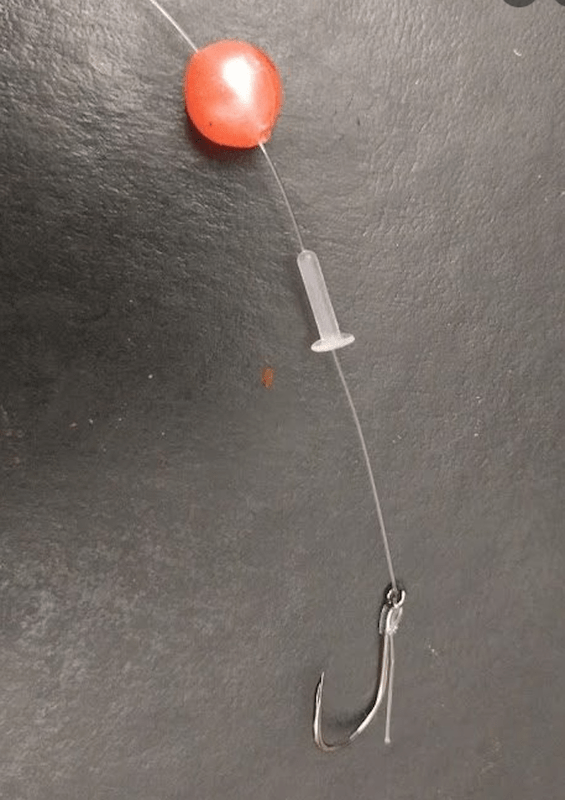
“T” Stop Inserted in Bead & “T” Stop 1-2 Inches Above Hook
BNR Tackle developed this bead stop for their soft eggs called the “T” stop, which was designed for their soft single beads or roe clusters. It is a tight sleeve containing a disc that keeps beads from sliding. Natural-looking soft beads in 8mm, 10mm, 12mm, 13mm, 16mm, 20mm, 25mm, and 32mm.
Pro Tip for Steelheads with the “T” Stop
Considering alternative solutions can help minimize tearing and crimping when plastic worms and hooks are connected. For example, placing a “T” stop between them can be beneficial, preventing the hook from sliding up and tearing into the plastic worm.
Fishing Technique
Bouncing the beads near the riverbed or drifting with a float can be very successful. Float drifting allows you to observe your cast at the location where you want to cover the flow visually. With the float system, the angler can control how fast the drift is and adjust if there is too much drag or too little.
Floating beads near the bottom, the angler’s weight tapping along the bottom of the river, also known as bobber doggin, or in the mid to three-quarter depth of the water column (Short floating ), produce positive results. Each Salmon species favours different structures and river flows, either hugging the bottom of the river or remaining suspended.
Pro tip
When the cast reaches the target area, pull the float back toward you as it lands on the flow. This allows the leader to straighten the float and avoid folding it back on itself.
Anglers who can adapt and change are the most successful.
Discover more from castingaline.ca
Subscribe to get the latest posts sent to your email.

