Twitching jigs for salmon and steelhead is nothing new in the fishing industry, yet it has not been fully embraced.
However, times have changed.
Due to the advancement of social media technology, anglers can now share positive experiences, tutorials on techniques, and tips on tying various twitching jigs and their use on social media.
As a result of watching anglers’ success, I recently learned how to tie and use twitching jigs.
First, we must understand the twitch.
Twitching is accomplished by quickly moving your rod from horizontal to nearly perpendicular to the water and then dropping the rod tip so the jig falls freely in the column. Consequently, the jig rises rapidly and then falls like a “W.”
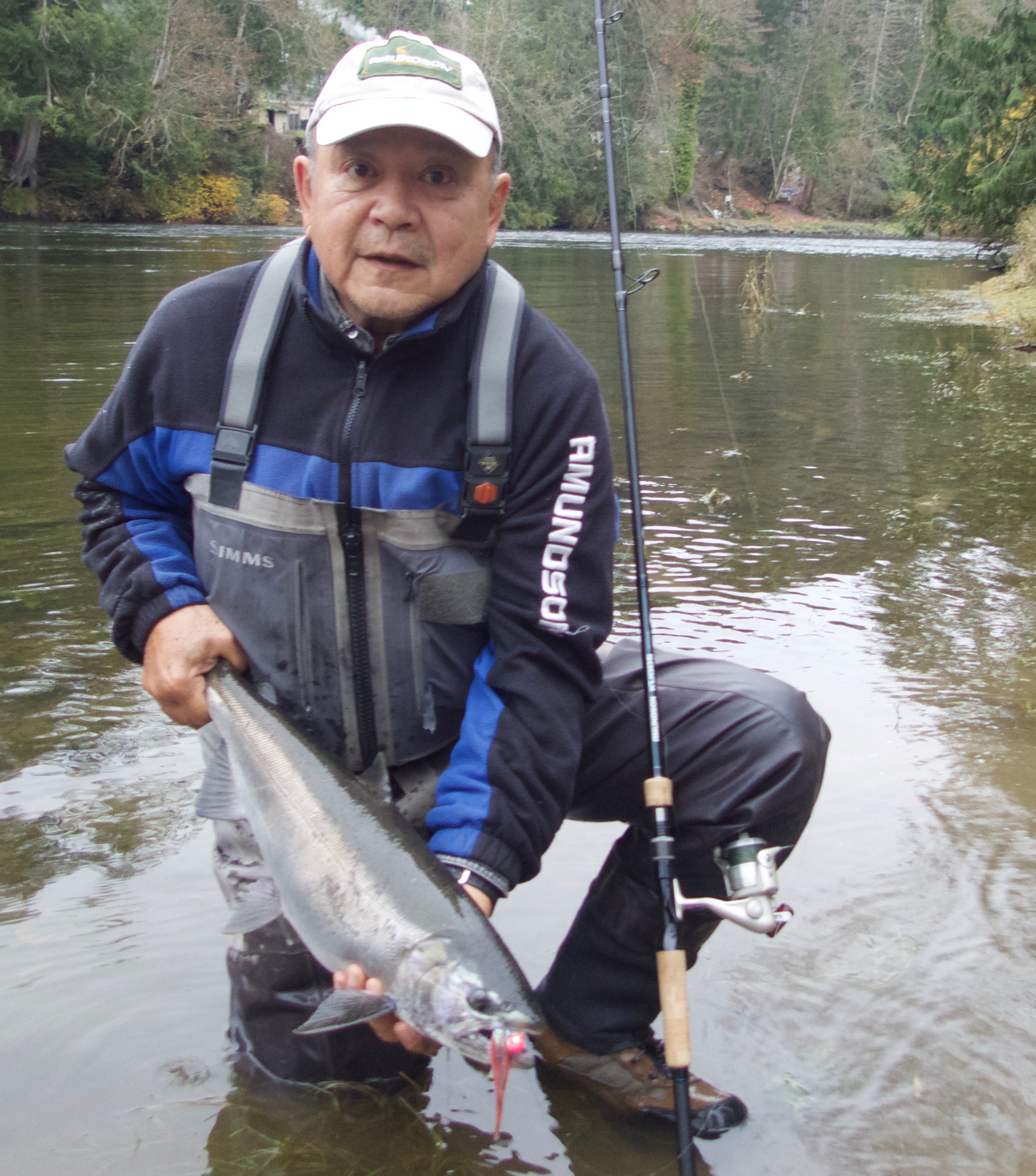
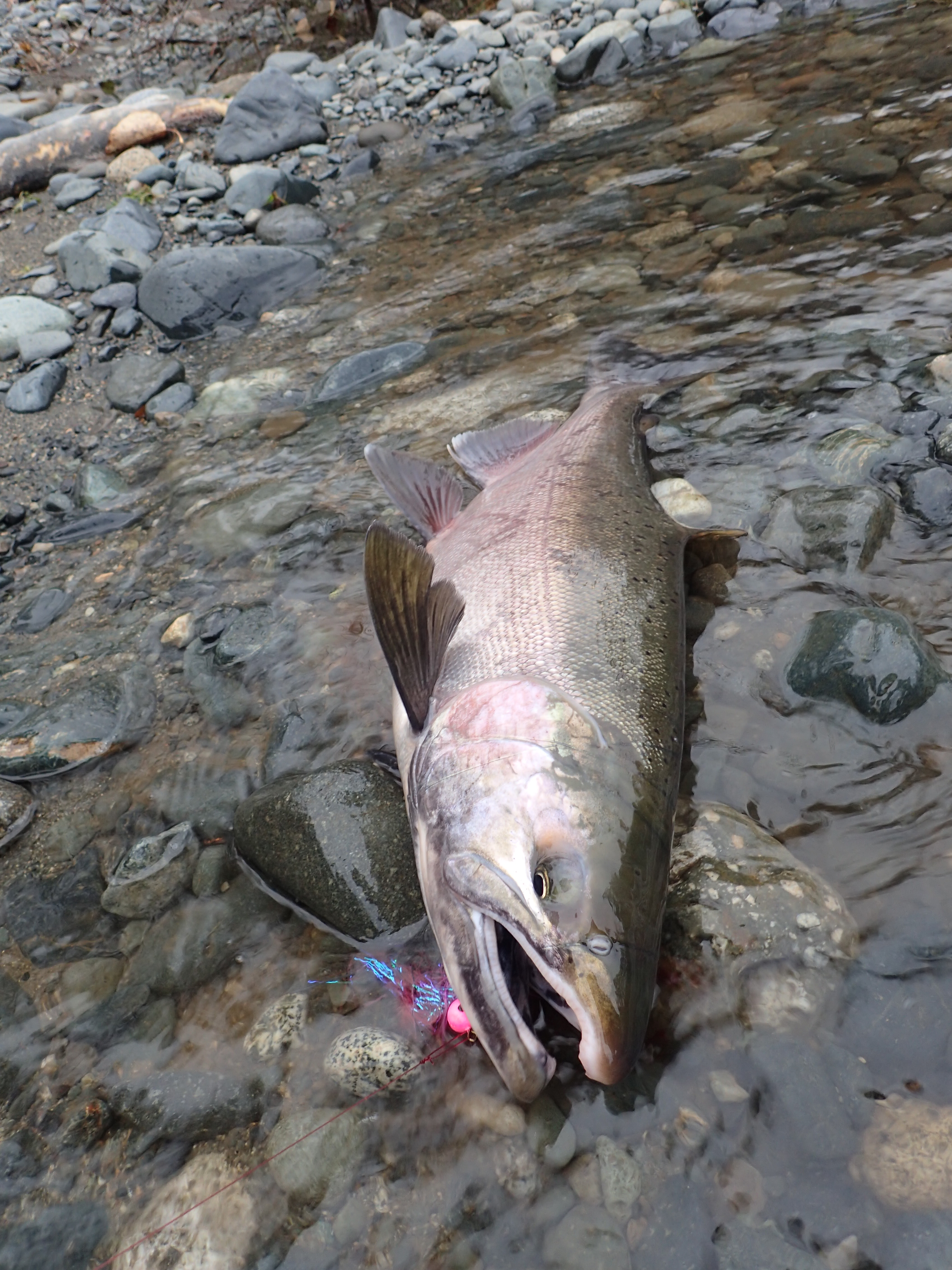
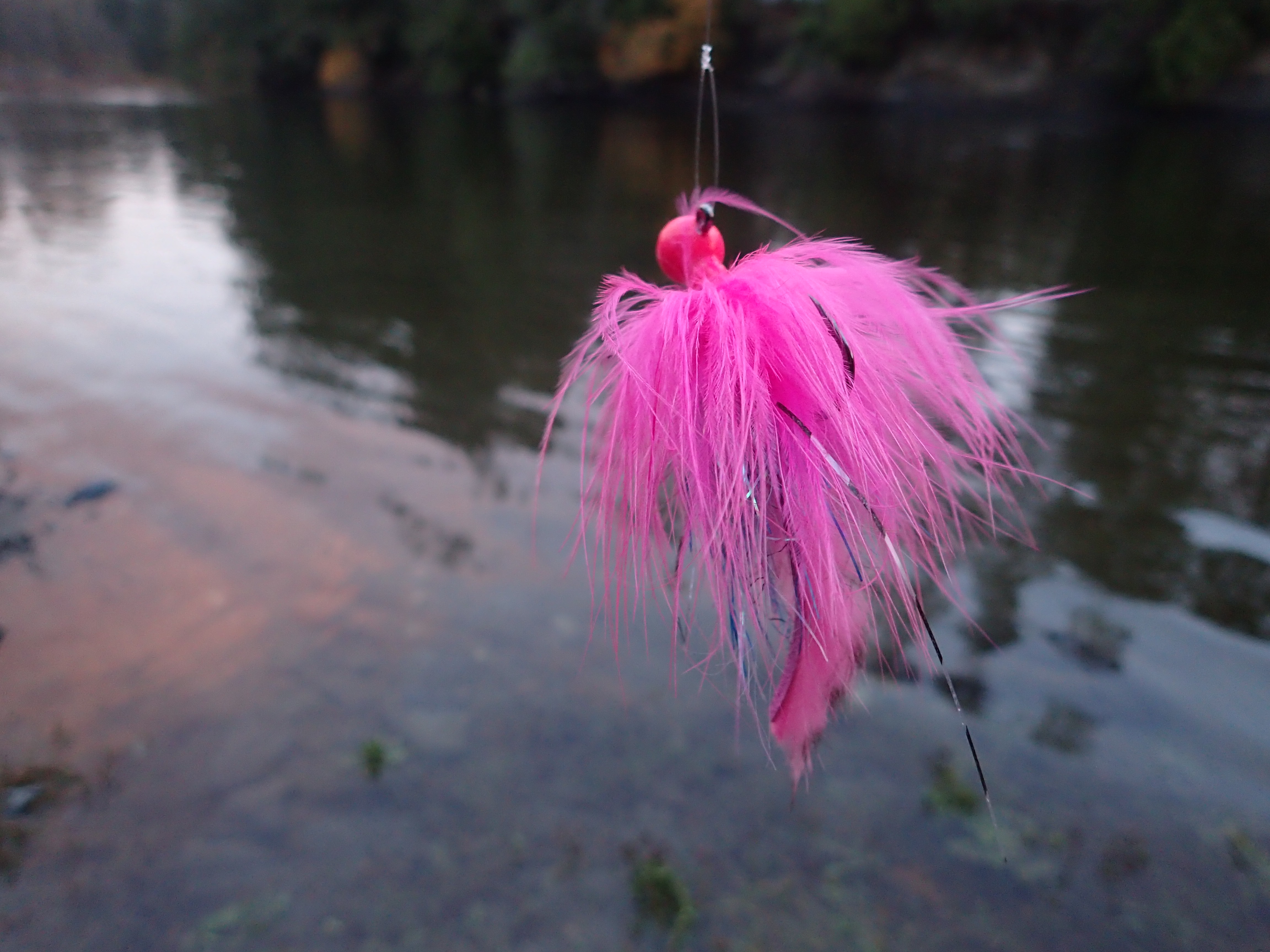
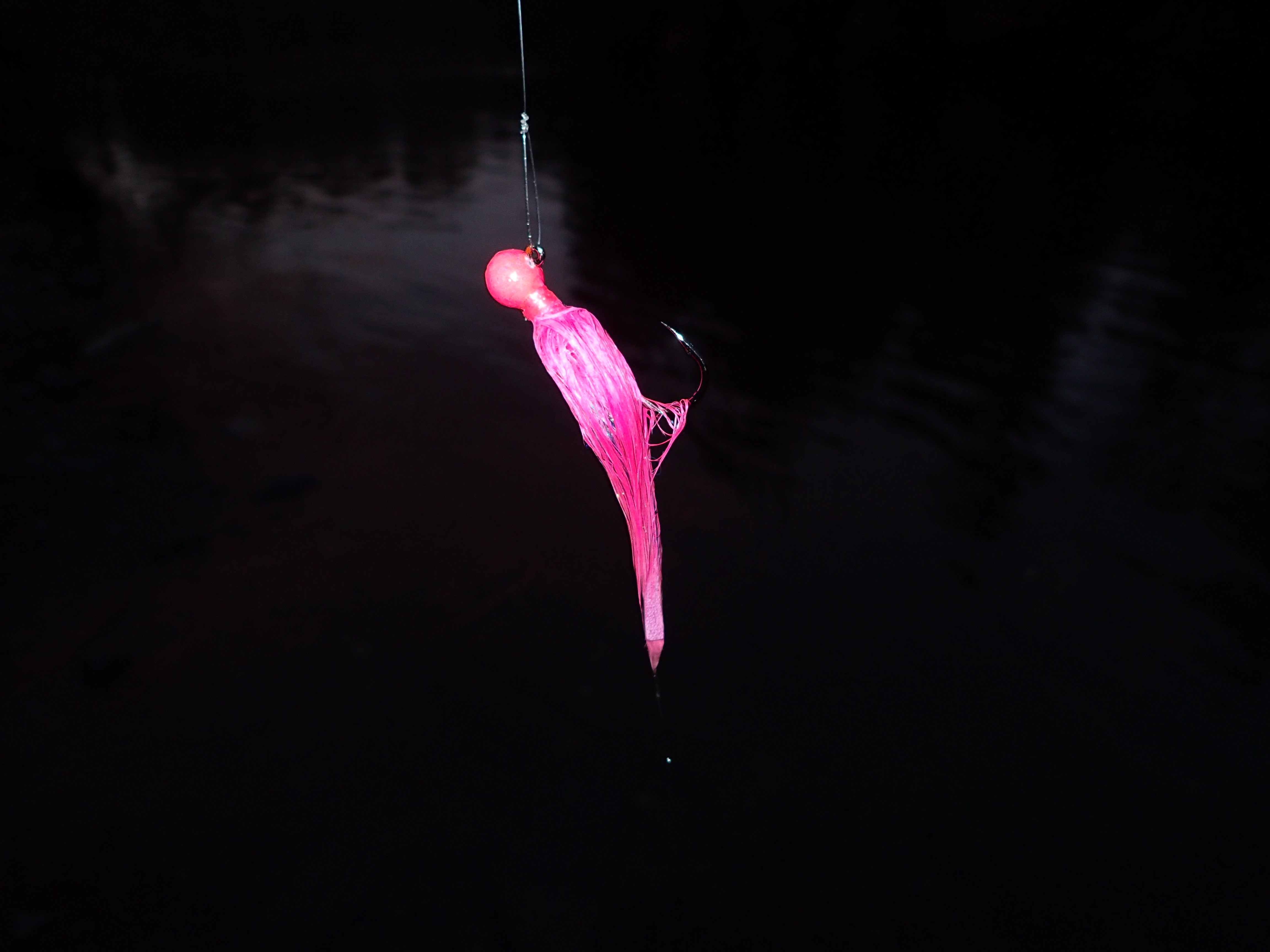
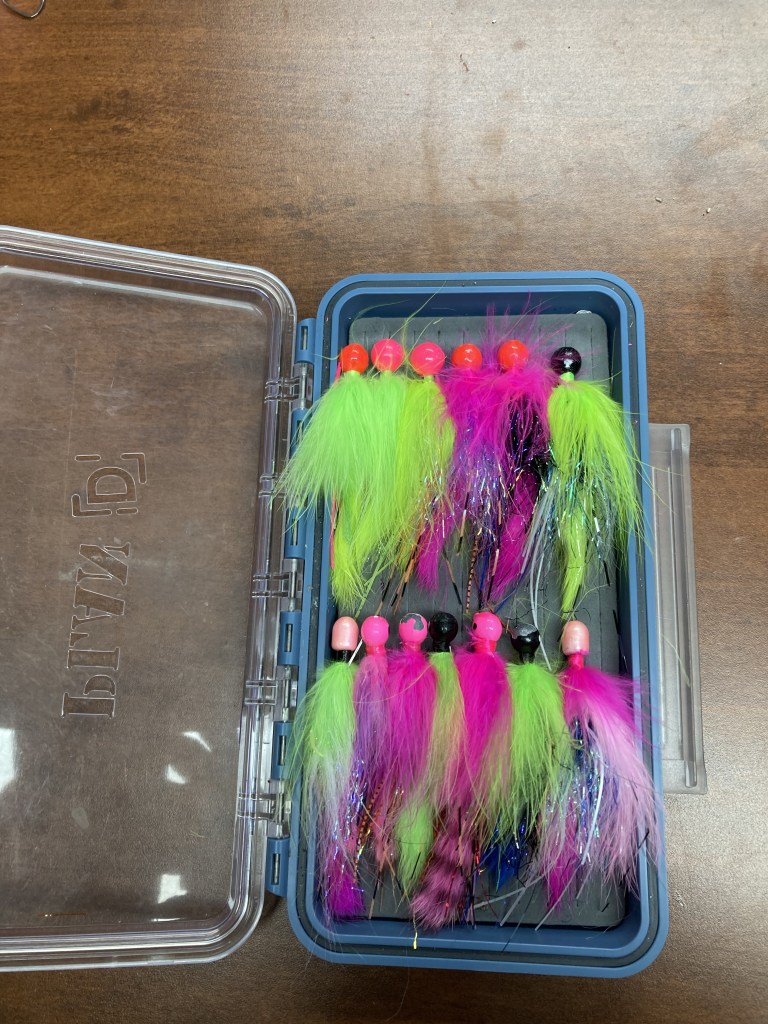
Twitching jigs are limited solely by the angler’s creativity. They encompass hair, feathers, plastic trailers, and various colours. These jigs typically weigh 1/4, 3/8, and 1/2 ounces. The heads may be round, conical, or cylindrical. Their design is constantly evolving.
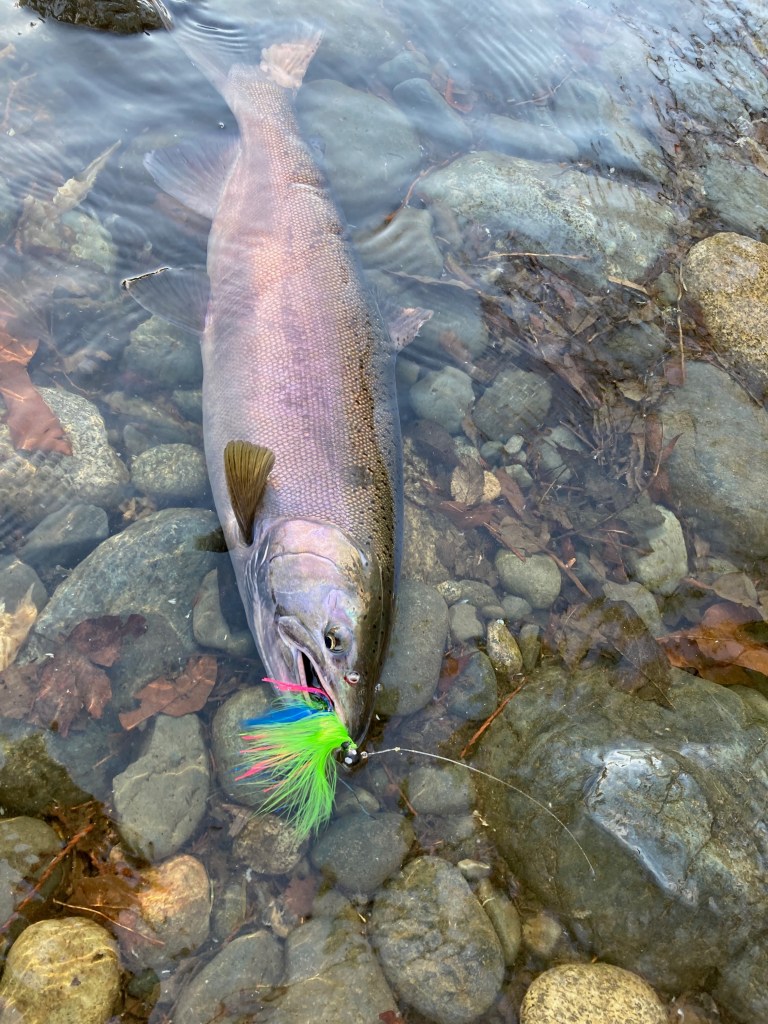
Most anglers prefer incorporating a twitching jig into their fishing strategy. In my experience, as long as the jig displays an up-and-down “W” motion, salmon are likely to strike as it descends.
To recover the line quickly and not limit line pick-up to recover the rod bend, the rod should be 7-8 feet long on average and have a medium-firm tip. The wrist will do the majority of the twitch activity.
I like my braids to have many strands incorporated into their makeup. I use eight, but you can queue as many as twelve. The more strands in the braided line, the more the line will be round instead of flat, making it easier to manage. Successful anglers in the past will have a favourite.
The twitch
Pro Tip:
30lb -8 strand braid = a diameter of 6lb mono
Coho anglers increasingly use the twitching (jigging) technique in slower pools and runs. A 7-9 foot rod, reel loaded with 20lb., or 30 lb. braid and a mono leader. I will cast the jig slightly upriver and let it swing through the current, incidentally lifting it and then allowing it to drop by applying varying 1–2-foot rod twitch, which means raising and dropping the rod tip, creating the slack line. Allowing the slack line to hit the surface without reeling in immediately. That is twitching, and the objective is to lay out a smooth all-over cadence without losing contact with the jig. Once the jig hits the surface, the angler starts the twitch, raising the rod and allowing the jig to drop while retrieving some line. The goal is to move your jig slightly above the fish in a “W” motion. The angler should keep his rod no higher than 45 degrees. It allows the angler room to raise the rod for a hook set quickly.
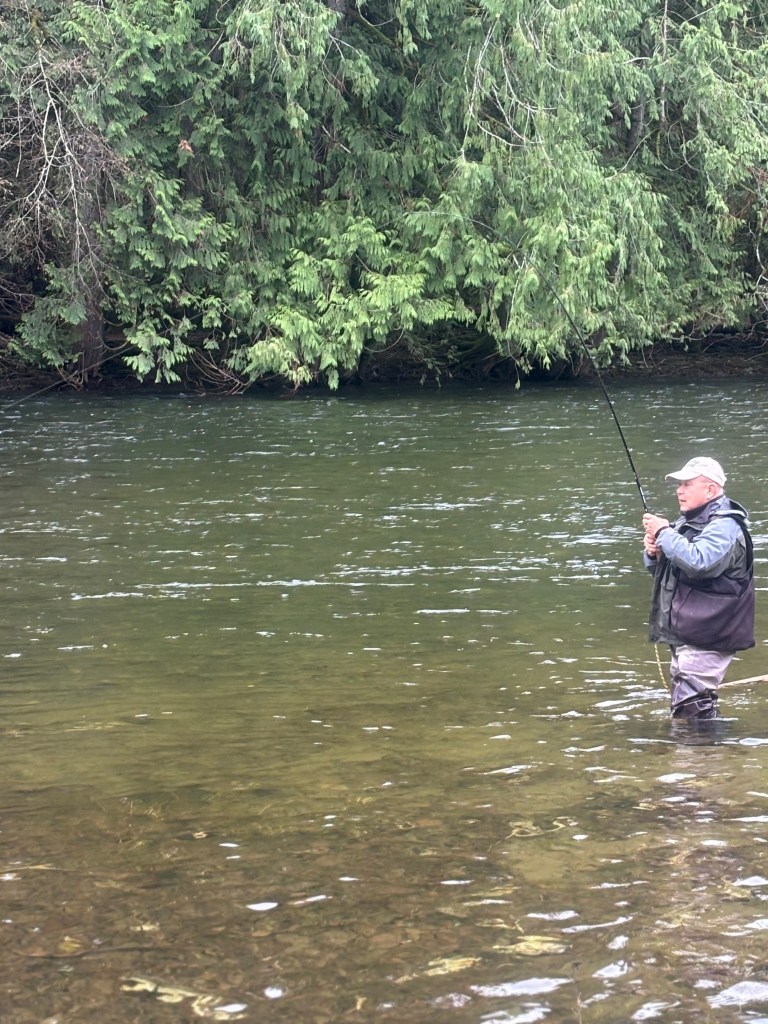
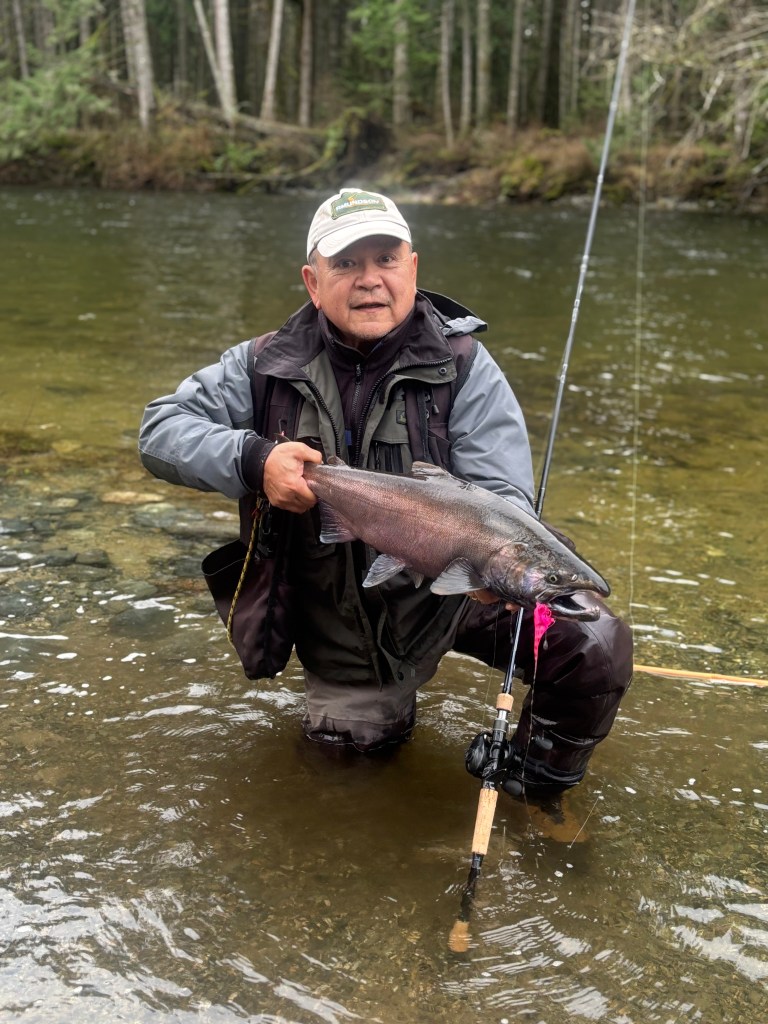
Now, anglers will have their favourite techniques and will vary the distance of the rod drop and pick up and the retrieval speed.
It all depends on whether the angler is covering moving water or little water movement. The water flow speed, added to the depths, will determine the twitch speed and the jig’s weight.
As the angler’s success or failure is experienced, the learning curve will increase.
Pro Tip: If the technique you are using is not successful, change it. It would help if you didn’t allow the jig to rest on the bottom of the river. As a result, the jig can get snagged in the river structure, or there is a greater risk of fowl hooking a salmon.
The braided line will float on the water’s surface and have zero stretch. Doing so will allow you to pick up and retrieve lines easily between twitches. It is recommended to tie on a mono leader. It allows easier break-off if a snag occurs. I often use the double uni knot to join the two and then the mono leader directly to the twitching jig with a loop knot.
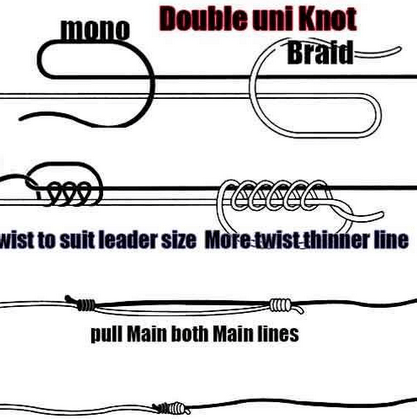
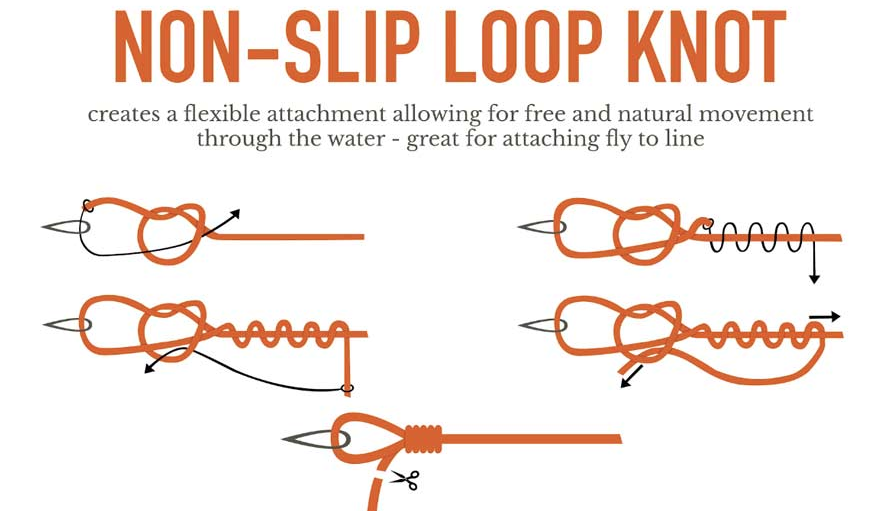
image; From Orvis news
Pro tip
My preference is never to attach the braid directly to the reel spool. Instead, I attach two to three feet of mono to the braid, which allows the line to anchor securely to the spool and not slip.
Description of twitching jigs
The twitching Jigs feature is active when hopped or twitched. Its body is often crafted from rabbit fur, Marabou, and squid tentacles, which give it a distinct pulsating motion in the water.
The Crazy Legs have been added to the range of options. They offer super-durable silicone legs in various colours.
My friends had to join the twitching journey
Some designs incorporate flakes of a bright contrasting colour embedded in the translucent silicone to produce an attractive and natural look.
A common twitching jig weight is ¼, 3/8, ½ ounce. Manufacturers have been very creative in the shape and colours of the jig heads. The most common is the spherical lead head.
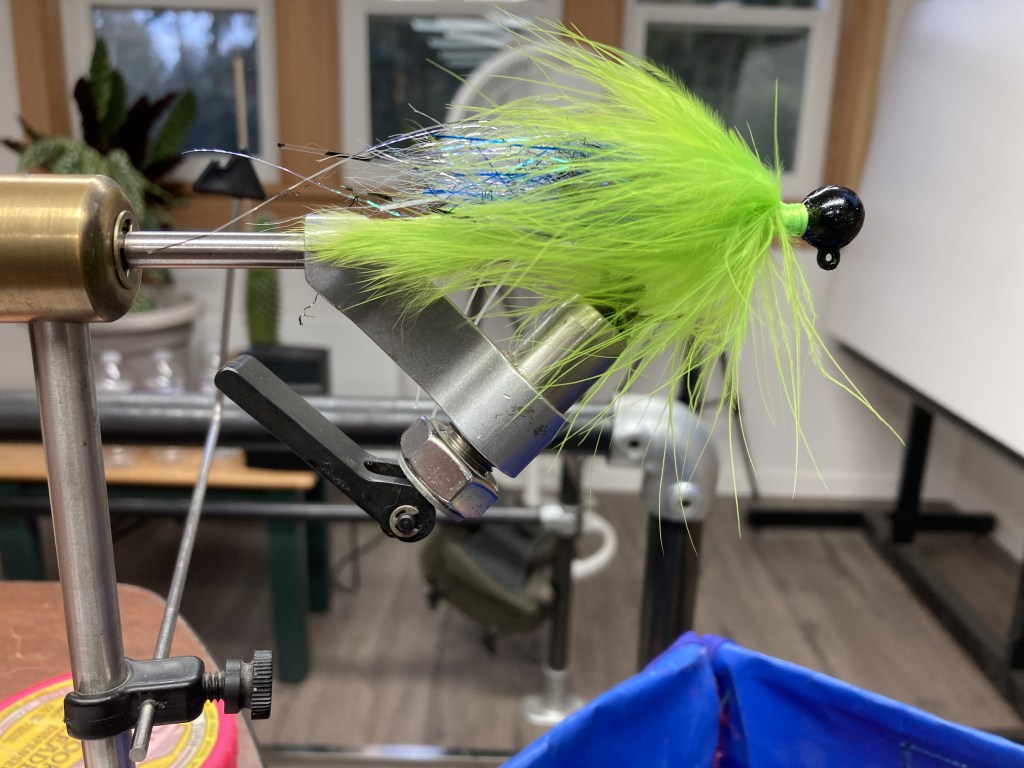

Regarding Coho salmon, my preferred hues are Blue and black, Black and purple, Blue and white, and Chartreuse and pink. As for Chum salmon, I gravitate towards Purple and pink, Purple and chartreuse, and simply Purple and flash. Regarding Chinook salmon, my favoured shades encompass purple, black, blue, orange, and pink. I prefer jigs that incorporate at least two or three distinct colours. Furthermore, the inclusion of flash and movement enhances the bait’s appeal.
Pro Tip: Nothing is written in stone when tying your twitching jigs. Be creative and think out of the box.
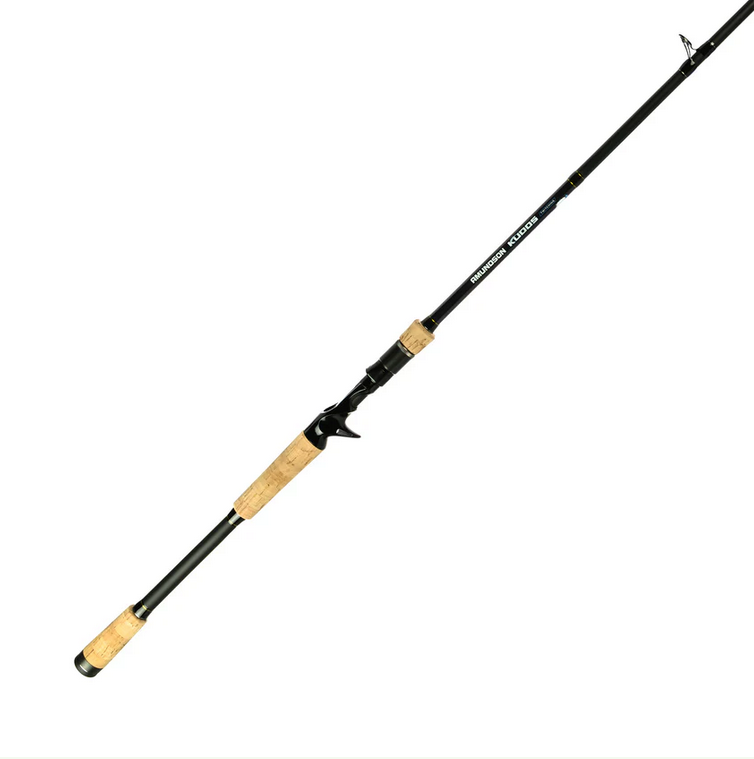
Description of twitching jig rods
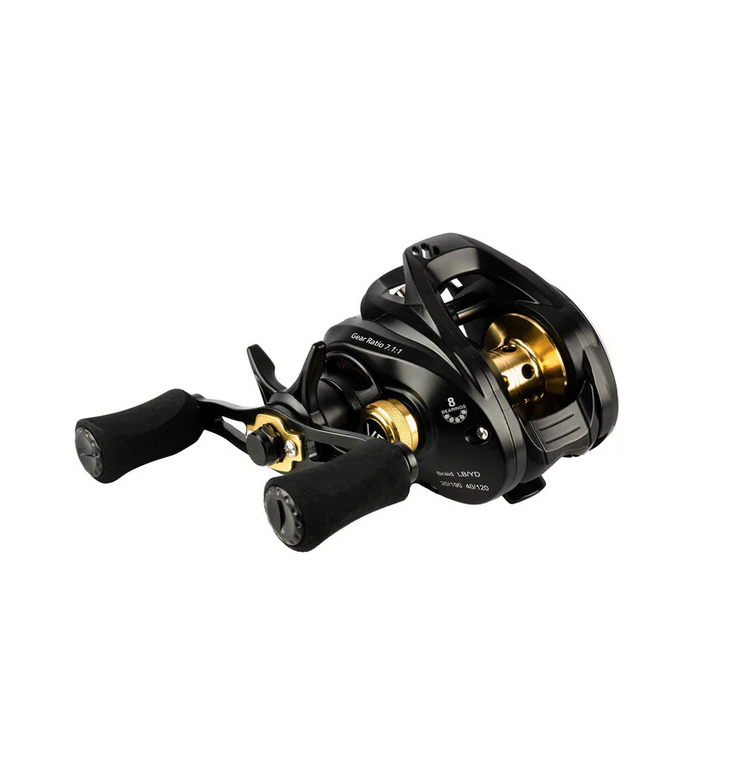
My inclination is towards a rod of shorter length, featuring a fast action and measuring 7 feet to 8 feet in length, with a line weight capacity of 10 to 20 pounds and a medium-heavy build. Using a shorter rod during extended periods of jigging will reduce stress on the wrist, arms, and shoulder. Additionally, a shorter rod facilitates a quicker hook set, providing an added advantage.
Pro Tip
Nothing is written in stone using a twitching jig, and you will find anglers varying the action of the twitch from short, slow to long, fast twitches. From slow rod movement to fast. By Casting up the river, the angler will pick up the slack line as the jig drops, but as it flows down the river, the current can keep the jig off the river bottom, so twitching without reeling in line is doable.
Twitching a jig is is must to add to your profile. Maintain the up and down W action and see the results.
Discover more from castingaline.ca
Subscribe to get the latest posts sent to your email.

