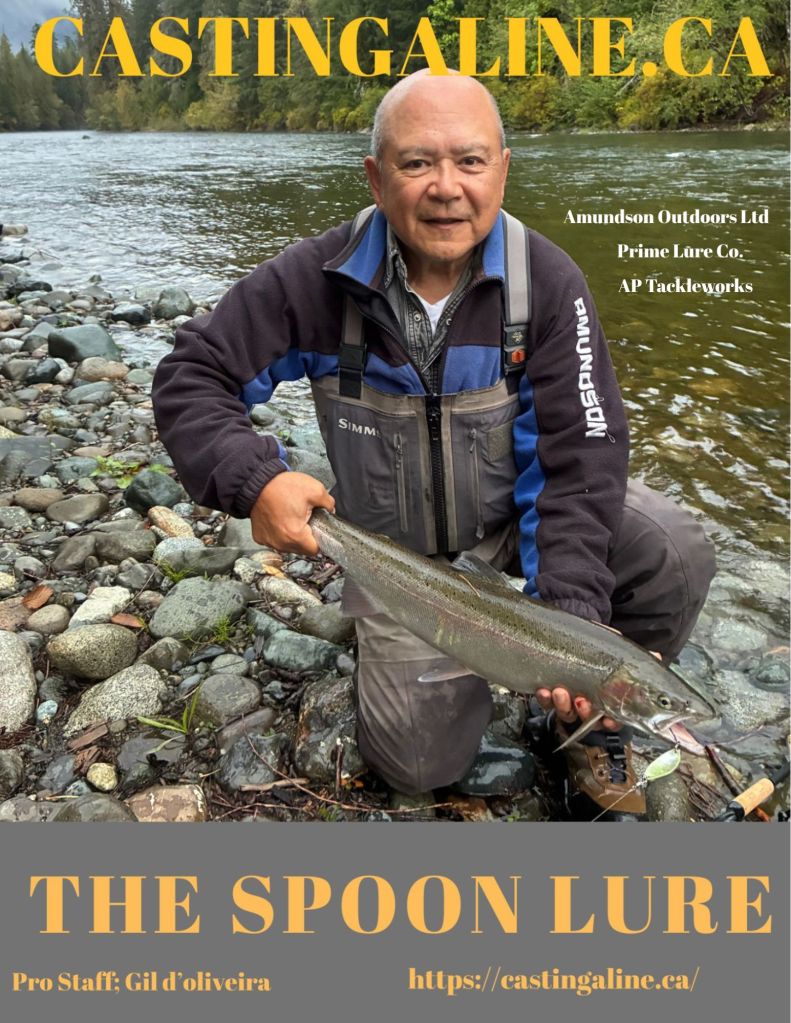
What is a spoon lure? It’s a versatile lure in the angler’s arsenal, named for its concave side that resembles a tablespoon. Manufacturers have been creative by adjusting the lure’s lengths, widths, and weights, as well as experimenting with various colours and reflective surfaces. It can be used for a wide range of fishing conditions and techniques. This versatility allows anglers to increase their chances of a successful catch.
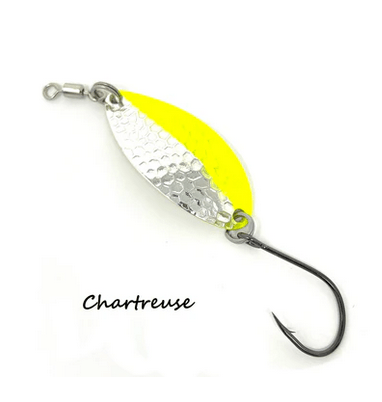
The Glory Spoon From Prime Lures Co.
Designed to attract predatory fish, a fishing lure spoon expertly mimics the erratic, wobbling movements of a wounded or distressed baitfish. As it is retrieved through the water, the lure flutters and darts, effectively replicating the characteristics of their wounded prey.
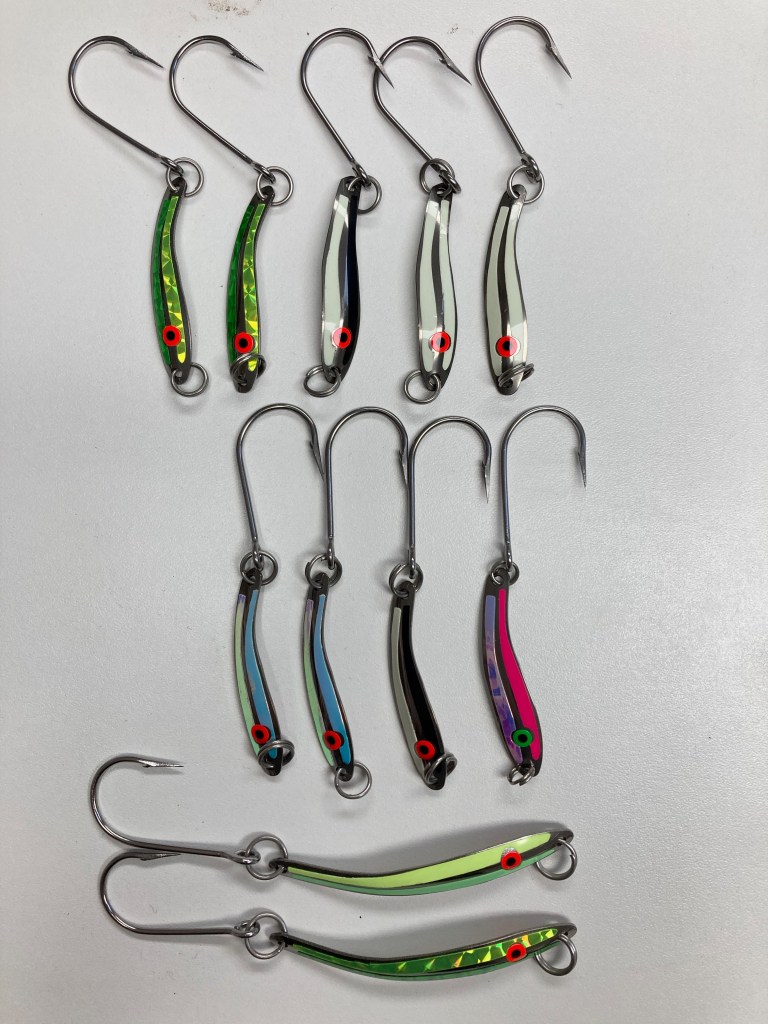
AP Tackleworks innovates with its unique spoon designs for trolling
Manufacturers have been very creative in developing various categories of fishing spoons, including casting spoons, trolling spoons, jigging spoons, and flutter spoons. The weight, width, length and depth of the concave side of each spoon can affect its peak performance at various speeds and depths while being retrieved through the water.
One thing is sure: the angler should be able to feel the motion of the lure as it travels through the water.

Prime Lure Co. Their Chartruese Glory Spoon excels in various retrieval methods
Finding a versatile lure that excels in multiple techniques is truly exciting—it’s definitely an essential addition to every angler’s collection!
Anglers can employ a variety of techniques for casting and retrieving lures, such as slow retrieval, swinging, trolling, and jigging. One innovative method that’s gaining popularity is called twitching! This approach involves letting the lure drop for a few moments before lifting the rod to create a captivating rise, then allowing the lure to drop again quickly, creating a fluttering action. This fluttering action, which is a rapid and irregular movement of the lure, can really entice fish by simulating the erratic movements of wounded prey. This is when you get that instinctive or aggressive bite reaction.
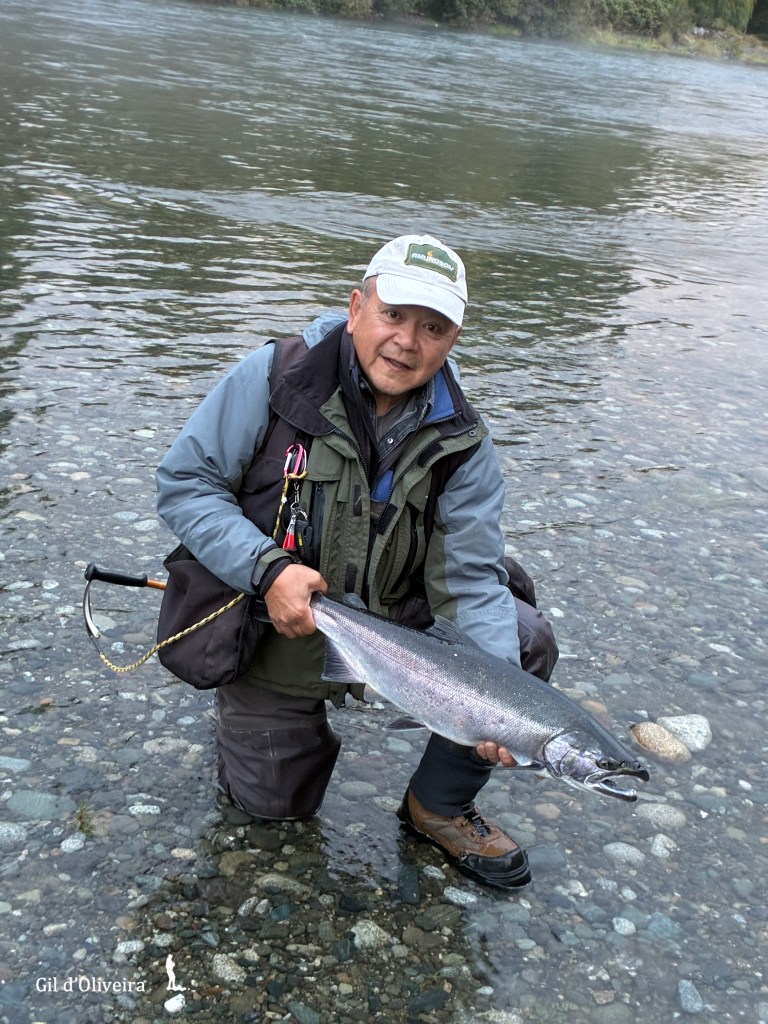
Amundson Outdoors Pro Staff Gil d’Oliveira
One time, I cast my lure slightly downstream on the Somass River, a renowned fishing spot known for its abundant Coho salmon, and allowed the current to swing the lure across the river without retrieving any line. Keeping my rod tip up, I was very conscious that if I tapped the bottom, I would raise the rod higher or retrieve a little line. As the line began to straighten out, a huge Coho salmon, a prized catch in these waters, couldn’t resist the lure.
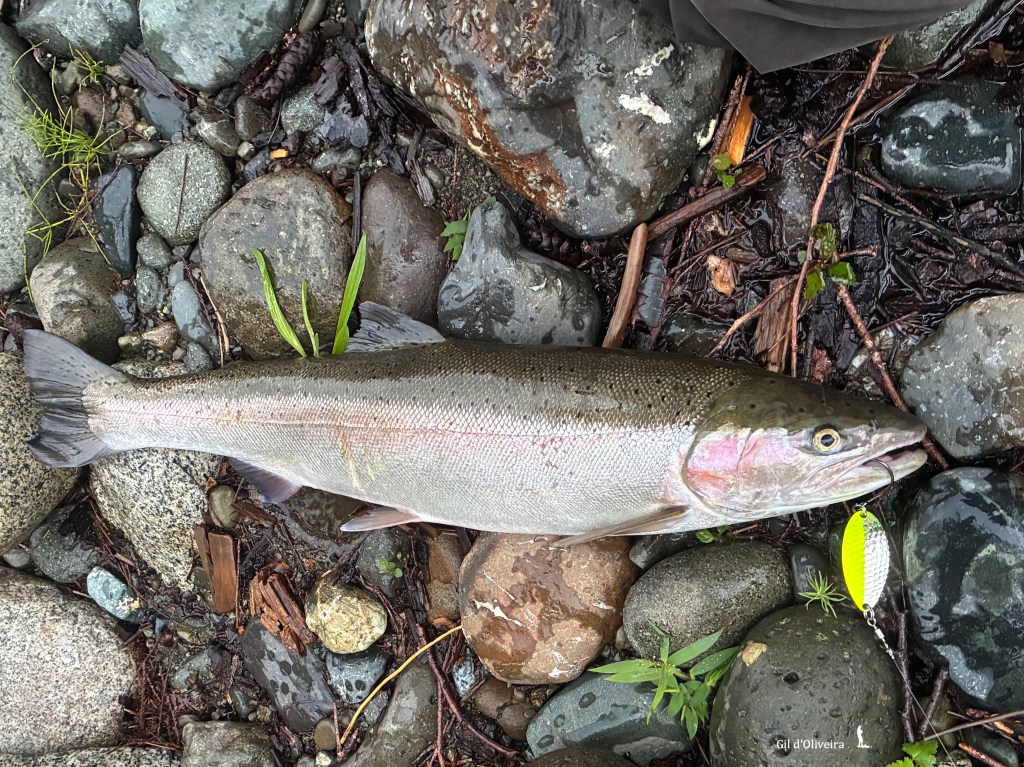
A summer steelhead and the Glory Spoon 5/8 oz.
On another occasion, I tossed the Glory Spoon directly across the river. After it landed, I counted 2 seconds, letting the lure drop and then quickly raising the rod tip, lifting the lure, and then allowing it to drop again with slack line that allows the lure to flutter as it sinks. I would repeat this as the lure moves downriver. On the secound drop is when a summer steelhead couldn’t resist biting.
Whatever spoon lure you use, experiment with your retrieve. You might be pleasantly surprised at the outcome.
Discover more from castingaline.ca
Subscribe to get the latest posts sent to your email.

