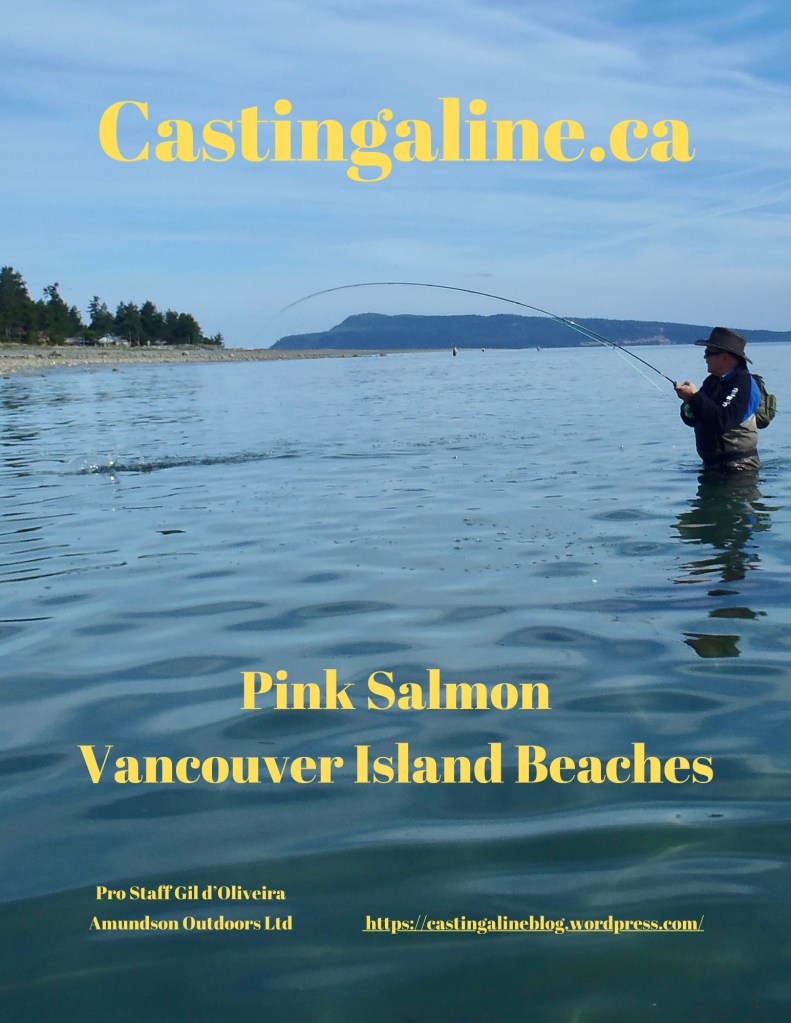
As we approach July, anglers are dusting off their rods and reels in anticipation and preparing to hunt for the pink salmon on the East Coast beaches of Vancouver Island.
Young and old alike can enjoy this fishery thanks to easy beach access, and it requires minimal gear: waders, a rod, a reel, and flies or lures.
Pro Tip
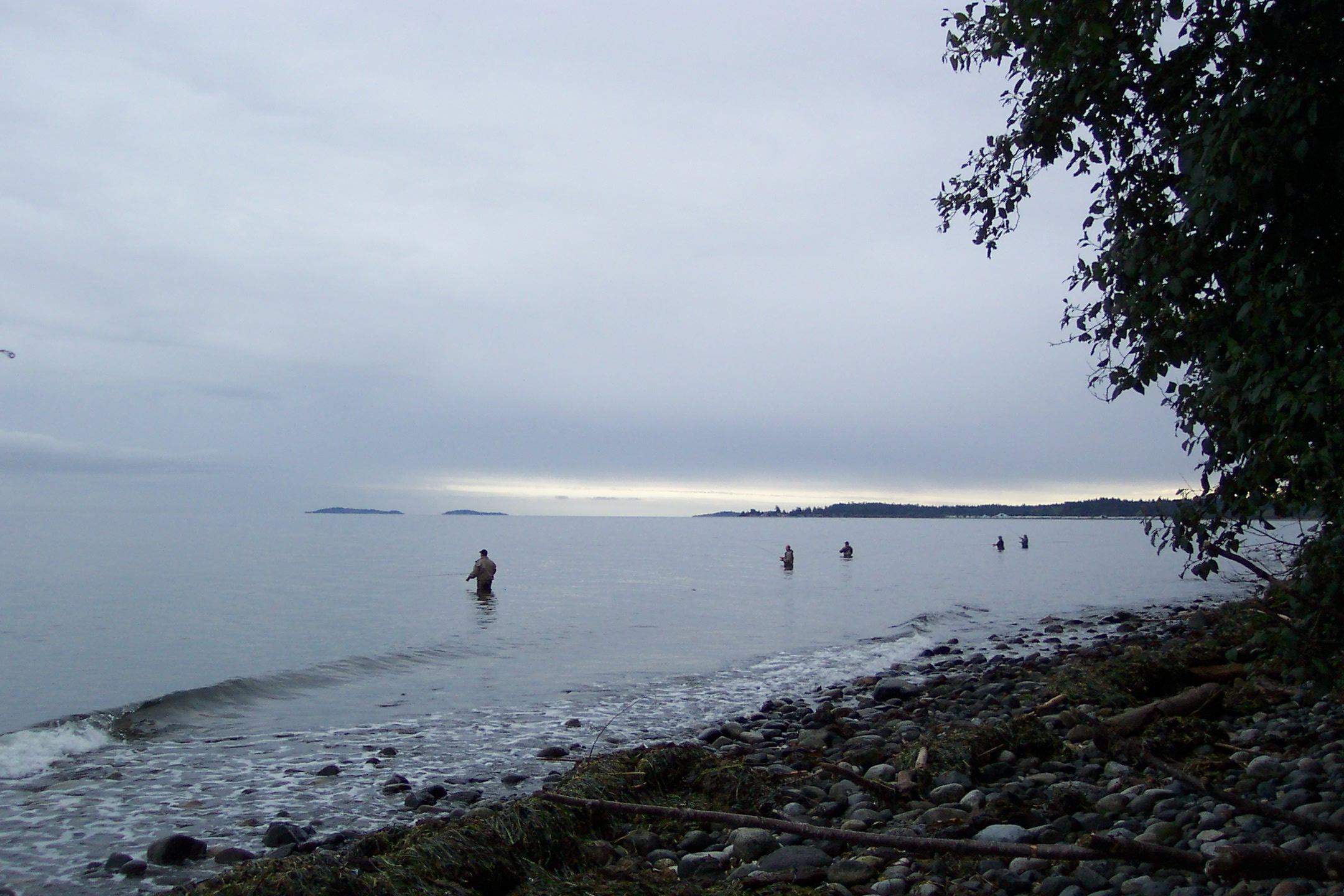
Under inclement weather conditions, such as heavy rain, runoff from beaches, and overflowing culverts can cause salmon disorientation. Due to similar scents, salmon may linger in unfamiliar waters for extended periods. From my observations, these fish can be kept far from their native habitats for extended periods.
The Pink Salmon migrates to their birth waters after living in the open ocean for several years. They arrive and stay in or near the estuary of their river, stream, or creek that leads to their spawning grounds. This duration is often affected by the weather. If we have heavy rain and rivers are at high flow, they will quickly move upstream from the estuaries. Beaches near the estuary will often hold salmon before entering their natal water.
Knowing the tides is essential, as some beaches fish best at low tide and others at high tide. At the beginning of the stage, they are voracious eaters who try to gain as much weight as possible, but as time passes, they stop taking in nourishment. They will eventually undergo physiological changes to adapt to the freshwater of their natal stream, and they will then be difficult to catch.
The pink salmon lives for only two years. They are the most abundant salmon in the Pacific Ocean. Pink salmon can be found throughout much of the North Pacific Ocean, including Washington State, British Columbia, Alaska, Japan, and Russia. Salmon return to their native waters after two years of hatching. Consequently, the two-year cycle of the little pink salmon makes it easy for hatcheries to see positive results quickly.
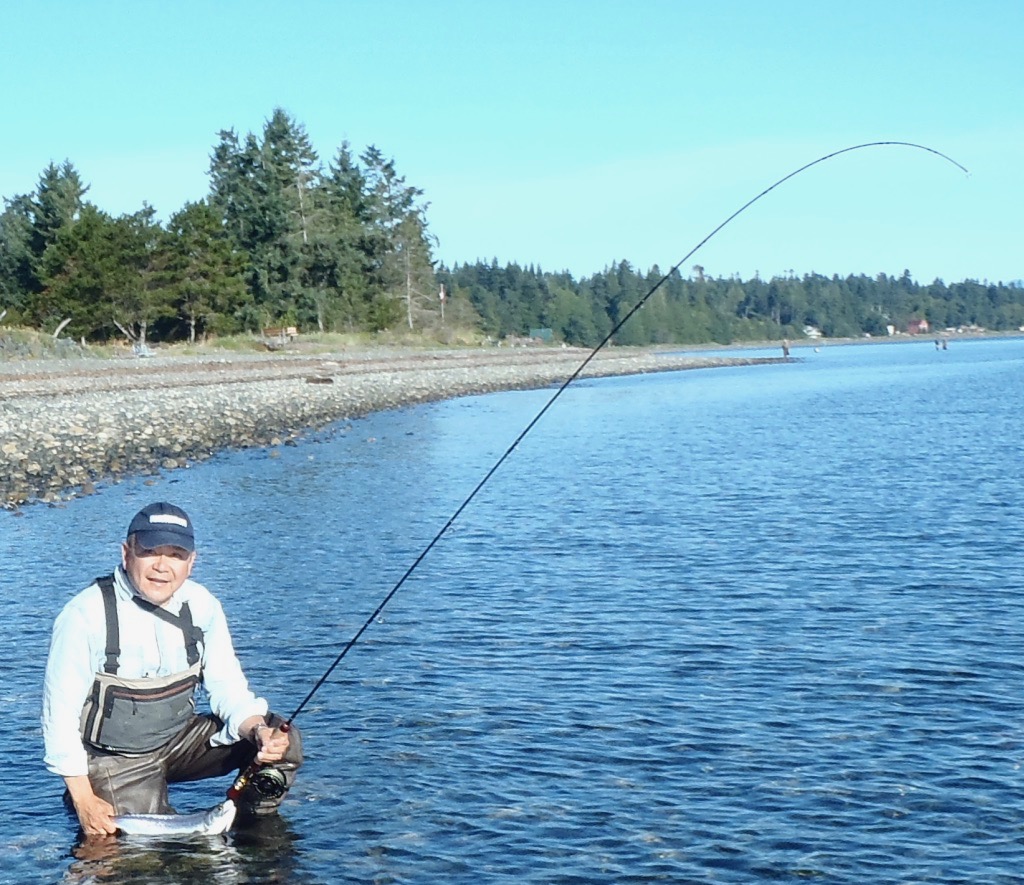
Amundson 8wt Miramichi Demon rod with Trend X3 Sealed Drag Fly Reel
Most anglers will mention that pink salmon runs only occur in odd years. That isn’t entirely accurate, as pink salmon runs can occur every year. Geographical factors and climate change can play a role.
For example, Alaska’s dominant pink salmon run occurs in even-numbered years in the United States. Still, the Fraser River in British Columbia, Canada, has been the dominant river for odd years.
The east coast of Vancouver Island is fortunate to have a well-established salmon population. In the past, their spawning cycles occurred every other year. However, thanks to the implementation of salmon hatcheries, specific rivers and streams can now be chosen for targeted runs. This is achieved by importing pink salmon roe from dominant cycle locations with even-year runs.
Pro tip
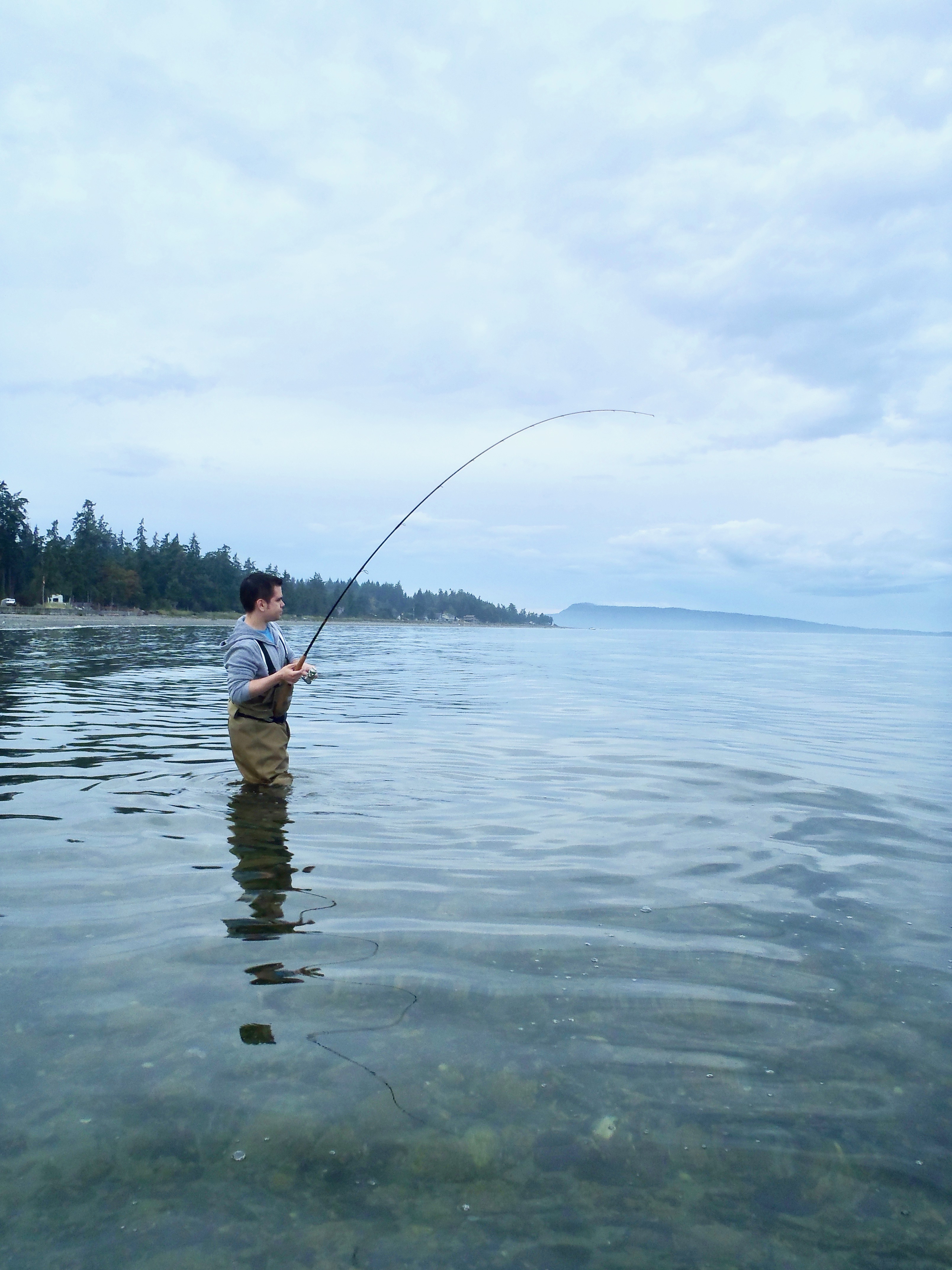
Carrying a small net allows the angler to reduce the fight time and have a quicker release. Another benefit: If you harvest the salmon, it is best to dispatch it quickly, cutting the gills to bleed it, using a rope tied to the angler’s waist and allowing the salmon to cool in the ocean water. It also allows the angler to maintain his position while he fishes without having to wade back to shore to land the salmon, as another angler will move in to improve his chances.
The pink salmon, known for their size, possess formidable strength during their short runs. These fish are commonly referred to as “Humpies” due to the prominent hump that males develop during their spawning cycle. This cycle entails a two-year journey back to their native stream. While some populations spawn in even calendar years, others follow an odd-year pattern. Nile Creek hatchery has developed Pink salmon on Vancouver Island’s east coast yearly. Since the hatchery was built, it has created a run every year, making Nile Creek and its estuary a popular stream for anglers of all ages—the estuary, with its numerous beaches, is easily accessible to anglers. In addition to fly fishing, gear anglers have used lures or flies attached to torpedo floats to reach them.
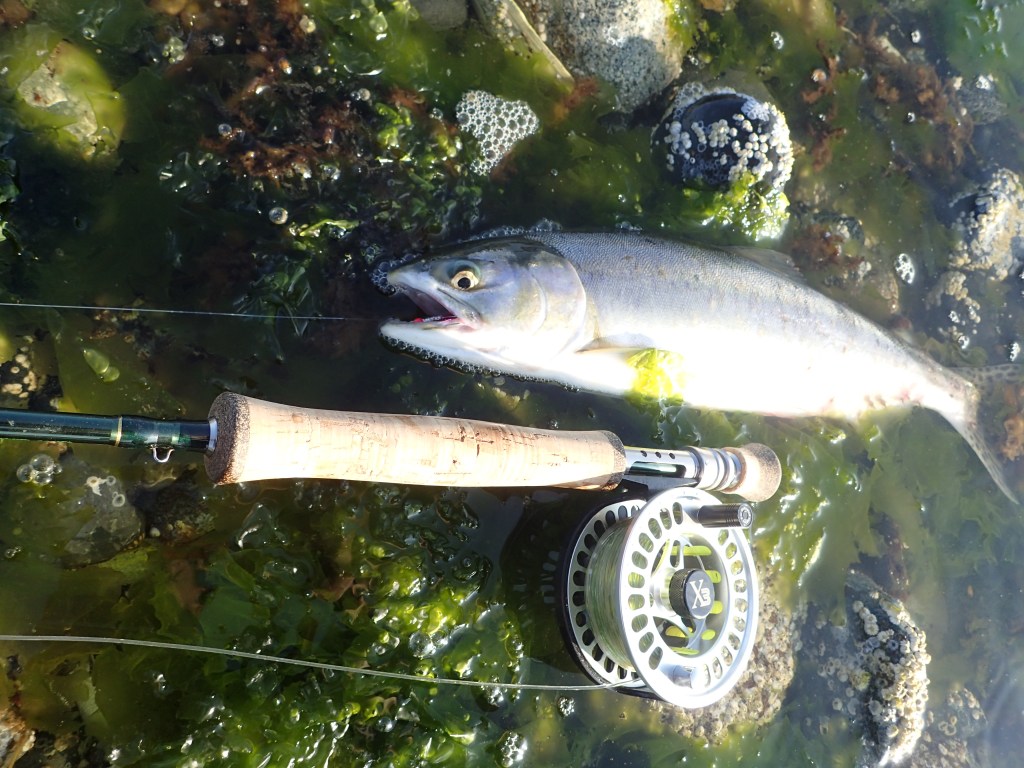
The fly angler
Fly rods used for single-handed fishing are typically seven- or eight-weight rods approximately nine feet long. The two-hand switch fly rod development allows anglers to cast more comfortably, minimizing arm and shoulder strain. They will average ten to twelve feet long. If you’re catching and releasing the pink salmon, it is best not to use a lighter rod, 6wt or less, as you want to land and release the salmon quicker, so it can recover.
Floating lines with sink tips are the most widely used fly lines. I have found success using an entirely transparent intermediate sink line.
Casts by fly anglers are frequently exposed to destructive winds, currents, and waves. I like to use an eight-weight fly rod to cut through the wind and have enough strength to land the pink salmon rapidly. A lighter-weight rod prolongs the struggle longer than it ought to, minimizing the pressure on the small fish during catch and release.
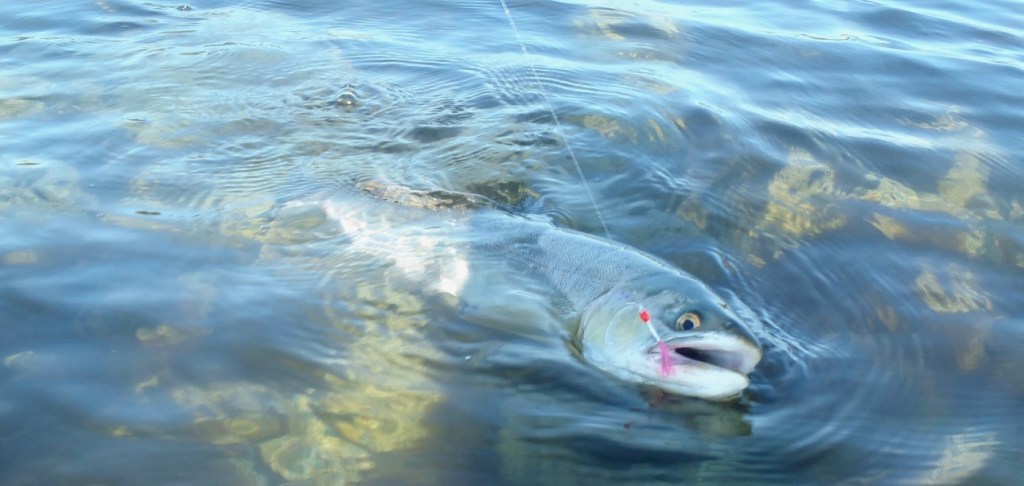
The most effective way to present the fly is by using a slow retrieve. It’s quite delicate when the Pink Salmon bites, so the angler should gently but confidently lift the rod to set the hook. However, be ready for a rapid burst of power. Without disc brakes on the fly reel, the angler might have a painful knuckle bashing.
If you want to keep the pink salmon fresh, the ideal spot would be in the chilly ocean, inside a netted bag securely fastened to your waist. Pink salmon meat is fragile and can spoil rapidly, so it’s crucial to bleed the salmon.
I like to fish during high tide. This is when the angler can cover deeper water and a larger area. A common mistake new anglers make is wading too deep right away, which scares off the salmon cruising close to shore. As the day progresses and the tide rises, the fish will move further away from shore.
I use the Amundson Wind Warrior nine-foot, 8-wt fast-action fly rod with the Trend X3 sealed drag fly reel. I often try to make the presentation as simple as possible, with one or two kinds of salmon fly: a little pink colour and some silver tied on a number six, number four, or a number two barbless hook. I use a clear, slow-sinking fly line with eight to ten feet of the tapered leader. Other anglers have success with floating fly lines and with floating fly lines with low-sinking tips.
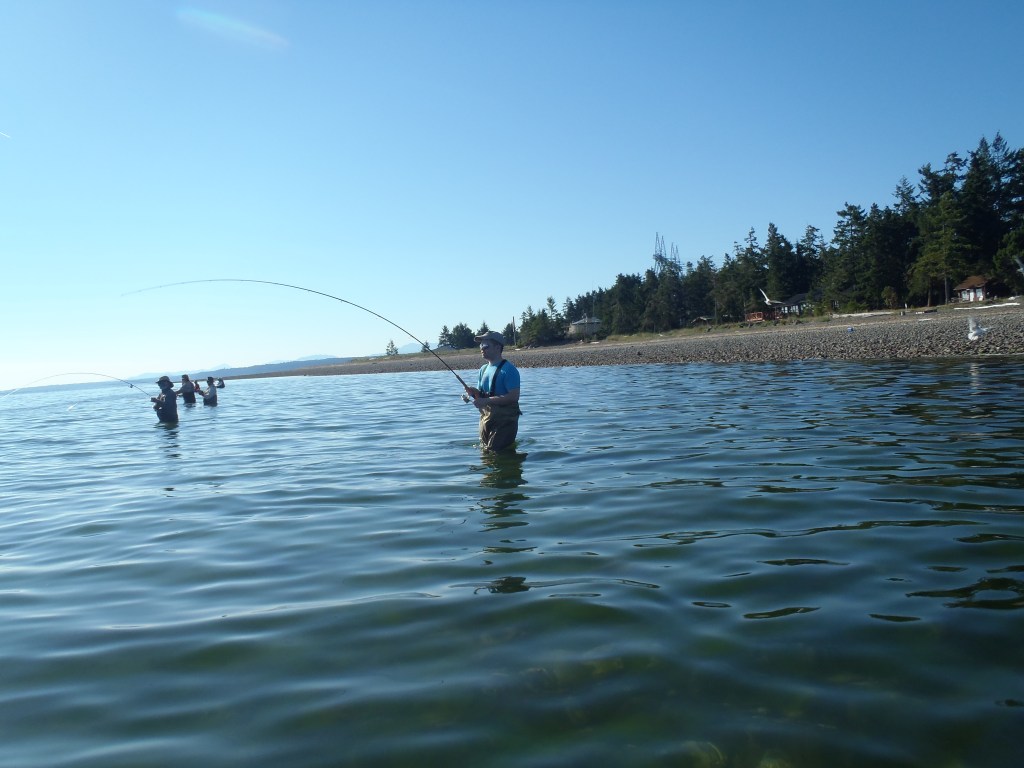
The Gear Angler
A light spinning rod with a spinning reel loaded with an eight or ten-pound test is all that is required. Small hard lures like spoons or spinners, or all-metal lures with erratic action and vibration. The common colour is pink, but I have succeeded in blues, silver, and orange. The key is to present the lure slowly.
The gear angler can also adapt to a fly by adding a small weighted float. The distance from the float to the fly should be around three feet. Again, a slow retrieval is a must.
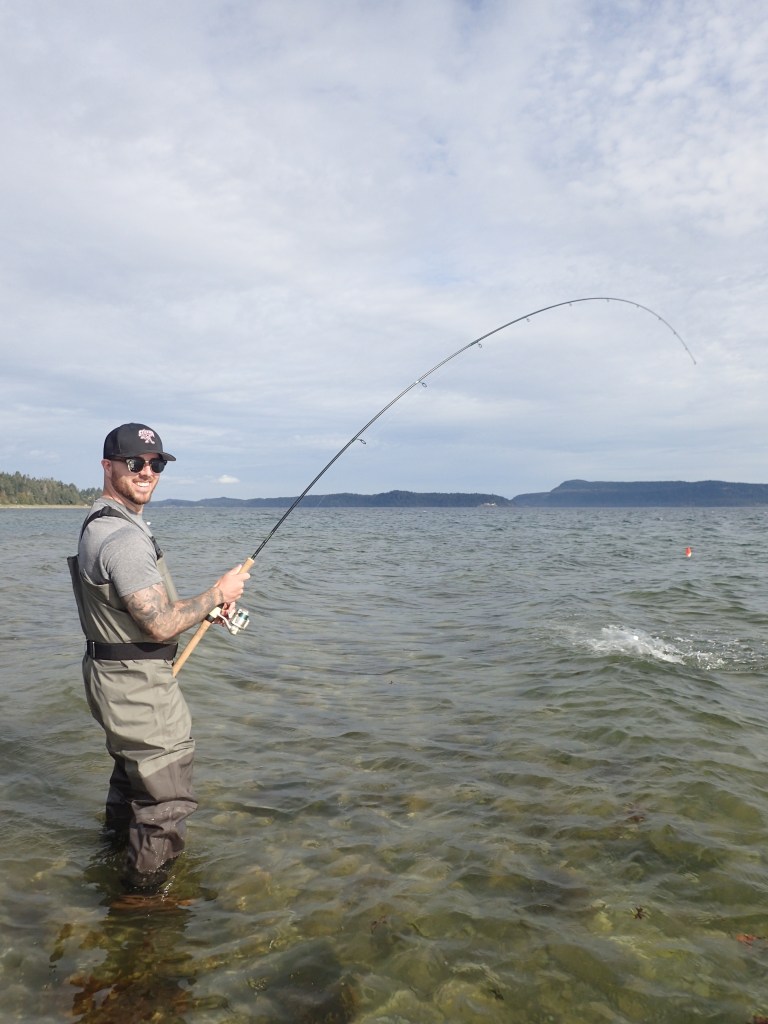
Pro Tip
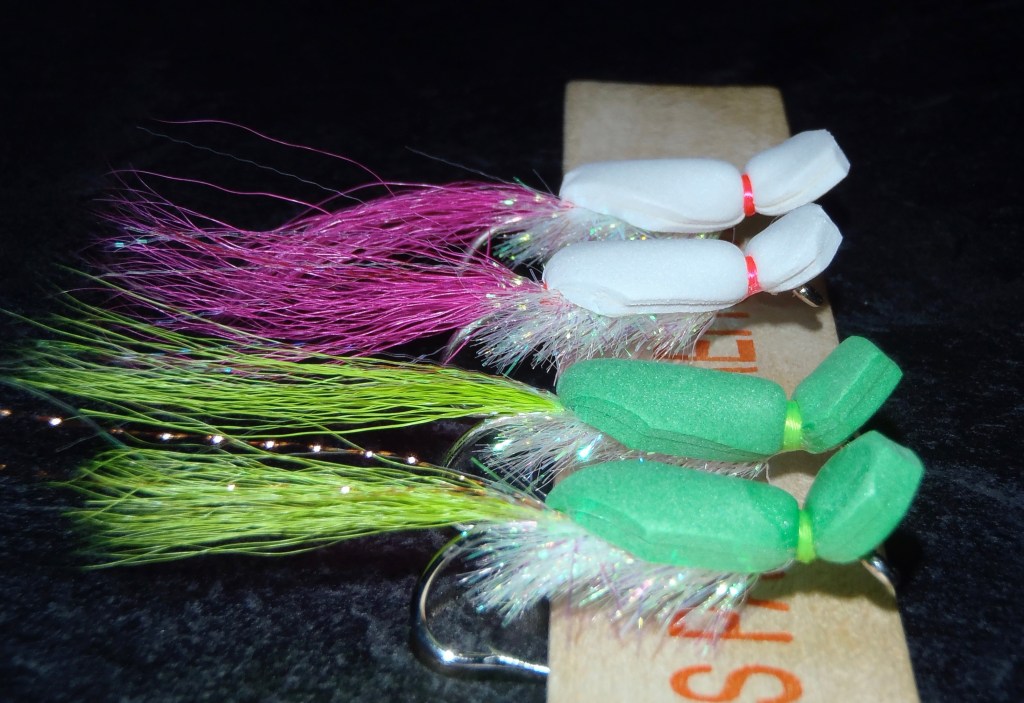
Even though most Pink Salmon are caught below the ocean surface, anglers can use surface popper flies and floating lures when schooled tightly. Seeing the salmon react to the angler’s lure is very exciting.
Waders and Boots
Waders and boots are essential accessories. The ocean is frigid, and neoprene is often used for its insulating qualities. However, when not in the water, neoprene can be very uncomfortable during hot weather.
Breathable waders are a better option during warmer days. These waders are lighter and will release excess body heat that builds up. Fact: air molecules are smaller than water molecules and pass through the wader’s membrane. Breathable waders require layered clothing for insulation; this also helps absorb moisture generated by the legs.
Wading boots offer excellent ankle support. You often walk on barnacles, sharp edges, weeds, boulders, and slippery terrain, and metal studs on the soles of the boots can increase your stability.
The season approaches, so prepare to start the hunt on Vancouver Island’s East Coast beaches.
Discover more from castingaline.ca
Subscribe to get the latest posts sent to your email.

