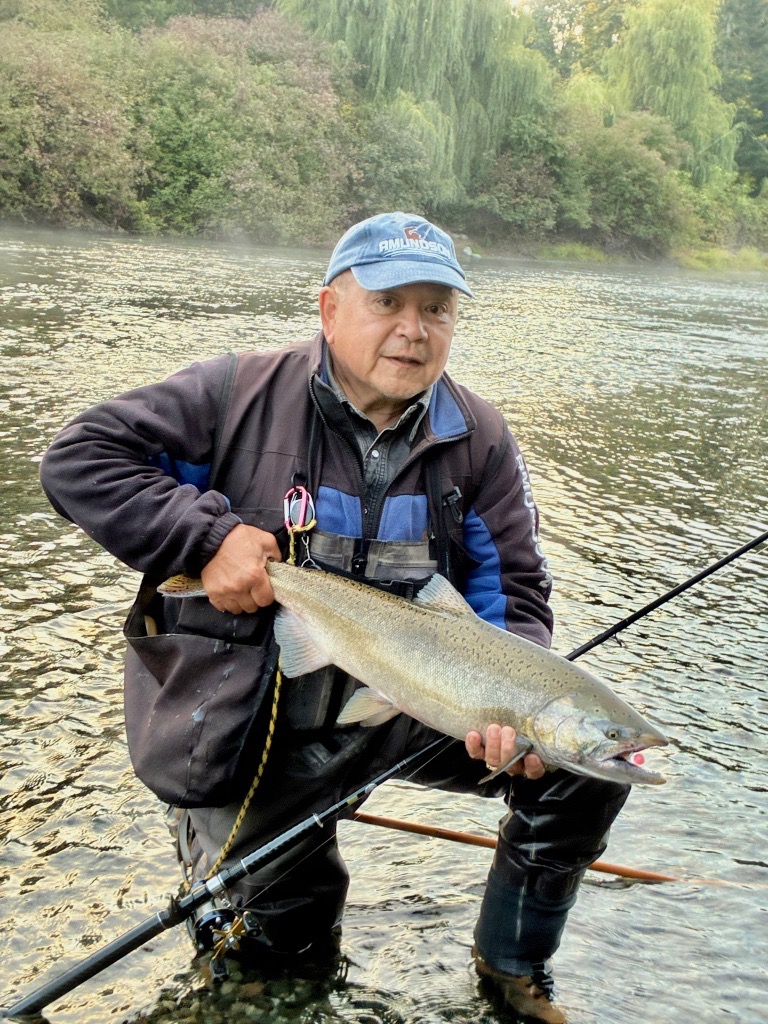
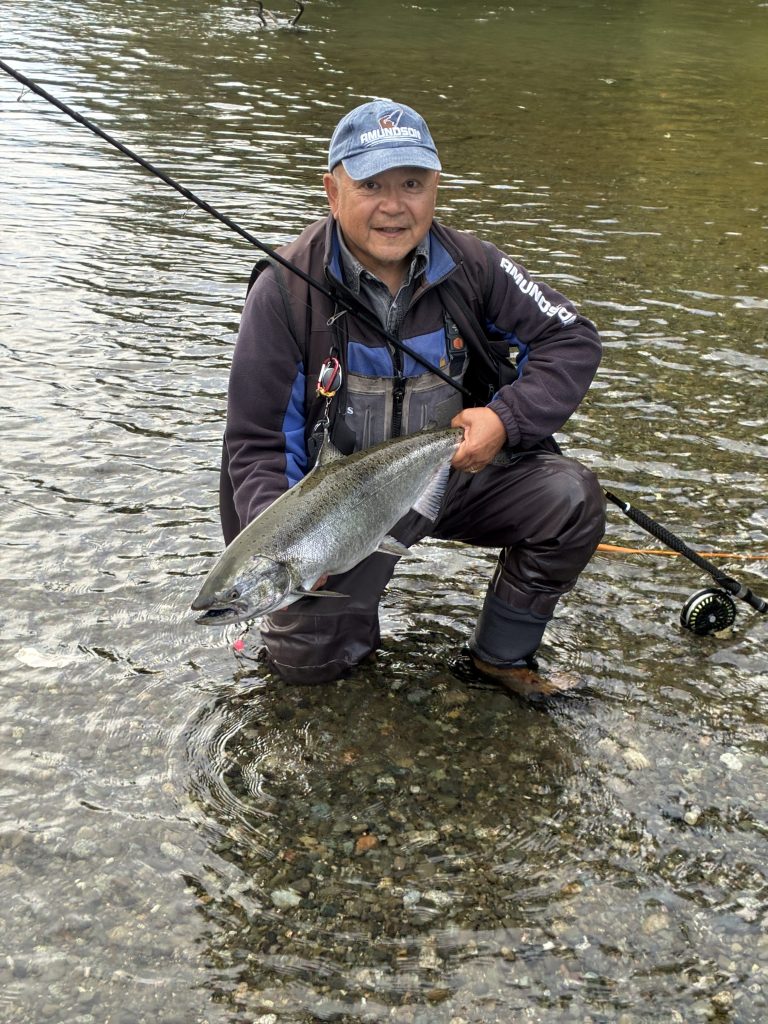
We camped on the Somass River for four days. River conditions were challenging: low, clear water, sunny weather, and slower-than-usual flow. Larger setups were ineffective, as the salmon were cautious. We had to lighten the leaders and the main line. We used 10- and 12-pound fluorocarbon leaders for the large spring salmon.
For the first two days, I used the Amundson Outdoors Kudos Strategy X 13-foot float rod paired with the TCP X3 Center pin reel. The extended rod length let me keep more line off the river surface, enabling a smoother drift. Notably, running a free-spinning reel with a 1:1 ratio retrieve and no braking mechanism beyond palming the reel is a major challenge when targeting these salmon.
During the last two days, I switched to the eleven-and-a-half-foot Kudos Strategy Casting rod equipped with a level-wind reel.
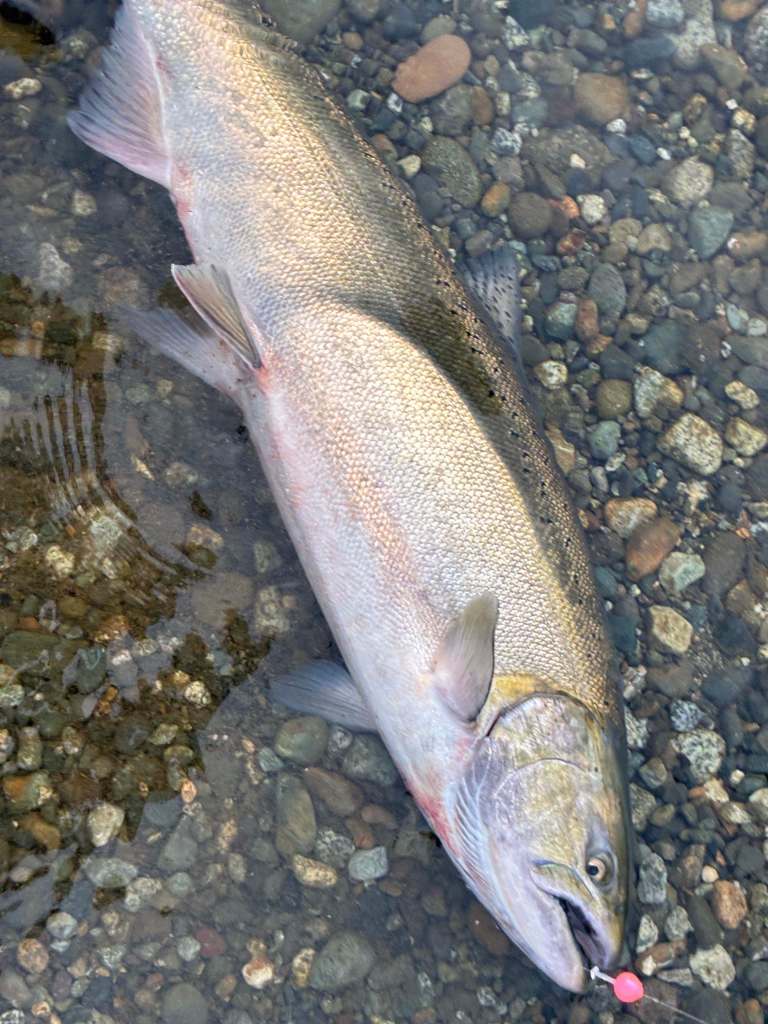
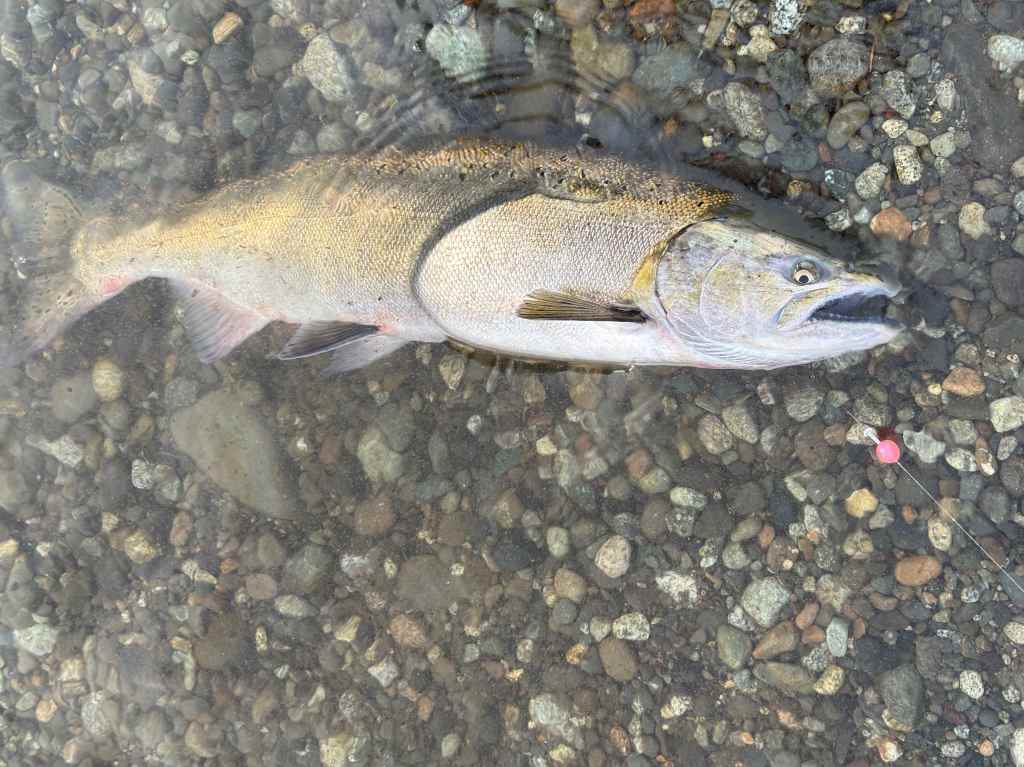
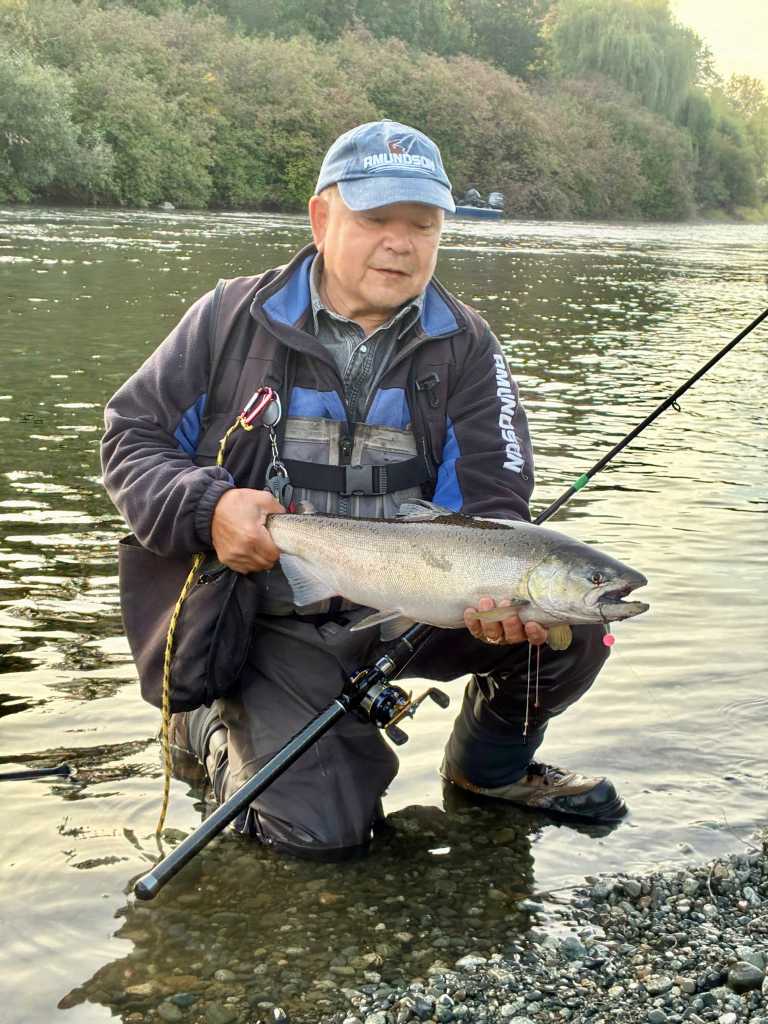
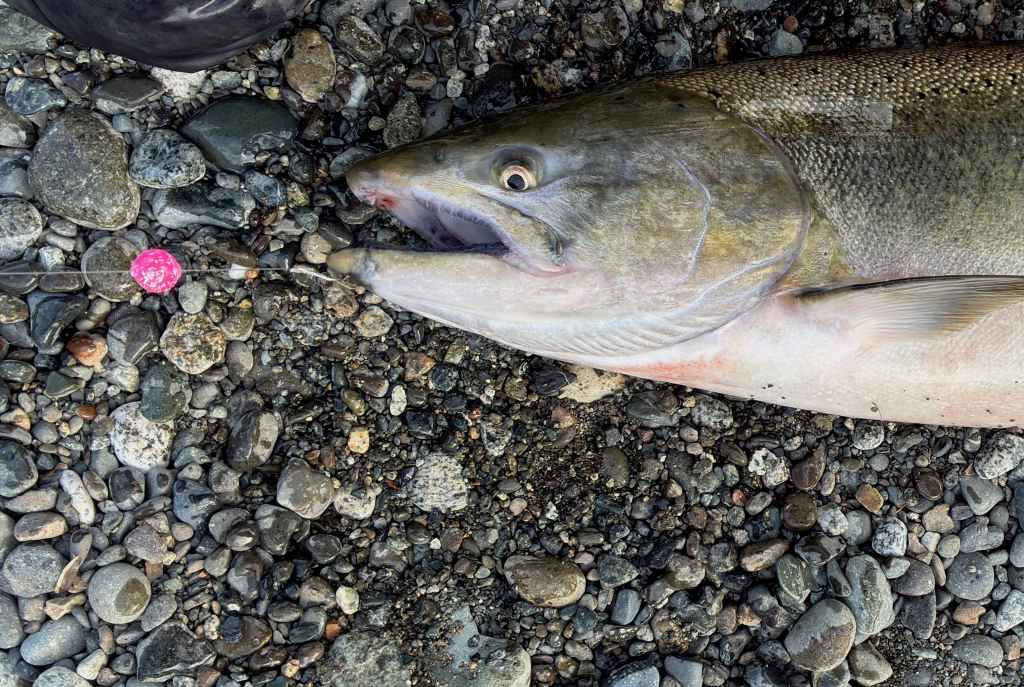
This season typically brings heavy rain and high, fast-flowing water, when larger beads—16mm, 18mm, and 20mm—are effective. Due to the current conditions, they reacted to the smaller beads.
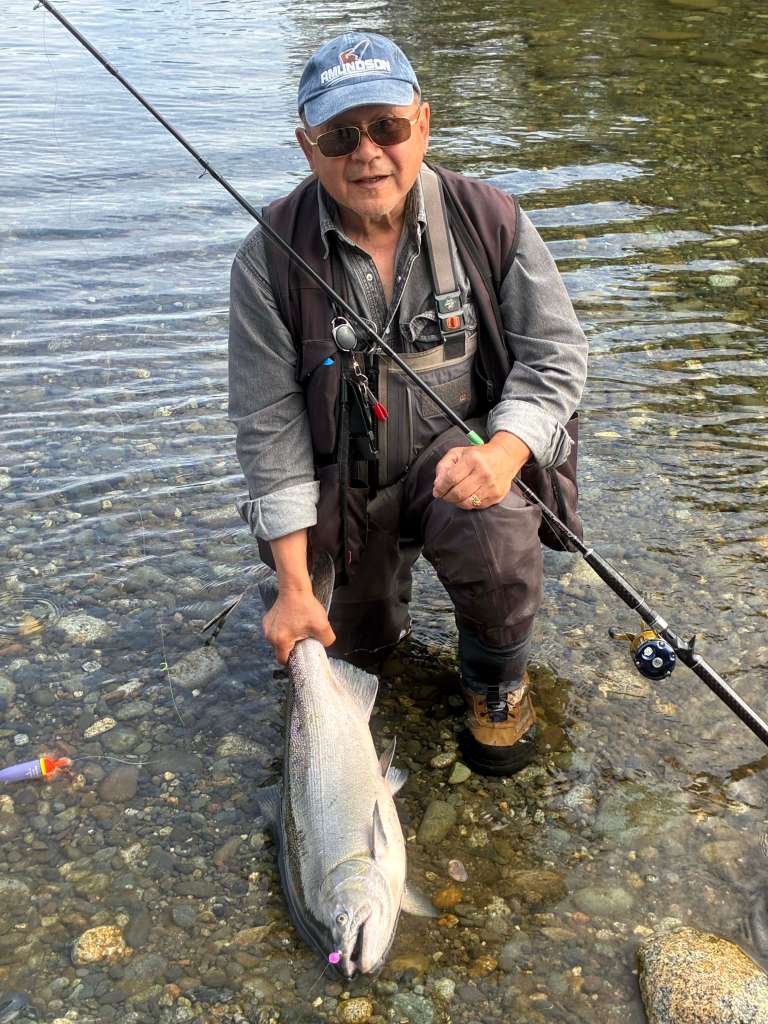
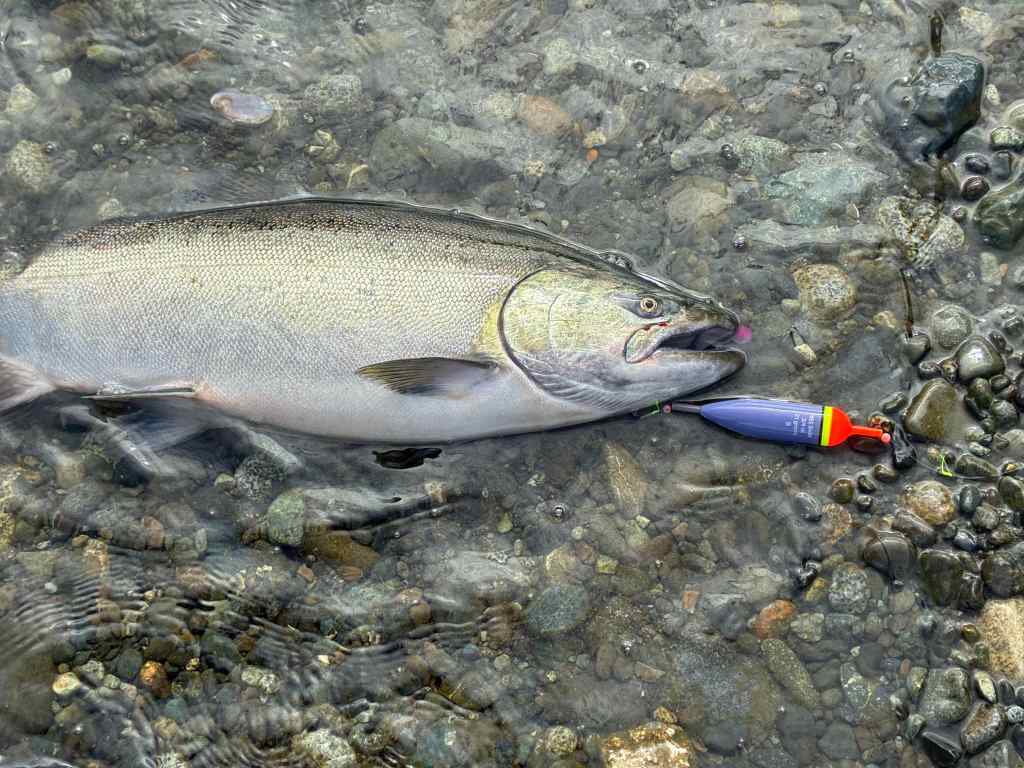
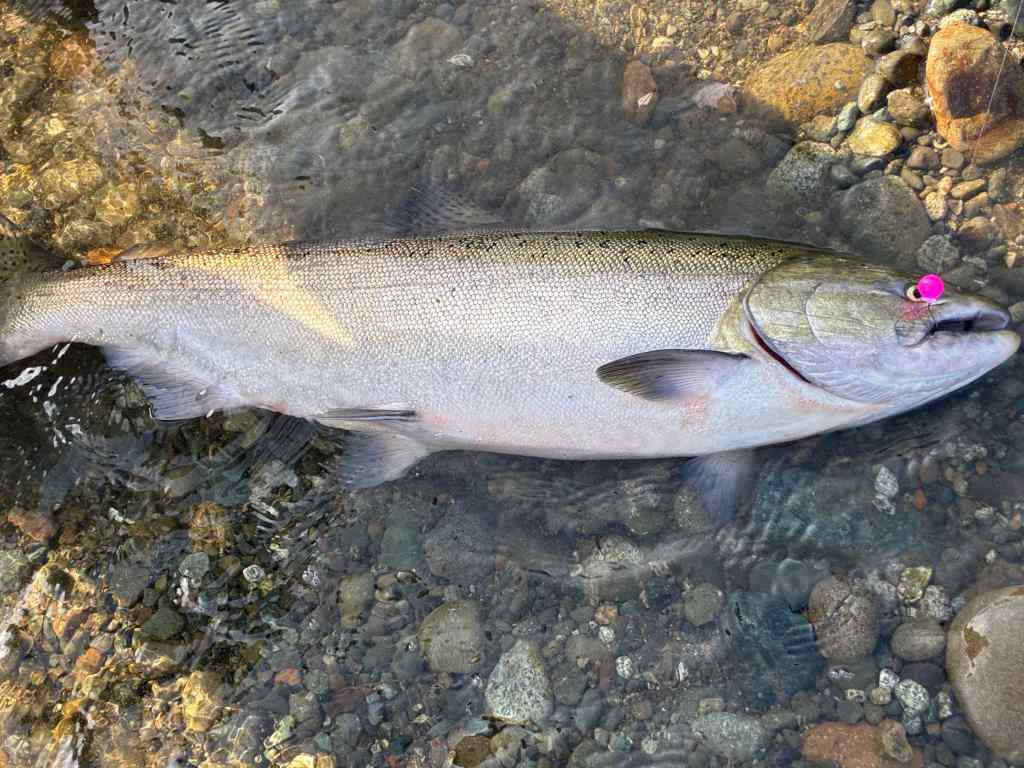
The most effective BnR beads were 14mm and 12mm in colours such as Cerise, NW Steelheader, Mottled Pink, Pink Sheen, Mottled Cerise, HotSnot, Blue Goon, PinkCandy, and Soupy. We also reduced our main line to 15 pounds.
Smaller BnR beads outperformed roe 90% of the time, likely because roe and larger beads were too large for these conditions. In my experience, roe is most effective in low light, while beads perform better as daylight increases. However, this year, the colours Green Hot Snot and Blue Goon beads were most effective during low light in the morning.
I always pack both cured roe and beads to lure in salmon. When I want to switch, I simply slide the bead up to the top of my 2.5-foot leader, add roe to the hook with a bait loop knot, and I am ready to go—no need to re-rig. I find that keeping the bead about 2.5 feet above the roe adds extra appeal. When I want to fish just the bead again, I slide it back down and set it two finger widths above the hook.
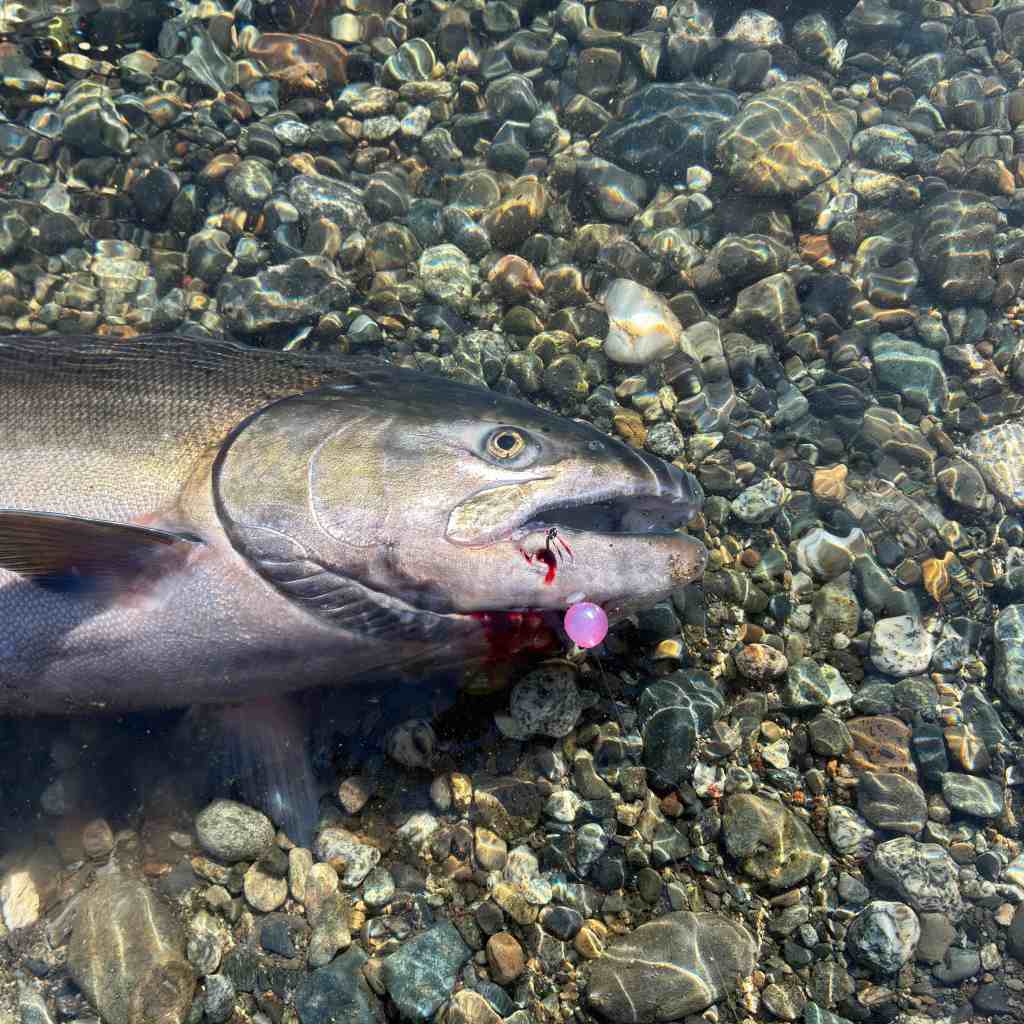
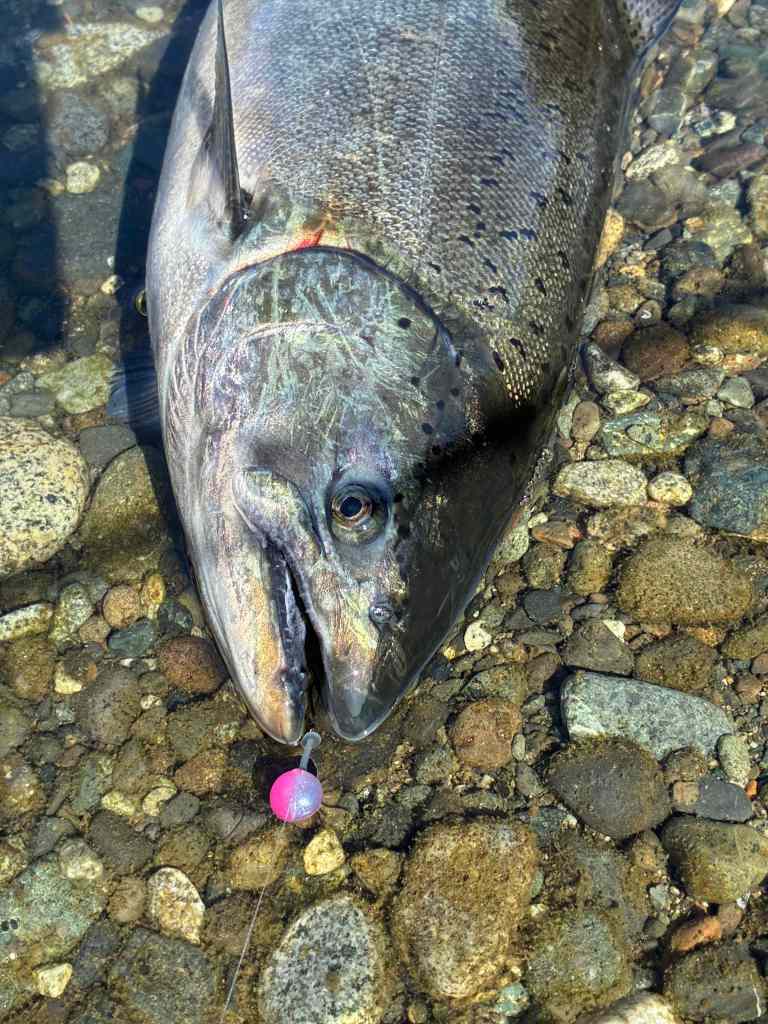
We also made another adjustment this year. I typically use the short float technique, where the bead drifts at mid-column depth in the river. With lower water levels, we let the bead drift near the river bottom and used lighter floats, rated for 21 grams, and 1/4-ounce weights.
Pro tip: Keep a variety of bead colours and sizes, and be prepared to use less drifting weight. Adapting to current conditions is essential for achieving positive results.
Discover more from castingaline.ca
Subscribe to get the latest posts sent to your email.

