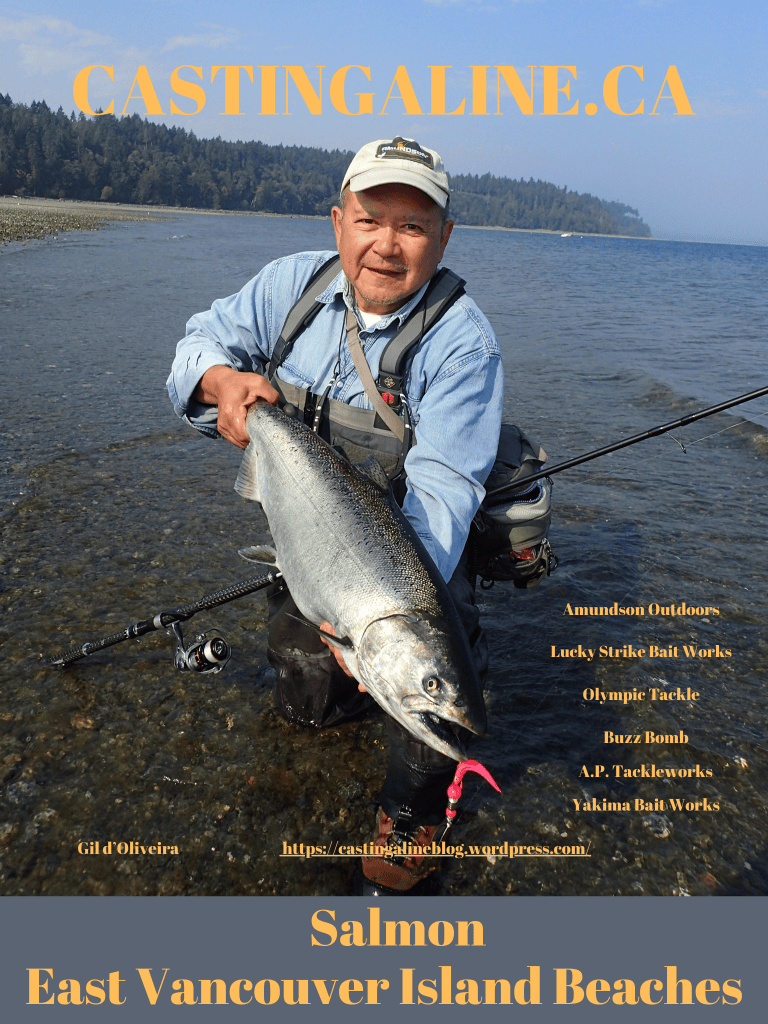
Nothing is more exhilarating than the pursuit, discovery, approach, and culmination. But this isn’t traditional hunting; it is beach fishing for salmon along the East Coast of Vancouver Island.
A distinct sense of mystery comes with approaching a body of water and contemplating the aquatic life within. It is hard for an angler to resist the urge to look for signs of rising fish when passing a river, lake, pond, or beach. Being on the water presents unique challenges and opportunities for exploration.
Vancouver Island is widely recognized as a premier destination for anglers. Both freshwater and saltwater environments provide abundant opportunities. With over 10,000 lakes, rivers, streams, creeks, and beaches, Vancouver Island offers extensive possibilities for fly fishing and gear fishing enthusiasts.
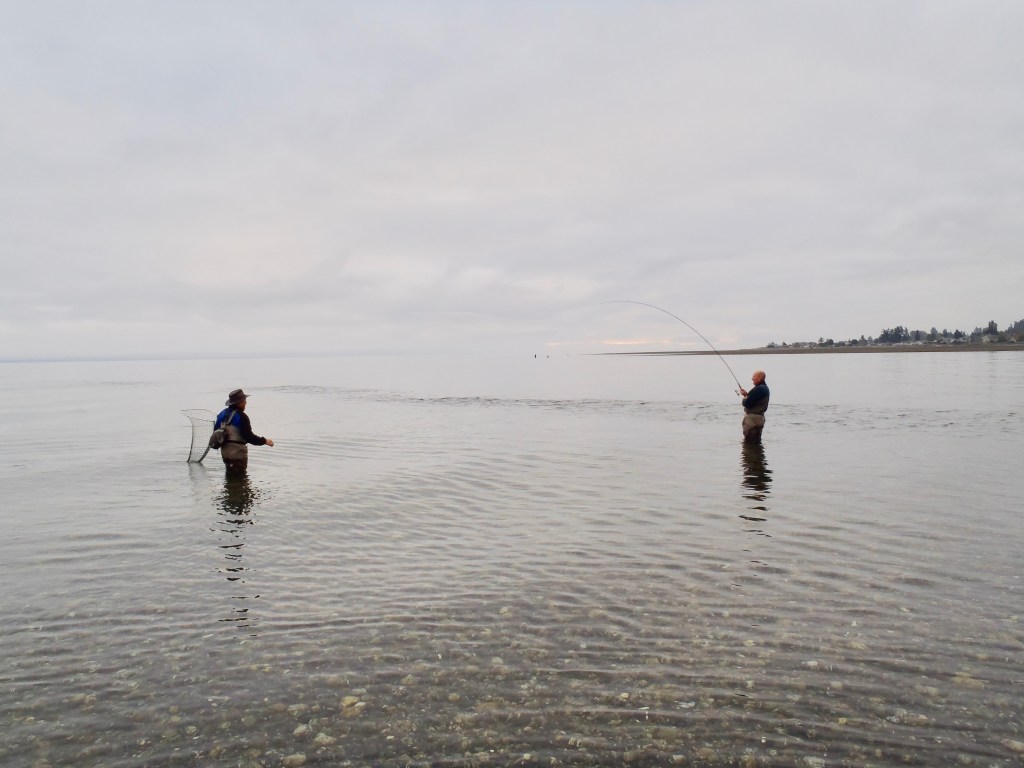
Light-tackle saltwater beach fishing for salmon is the fastest-growing technique among local anglers. The season begins in July and August with Pink salmon and transitions to more abundant species such as Coho, Chinook, and Chum salmon from September through November. These species move close to shore and into the estuaries of their natal streams. This approach lets you target high-cost salmon without the significant expense of a boat.
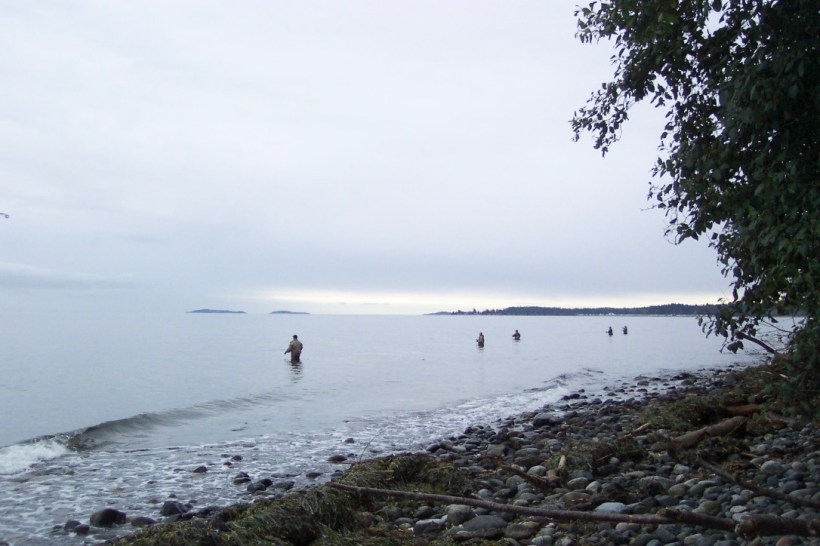
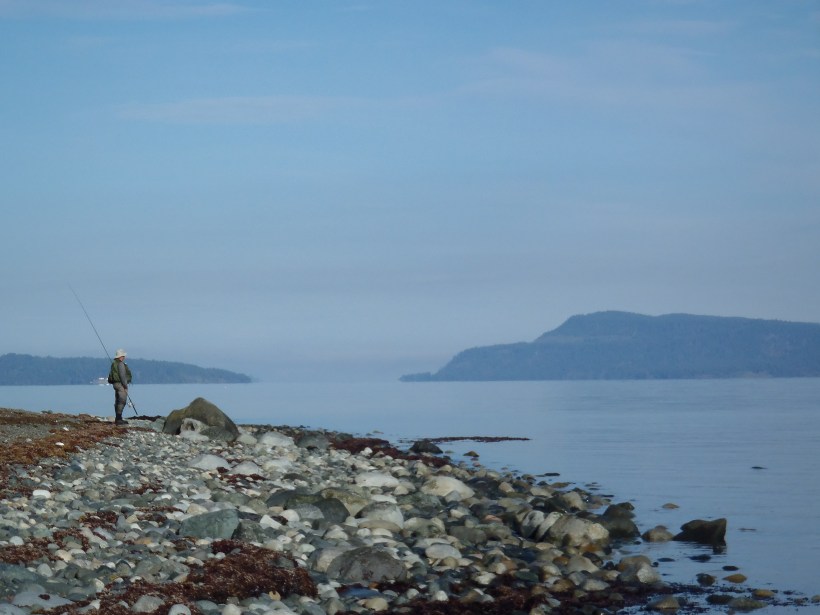
As salmon approach their natal streams, they congregate around the estuary in preparation to enter freshwater and spawn the next generation. This behaviour is called staging.
Staging areas can extend over long distances along the beaches adjacent to estuaries. Occasionally, salmon will remain in regions without a stream, influenced by runoff from heavy rains. The scent of freshwater reaching the beach can confuse them, causing them to hold in these areas until they resume their search for their natal waters.
As salmon stage near their streams, other transient salmon migrating to different locations may temporarily join them. It is unclear whether this behaviour stems from confusion or social tendencies. Most will eventually continue to their respective streams and rivers, although occasionally, an individual will enter waters that are not its birthplace. This process contributes to genetic diversity within salmon populations.
Over the past decade, salmon fishing on the East Coast beaches of Vancouver Island has grown in popularity, particularly with longer rods and ultra-light tackle.
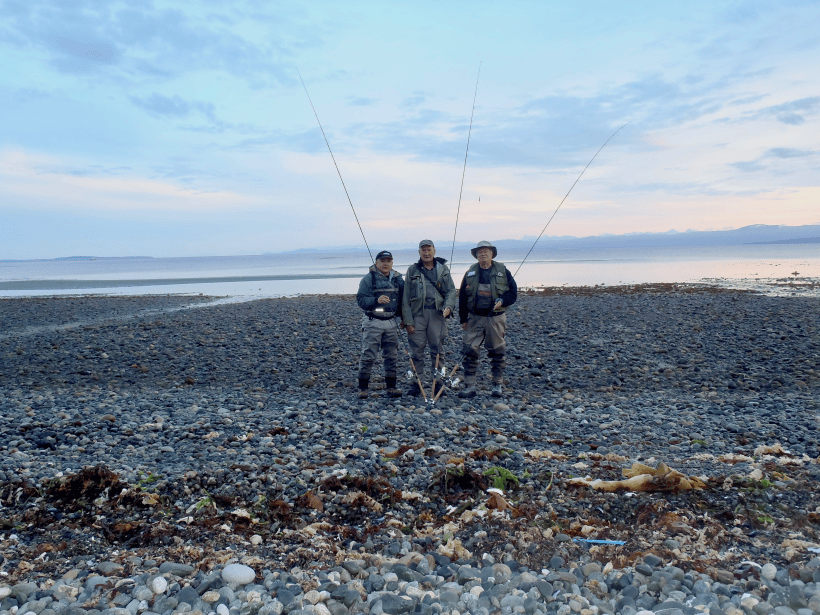
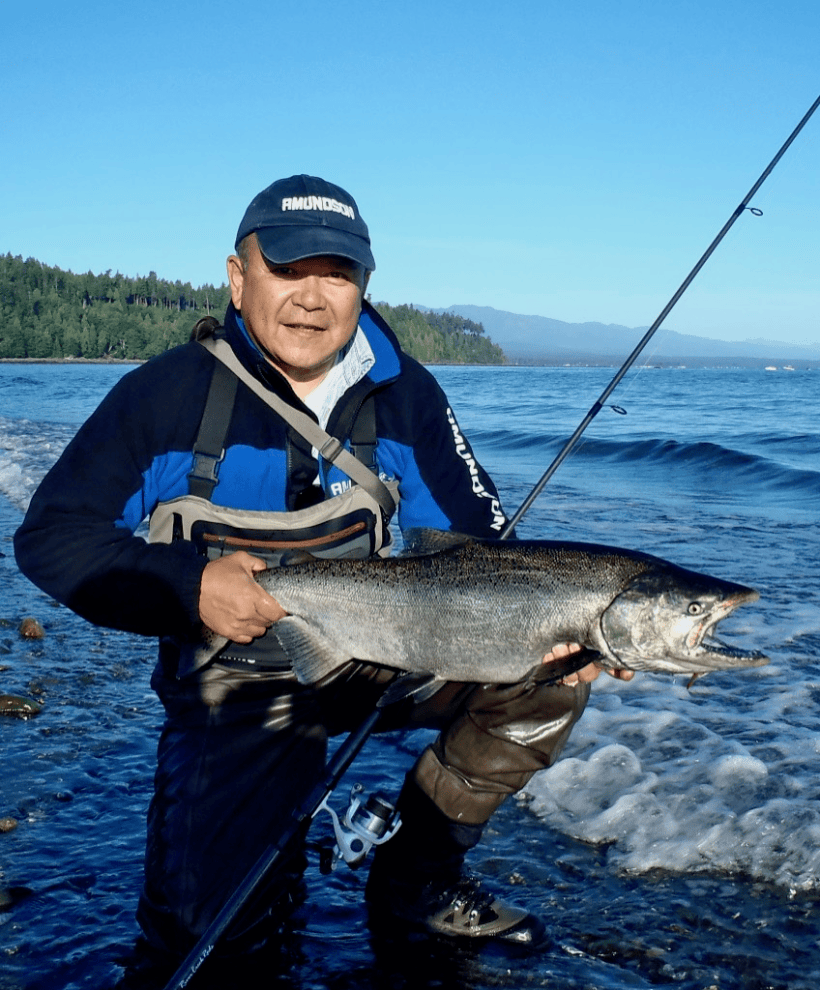
The ultra-light long spinning rod is becoming increasingly popular. Originally known as the noodle rod, it was developed in Eastern Canada for center pinning and spin casting for steelhead and salmon in the Great Lakes streams and tributaries. A few experienced anglers on Vancouver Island beaches have achieved high catch rates using these rods.
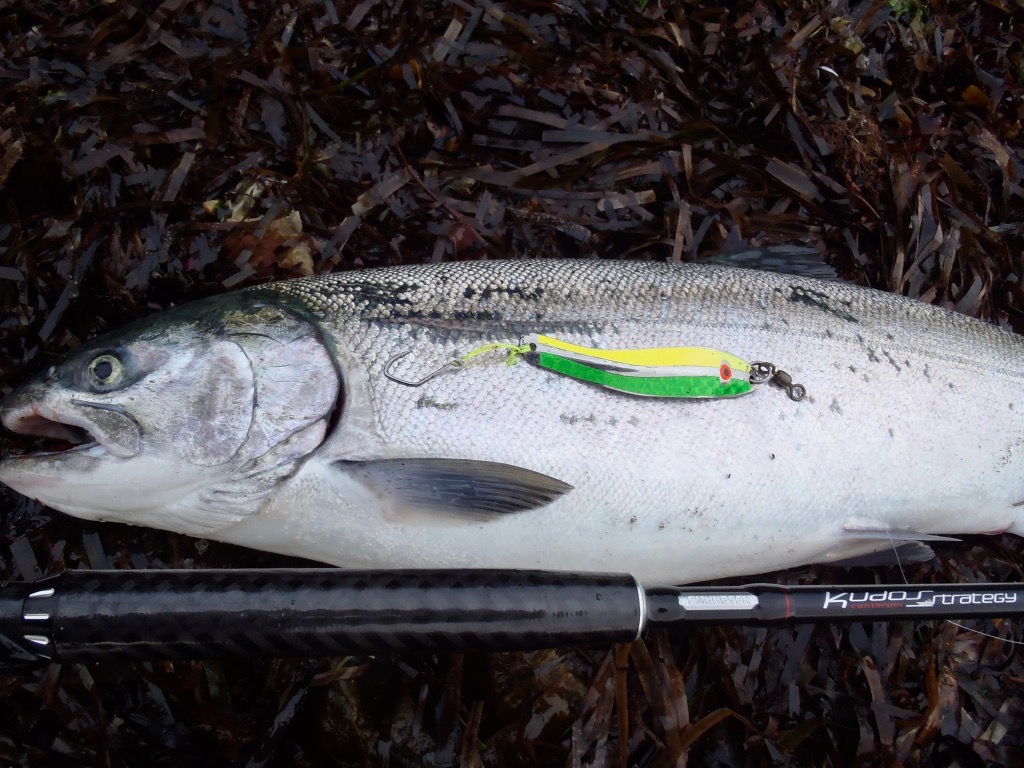
I use a medium-action 13-foot, two-piece rod with lures weighing 1/4 oz. to 1 oz. and lines rated from 10 to 17 lbs. The Amundson Outdoors KSP13M-2 offers enough strength while staying sensitive enough to cast light lures effectively.
The rod is paired with an ultra-light spinning reel featuring a 6:1 gear ratio and high-quality bearings. With a light line, you can cast 200 to 250 feet, reaching most holding or roaming salmon. Ultra-light, long rods help anglers overcome common casting challenges, including distance, wind, waves, floating debris, and high surf.
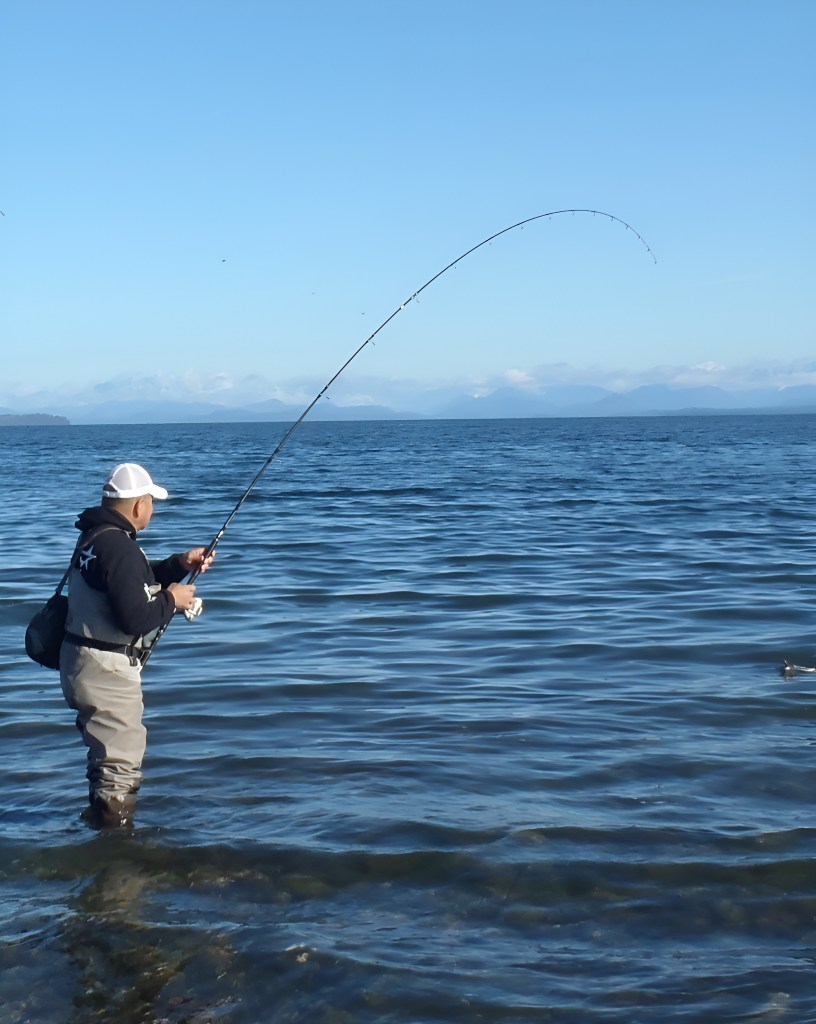
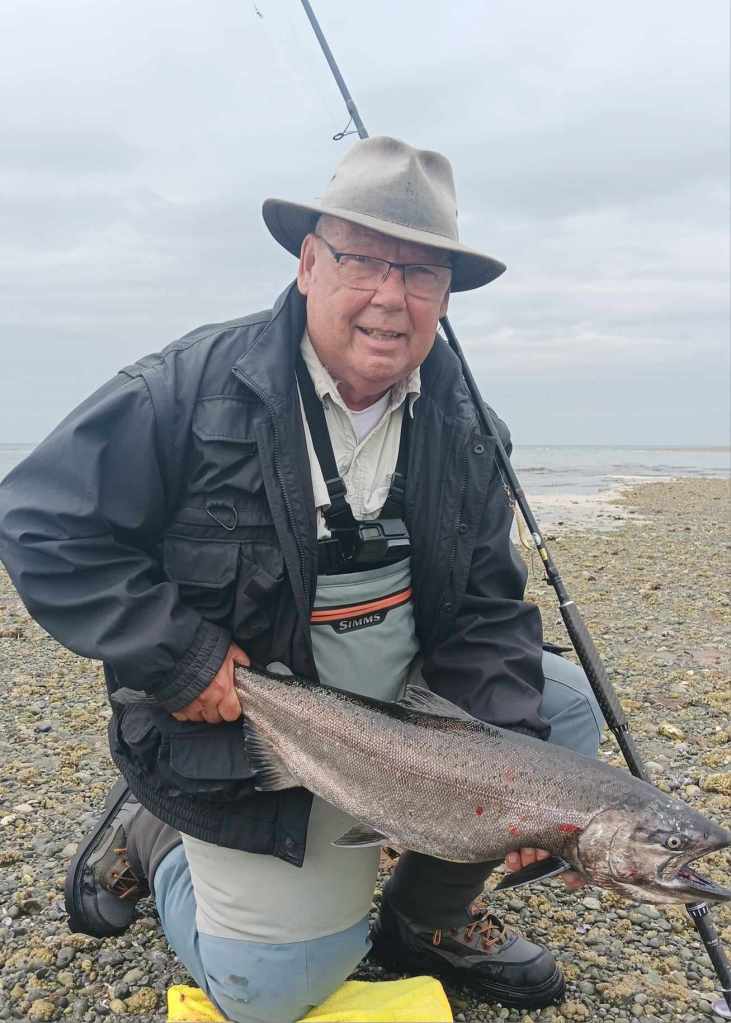
I typically use 8-pound monofilament as my mainline, paired with a 3- to 4-foot section of 12-pound fluorocarbon as a leader. I prefer a full fluorocarbon line over coated alternatives. If I experience frequent line breakage, I carry a spare reel spool with 10-pound test line and increase the fluorocarbon leader to 15 pounds.
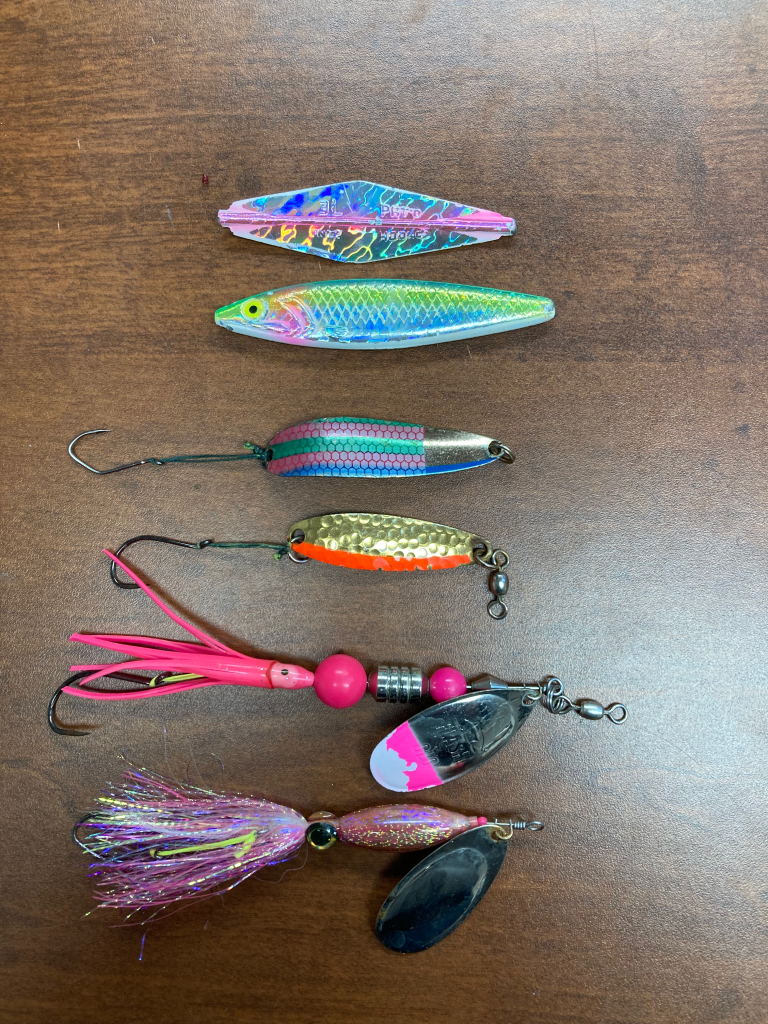
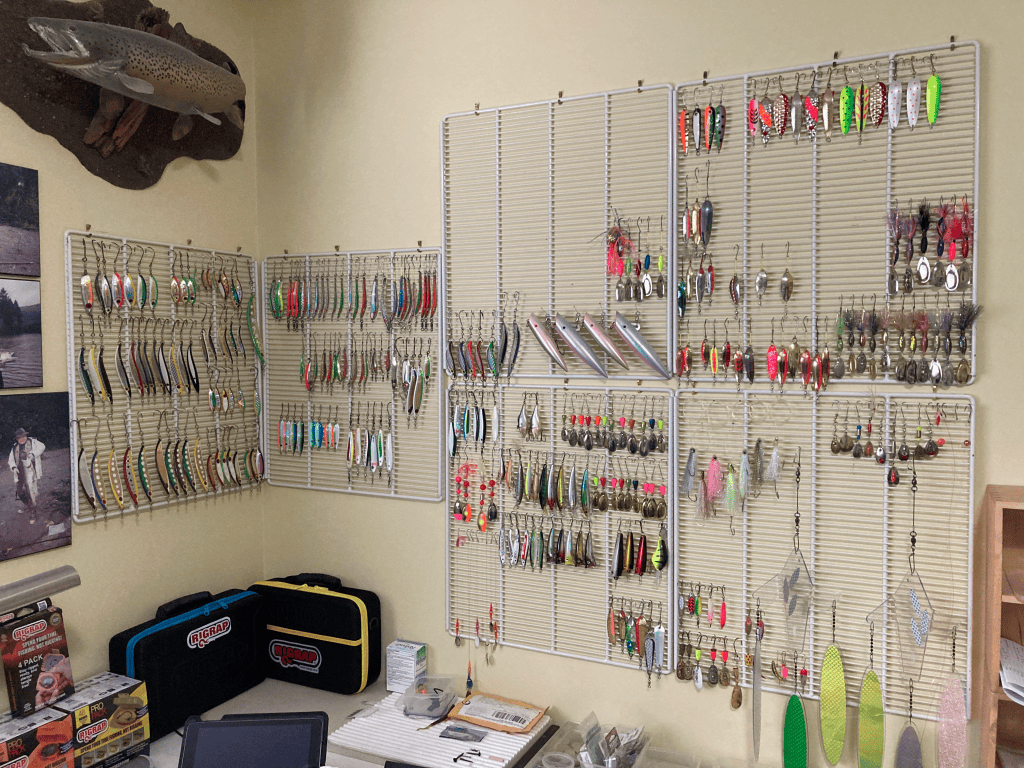
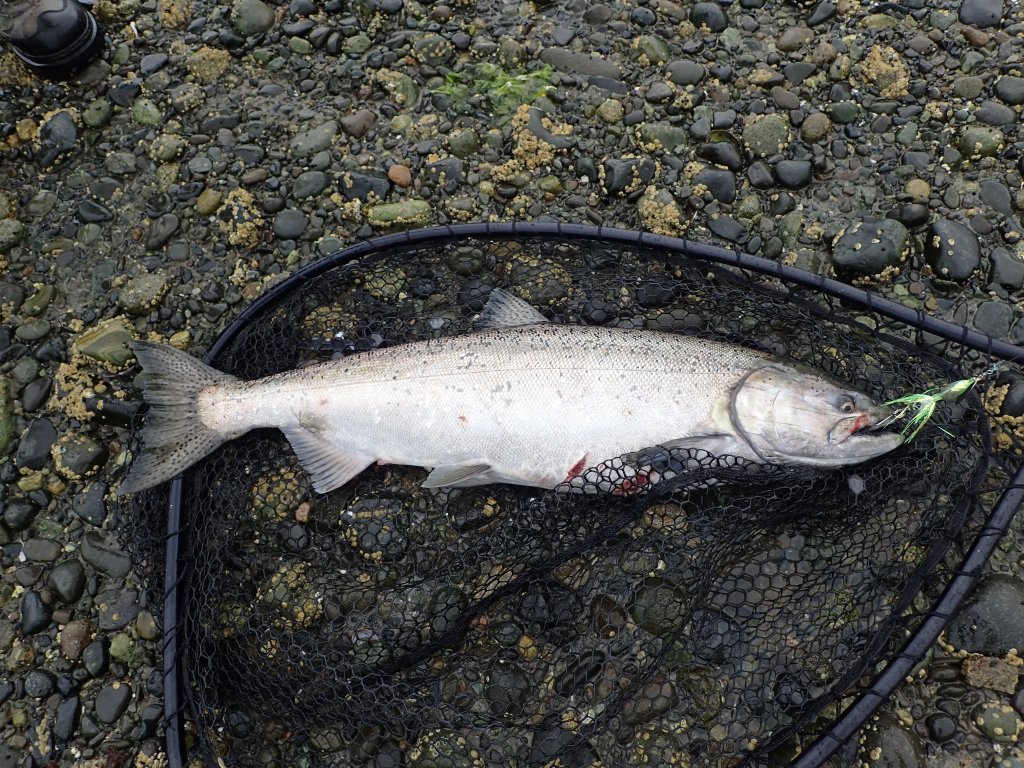
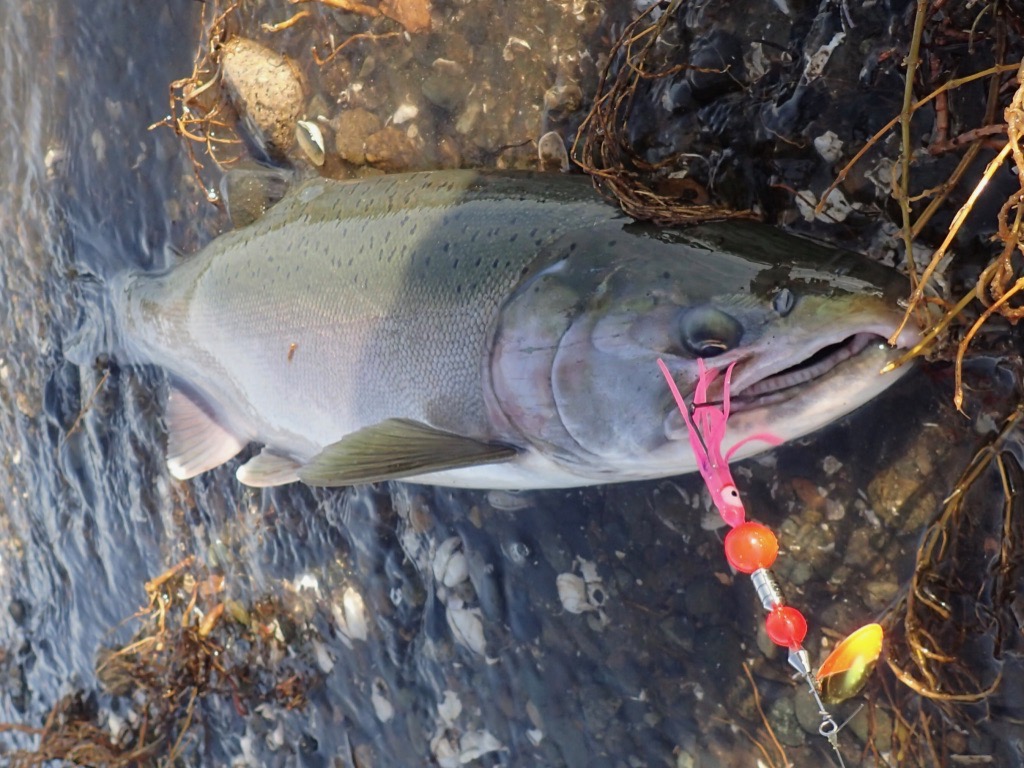
Anglers should carry a diverse selection of lures, as fish may become unresponsive to frequently used tackle over the season. Changing lures can often improve success. Commonly used lures include gold hammered spoons with orange stripes, large bell spinners with silver or brass blades, orange or chartreuse green bodies, squid spinners, and heavy metal alloy lures. I typically use lures in the 3/8 to 1/2 ounce range, which suits Vancouver Island’s shallow beaches.
When you arrive at a beach, watch the water’s surface, as salmon are often difficult to spot. Binoculars are invaluable for detecting subtle indicators such as unusual water movement, exposed fins, jumping baitfish, or salmon shadows moving through waves. If you see no activity, wait patiently for five to ten minutes before relocating. When you detect active salmon, be prepared to start fishing immediately.
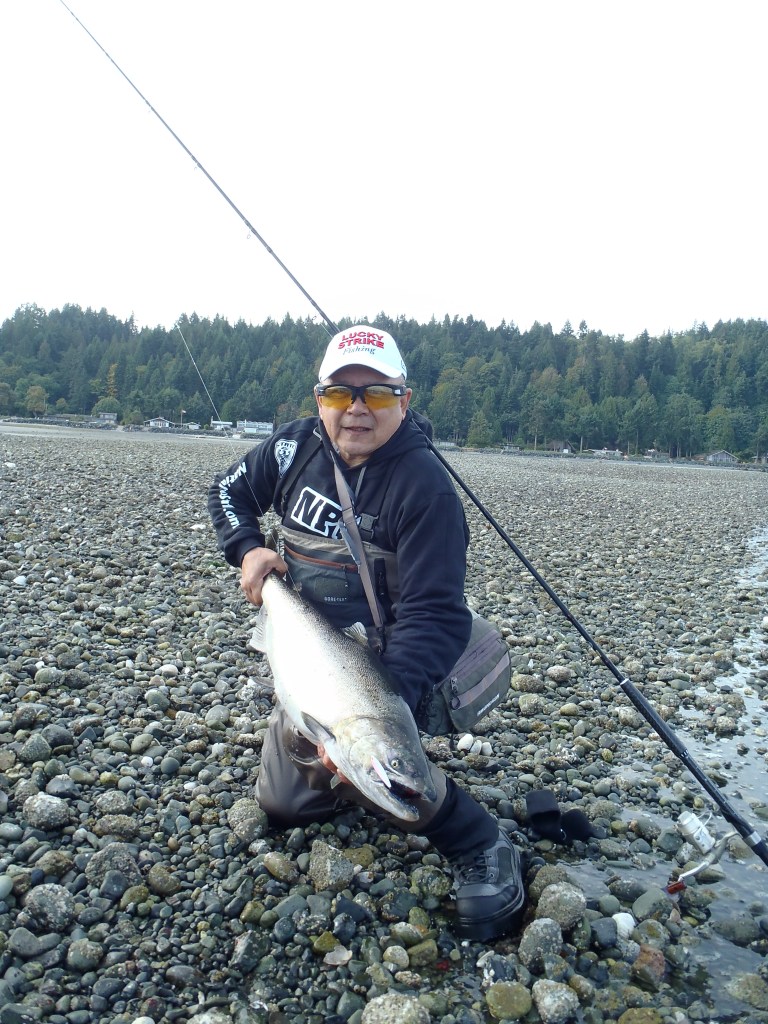
Salmon are highly sensitive to sound and vibration. Anglers should avoid rushing into the water, making noise, or speaking loudly. First, assess whether you can reach the fish with a long cast. If not, enter the water slowly and approach quietly.
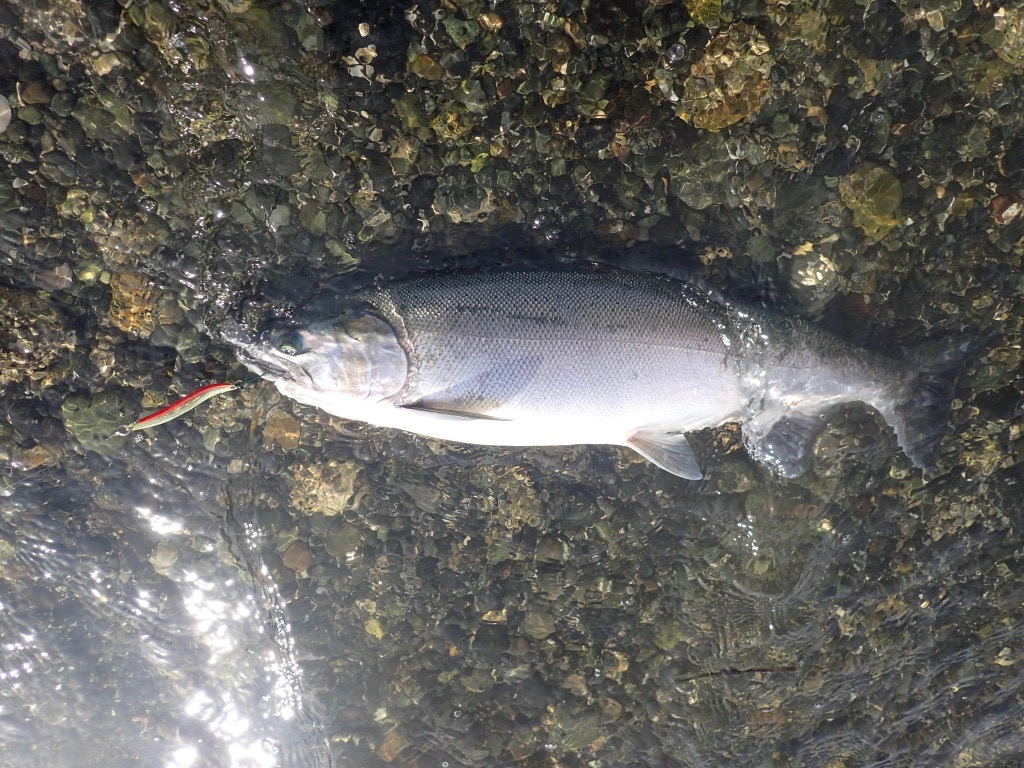
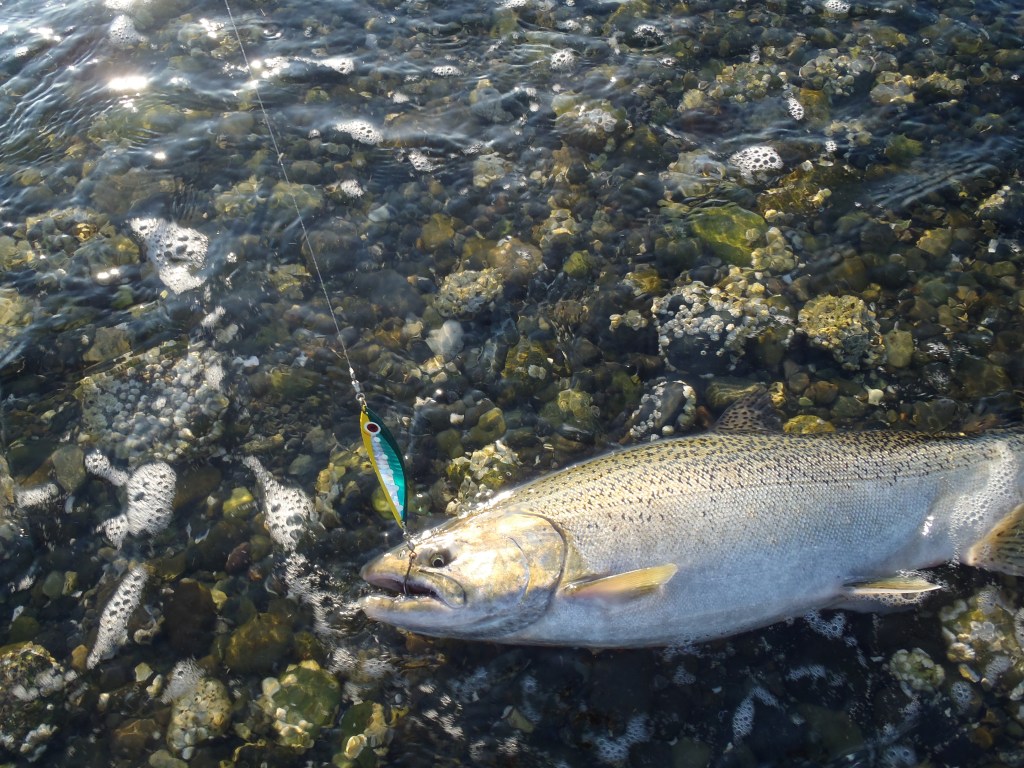
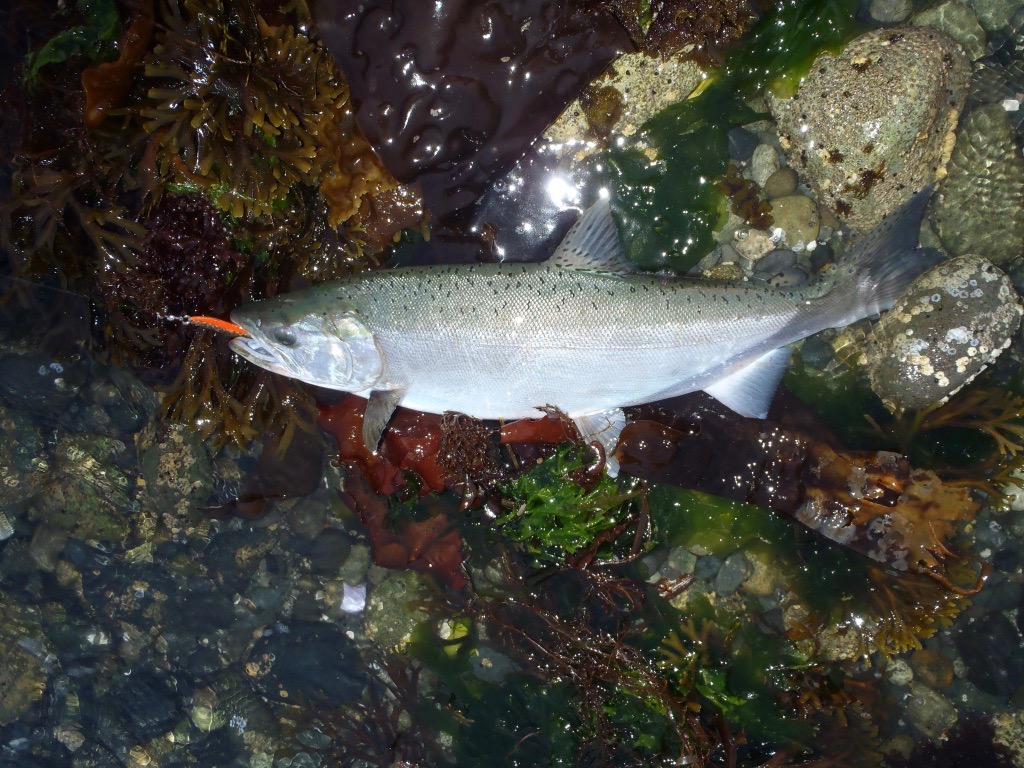
The objective is to cast the lure beyond the school and retrieve it through the group. Alternatively, casting over and ahead of the school and retrieving the lure across the salmon’s path is also effective. Both techniques aim to attract salmon to the lure.
As salmon undergo physiological changes before spawning, they may stop feeding but still strike lures out of aggression. In these circumstances, lures equipped with spinning blades tend to be more effective.
When using spinners, cast the lure so it lands directly over the school, then let it sink and flutter for three to five seconds, depending on water depth. Then raise the rod tip and retrieve quickly enough to activate the spinning blades. If no strike occurs, pause the retrieve with the rod tip raised, let the spinner flutter again, and then resume retrieving rapidly. Strikes often occur when the spinner transitions from fluttering to spinning.
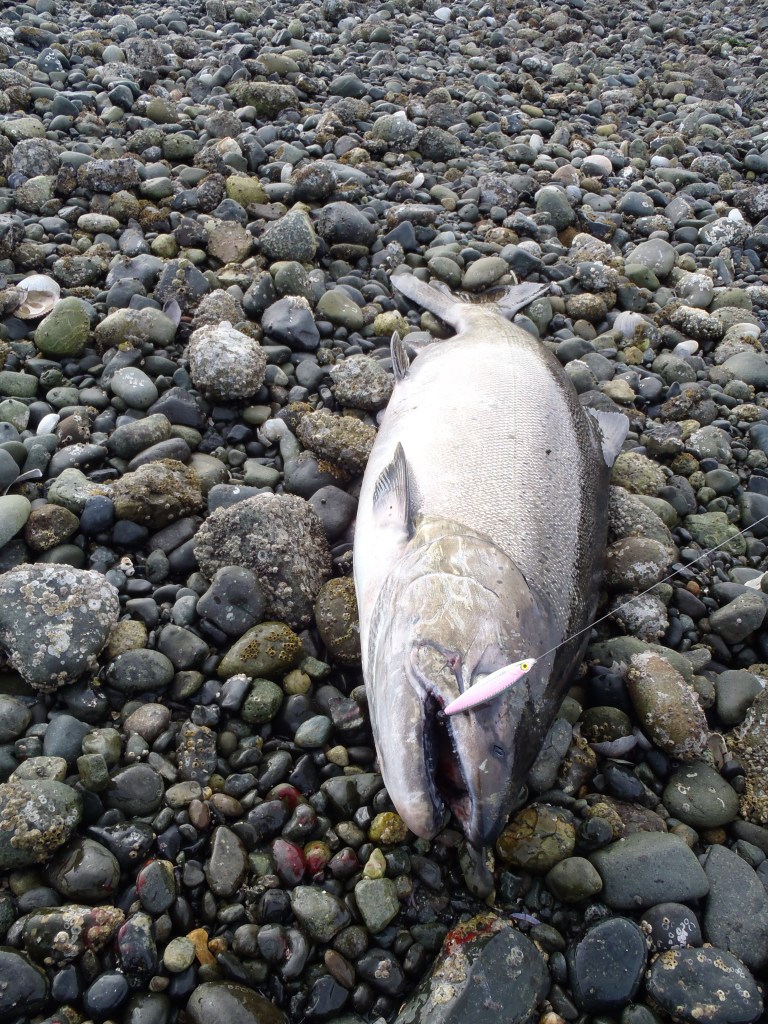
When you hook a salmon, try to guide it away from the school to minimize disturbance and preserve future fishing opportunities. If planning to release the fish, avoid beaching it; instead, release it promptly or tail it in shallow water. Barbless hooks make release more efficient.
Anglers have numerous opportunities to catch salmon along the shores of East Vancouver Island, where salmon stage near their natal rivers and streams. Notable locations include the Cluxewe River estuary, Salmon Point, Saratoga Beach, Miracle Beach, Black Creek, Deep Bay, Nile Creek, Big Qualicum, and the Small Qualicum River. Additionally, hundreds of unnamed beaches await exploration. Discovering a previously unexplored beach that holds salmon represents the ultimate aspiration for many beach anglers.
Most major manufacturers now produce rods of this type, typically ranging from 12 to 14 feet in length. The primary advantage of a longer rod is the ability to cast to schools of salmon that are often beyond the reach of anglers using shorter rods.
Consider switching to a longer rod to take advantage of these benefits.
Discover more from castingaline.ca
Subscribe to get the latest posts sent to your email.

