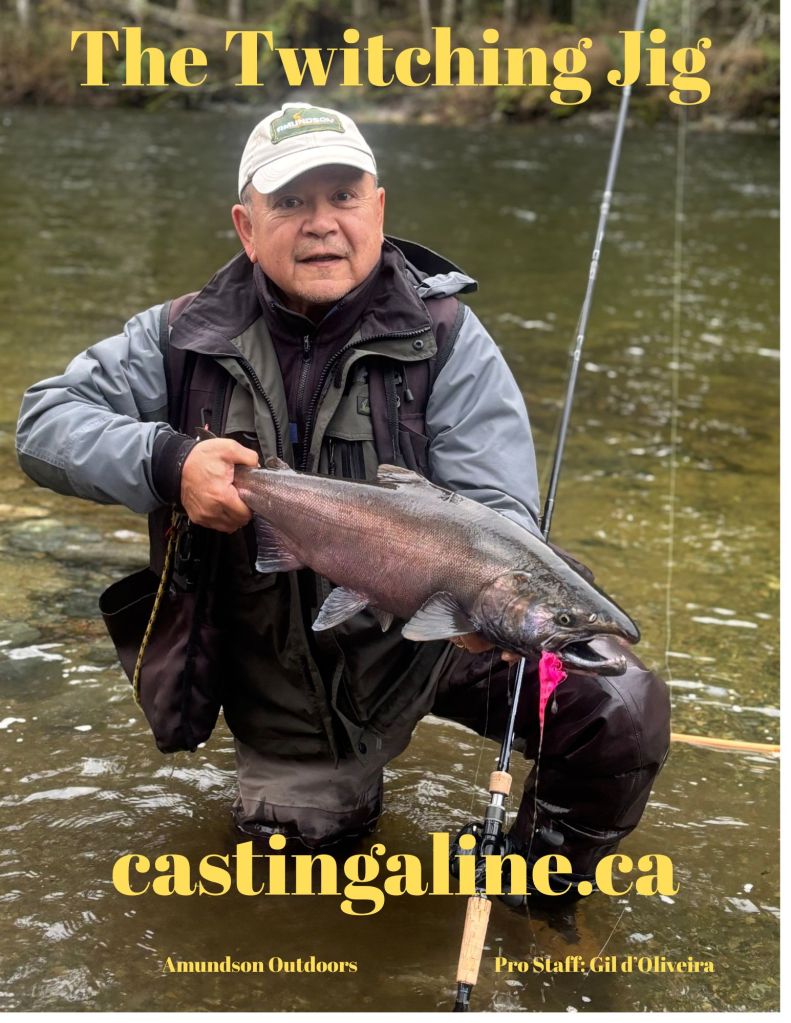
Fishing with jigs is a widely recognized technique. Anglers have traditionally employed this type of lure to target various species, such as bass, crappies, salmon, and steelhead. Fish are typically attracted to lures that mimic prey or provoke an instinctive predatory response.
Anglers use floats to drift jigs in moving water or suspend them in still water, creating subtle movement. Allowing the jig to bounce can also be effective.
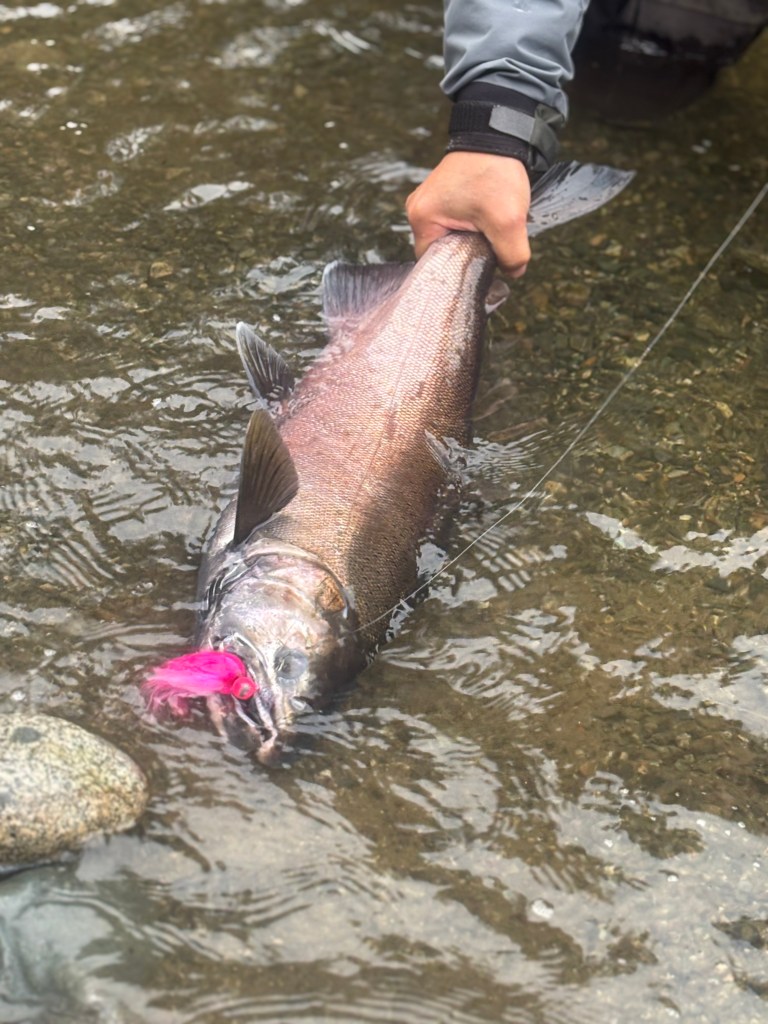
Over the past 15 years, anglers have found that increasing jig action in the mid-water column improves catch rates, especially in late season when salmon are more aggressive. This insight has led to twitching techniques, new jig head designs, and the use of both natural and synthetic materials. Sharing these methods on social media has further increased angler success. The main technique involves lifting the jig and letting it drop abruptly, repeating this motion without touching the bottom. This often provokes an aggressive strike.
During late season, salmon often ignore traditional lures and bait, a phenomenon known as lockjaw. However, the twitching technique can trigger aggressive strikes, and in my experience, it remains effective even in late December.
The term “twitch” refers to the short rise-and-drop motion at the heart of this method. Many anglers have developed personalized techniques based on their experiences.
This technique involves casting a jig upriver, across, or at a 45-degree angle downstream, then making quick upward rod-tip movements to create slack in the braid line before retrieval. River flow, water depth, jig weight, and casting angle all influence timing and effectiveness. In my experience, avoid letting the jig touch the bottom unless you are checking depth.
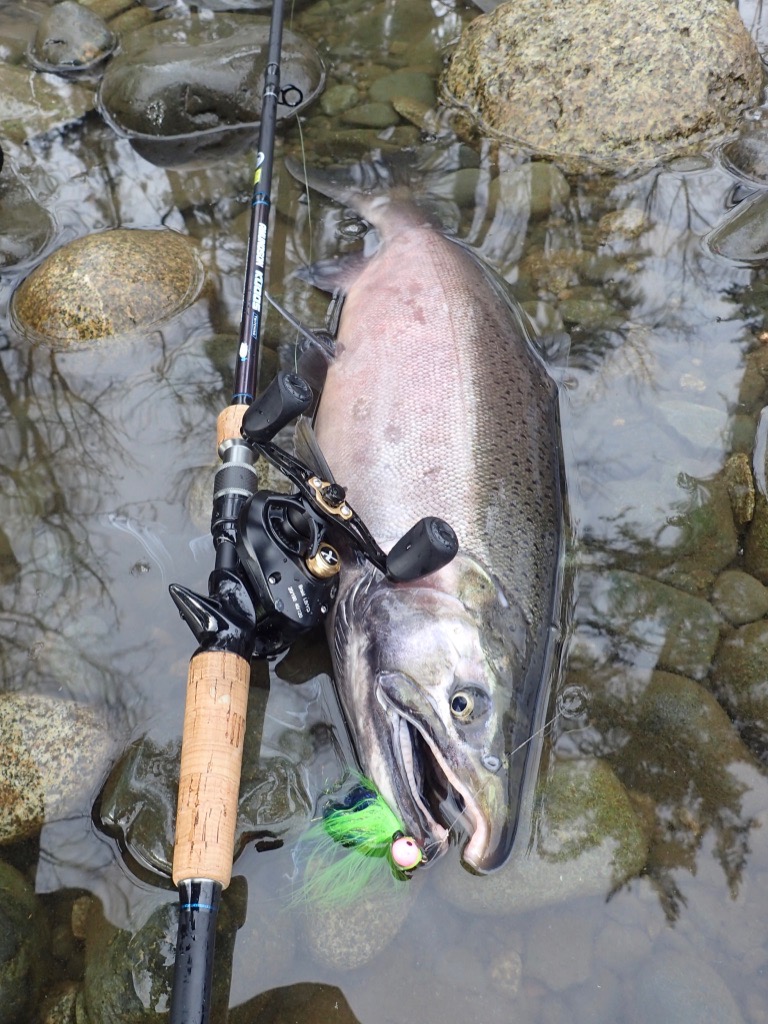
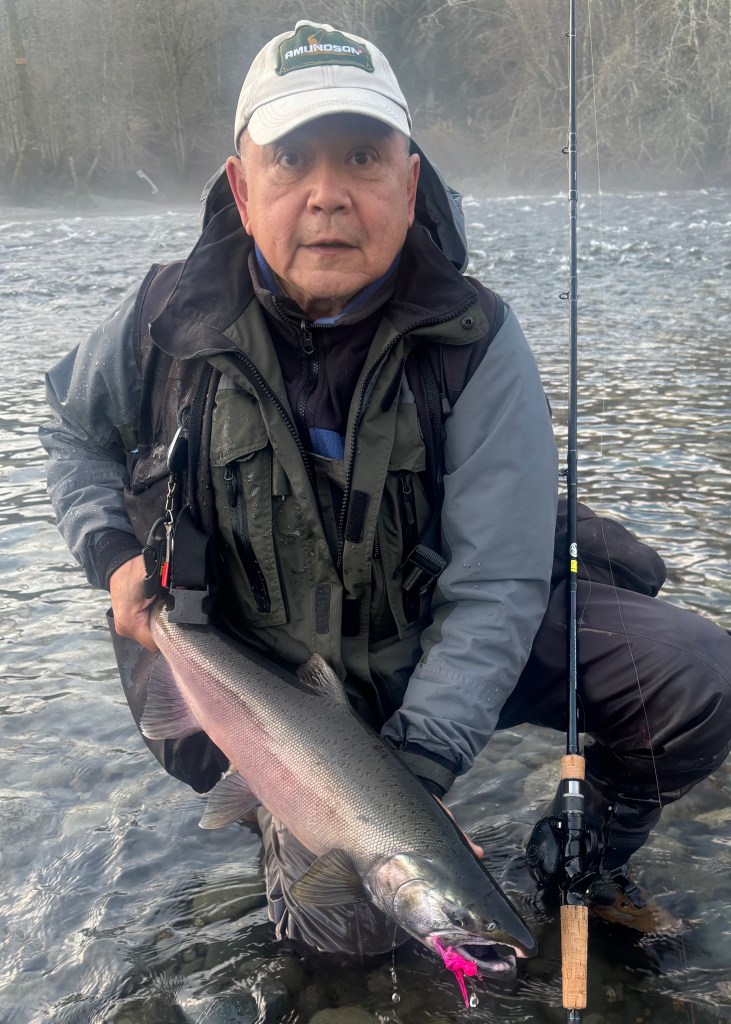
At each new location, I time my first cast to see how long it takes the jig to reach the bottom. Once it touches down, I retrieve it promptly to avoid snags. For example, if it takes 10 seconds to reach the bottom, I twitch between 2 and 8 seconds, depending on the target depth. Salmon may strike within the first two twitches.
Timing also changes as jigs encounter current resistance. For example, when casting slightly downriver, I twitch but delay retrieval since the current often takes up the slack. Expect a learning curve, and be prepared to lose some jigs.
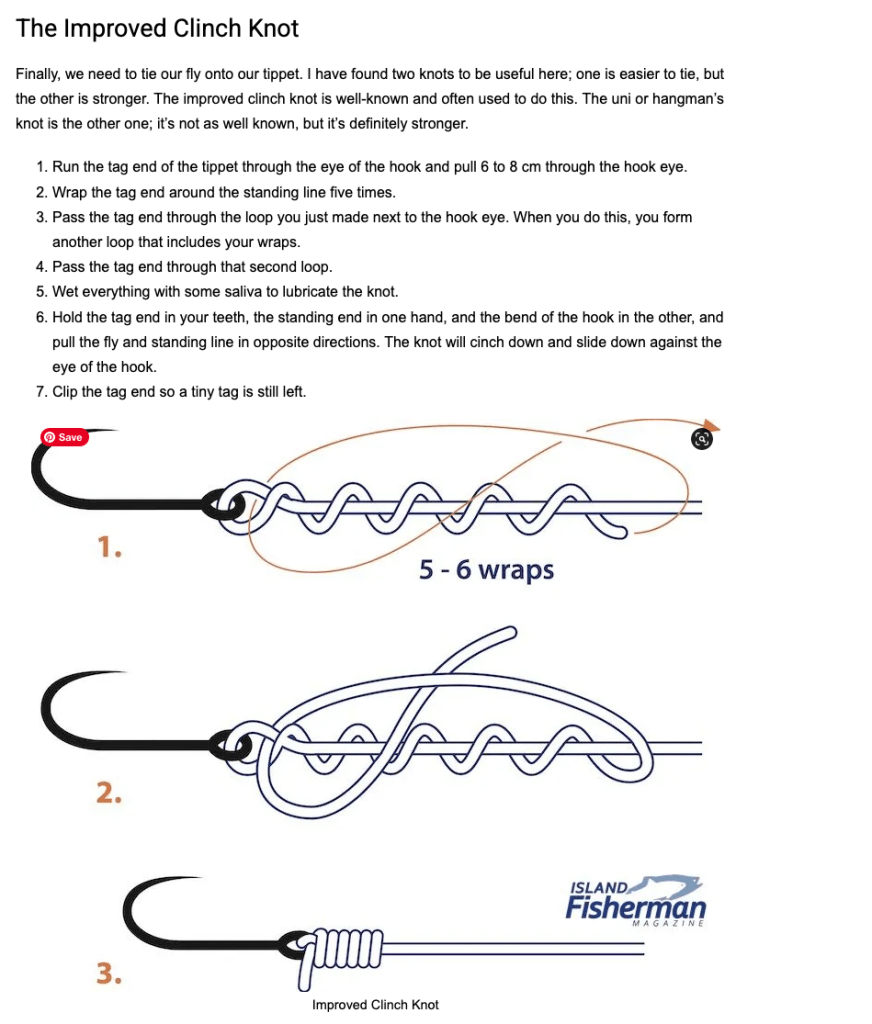
Pro Tip: Wet the knot and draw it together slowly to prevent heat friction, which can weaken the knot.
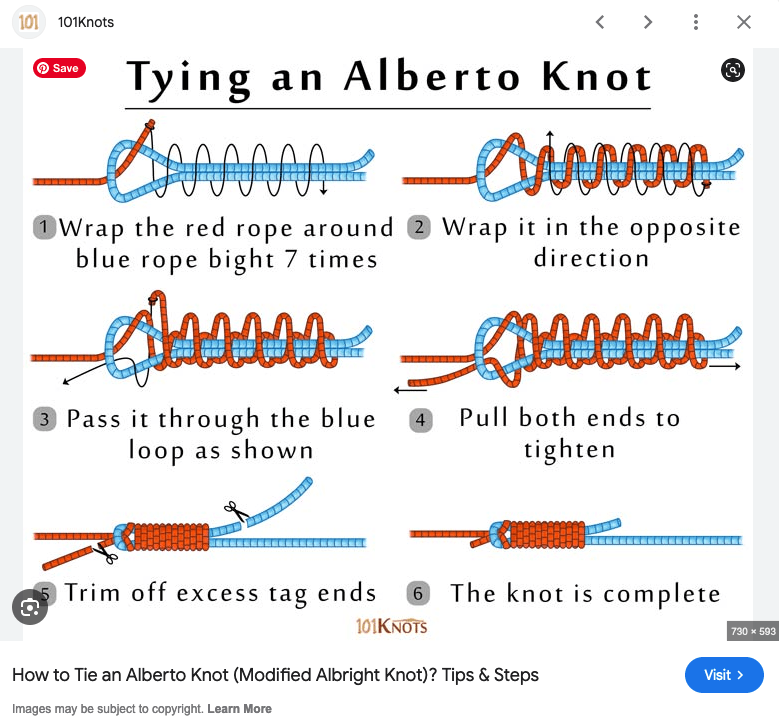
Braid is ideal as a main line because it floats and does not stretch, reducing resistance when retrieving slack. I typically add a 3- to 4-foot leader and use the Alberto knot to join braid to monofilament.
Many anglers use a firm knot, such as a tight clinch knot, to tie the leader to the jig. However, I find a loop knot gives the jig more movement, letting it dip or rise more effectively when twitched. My preferred knot is the “Kreh Knot,” also known as a non-slip loop knot.
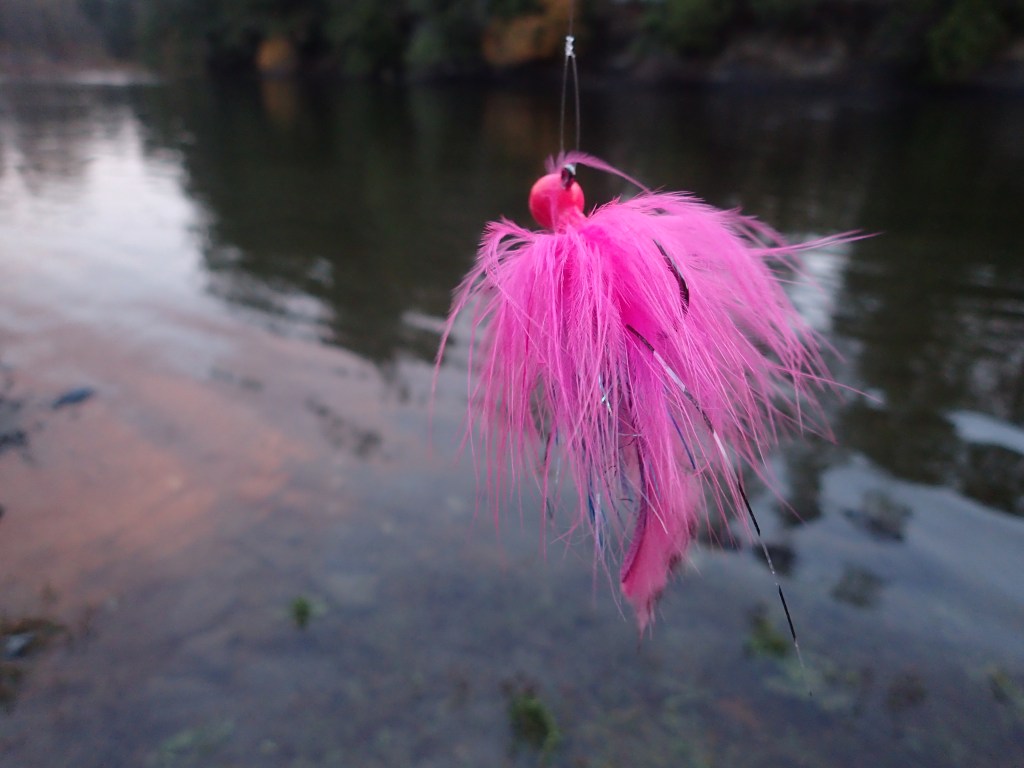
When making a twitching jig, use materials that create movement such as fluttering, pulsating, or wiggling. This is why a tail extends beyond the jig’s body.
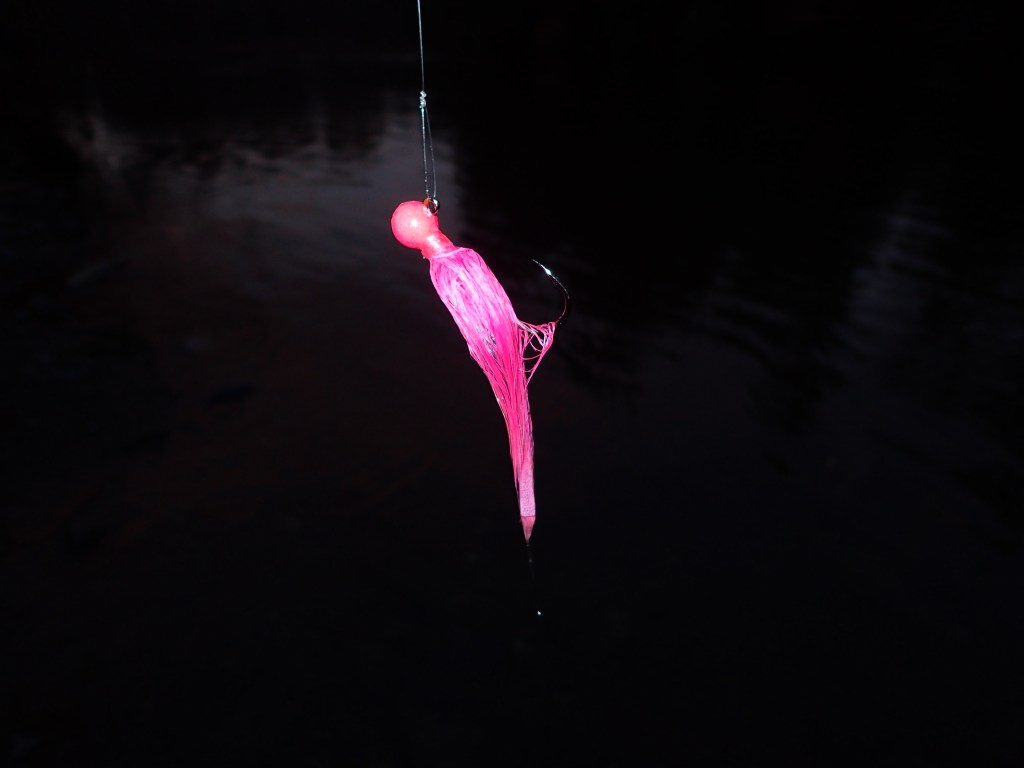
I carry weighted jigs ranging from 1/4 to 1/2 ounce to adapt to varying river flows. Jig head shapes have evolved from round to cone-shaped and now cylindrical, and manufacturers continue to innovate.
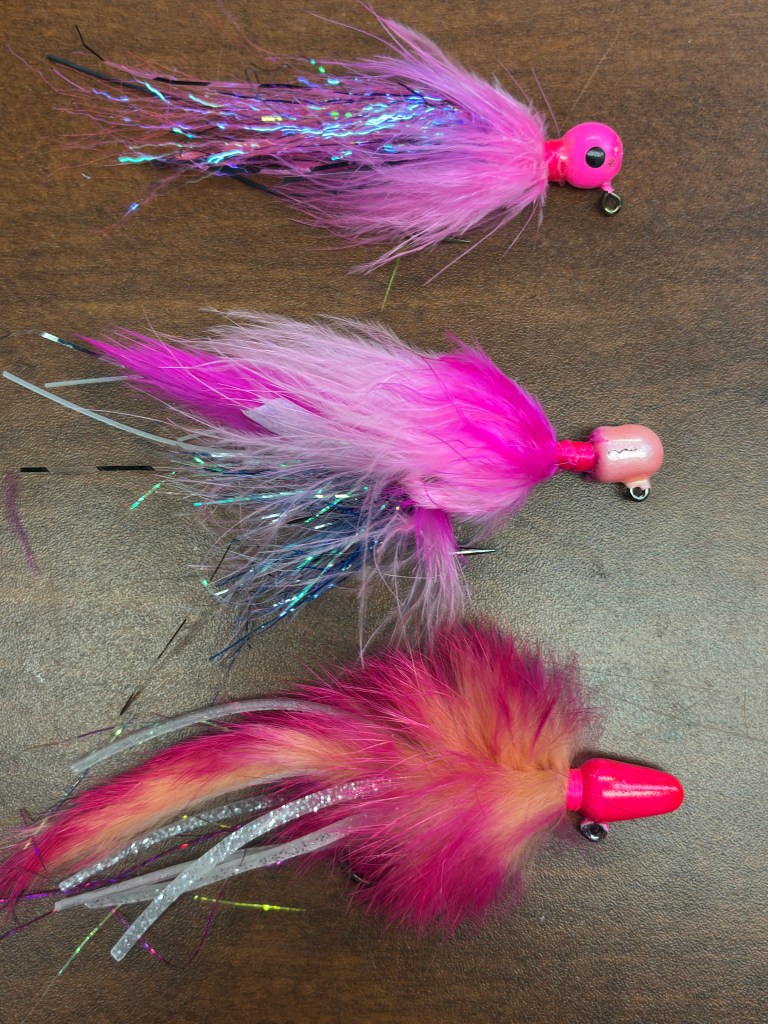
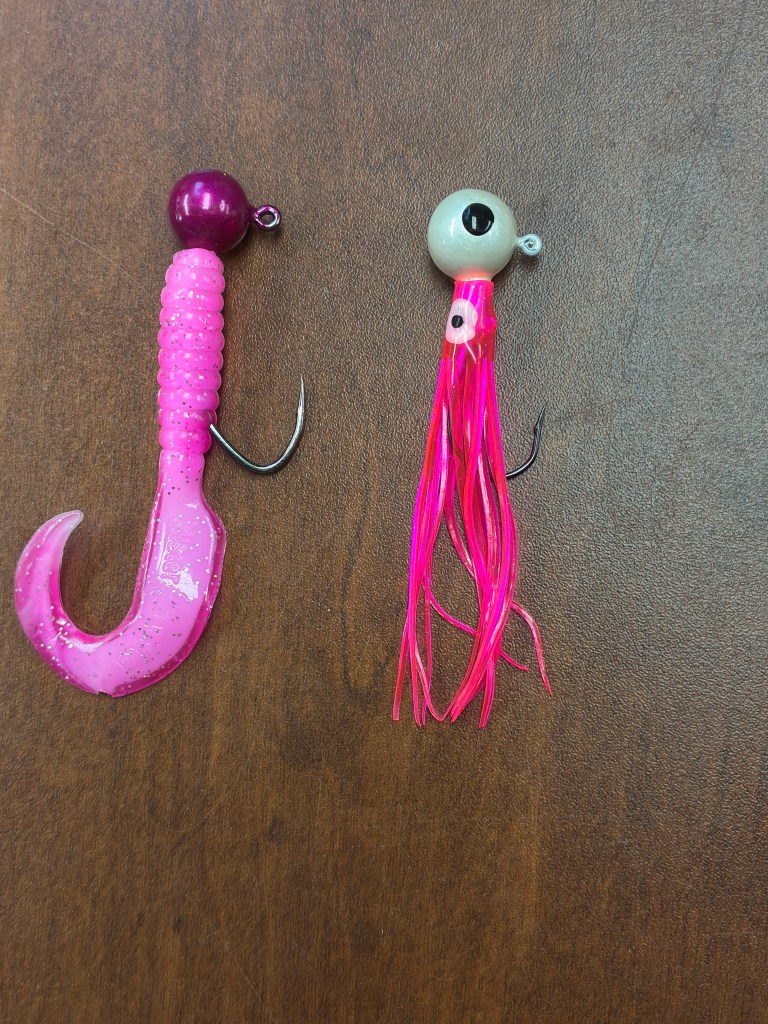
Jig bodies have progressed from rabbit fur tails to natural feathers and now to synthetic materials. Recently, anglers have found success adding curly-tail hootchies with flexible tendrils. I prefer combining rabbit fur tails, synthetic bodies, and thick marabou collars.
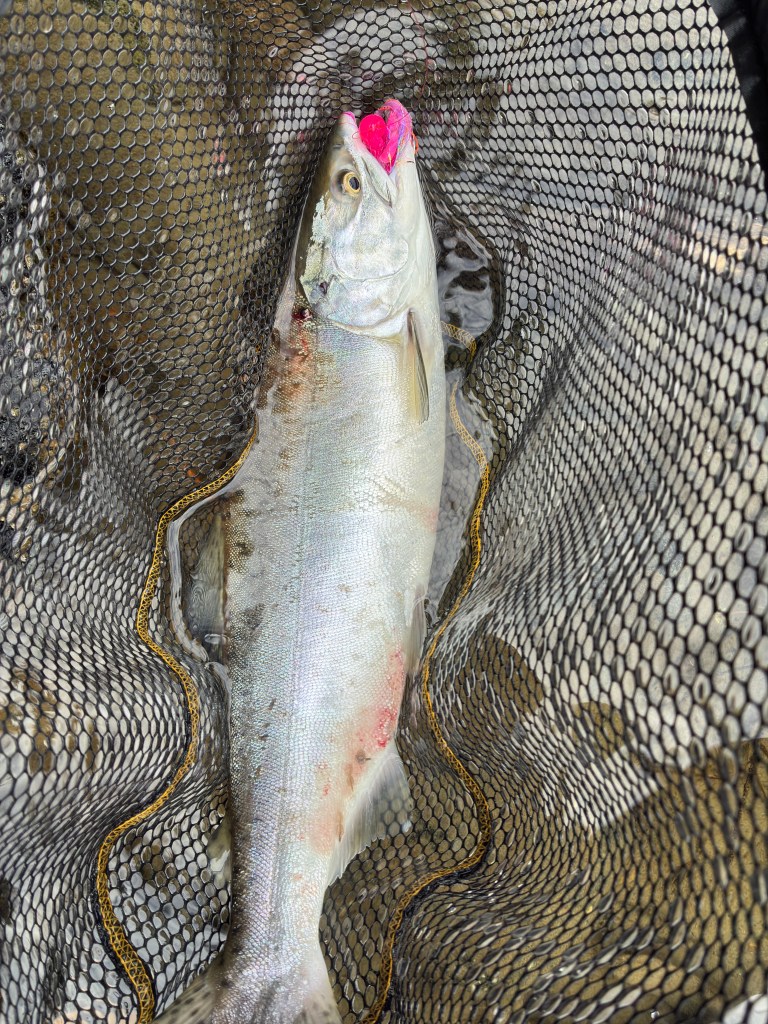
Pro Tip: When adding a grub curly tail, make sure it’s long enough for the hook to sit near the grub’s belly, and keep the body straight. Positioning the tail away from the hook reduces tangling.
Jig design offers endless possibilities for creativity and colour, and many anglers have personal favourites.
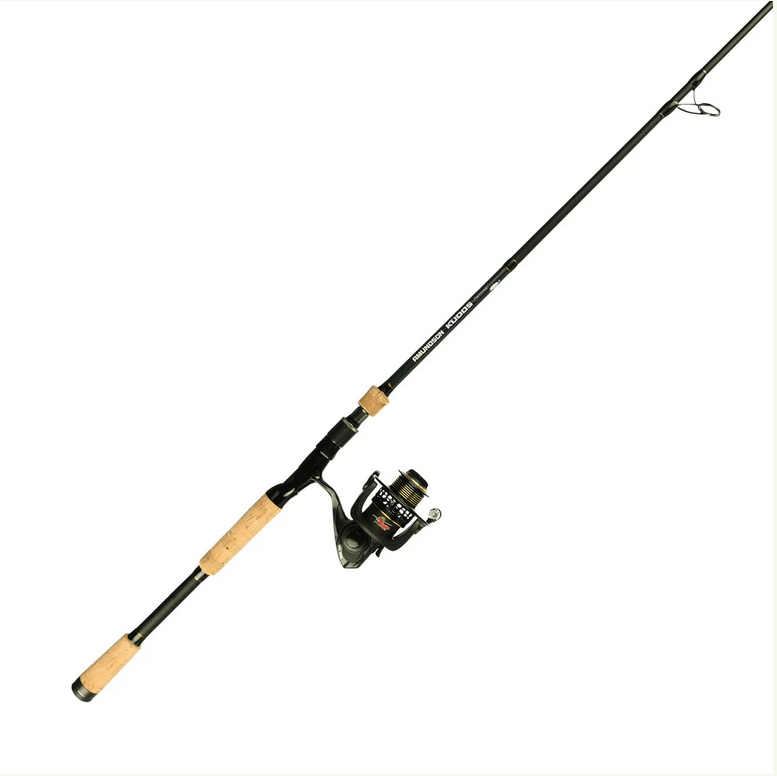
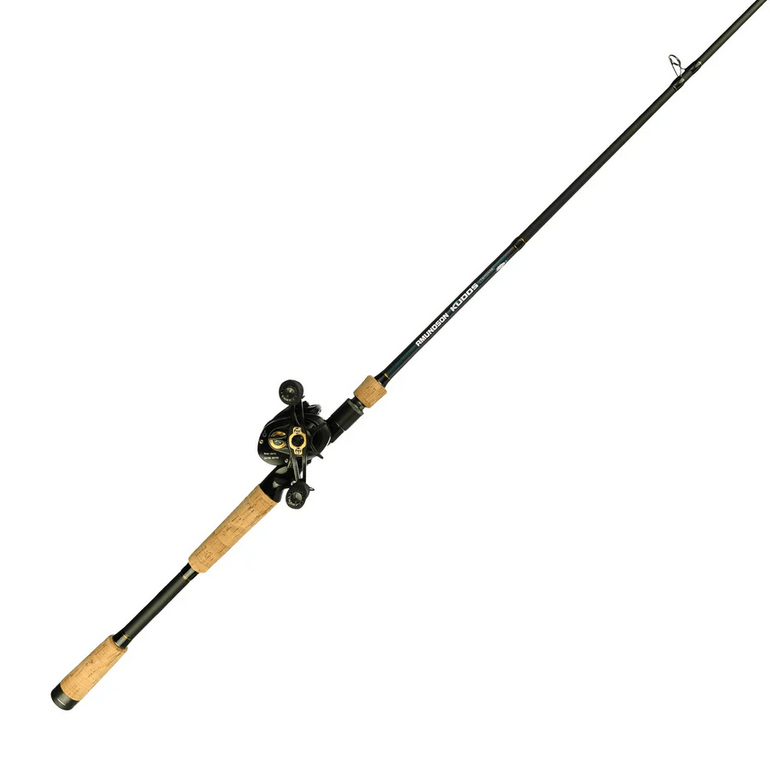
Amundson KDS-2 spinning………….Amundson KDC12-l casting
Eight- to nine-foot medium-action rods are ideal, as their shorter length provides better control for twitching. Longer rods require more effort to recover from the bend before retrieving slack and can be harder on the wrist.


This is my fourth year using this technique, and I look forward to continued success. In my first year, I caught spring salmon, and last year, we landed double-digit numbers of coho. Although many reported that coho weren’t biting, we still caught them, even in December.
Embrace creativity and explore new techniques. Move beyond traditional methods and enjoy the process.
Discover more from castingaline.ca
Subscribe to get the latest posts sent to your email.

