A small rise in water, known as the “first bump of water,” usually brings fresh fish upstream. This often makes them more aggressive and more likely to react to each other or to competing eggs.
But this October has had record-low rainfall. Even after three days of rain in a row, the rivers have barely changed in volume or clarity. Most of the runoff was still being held by the dry land.
Gil d’Oliveira
On the east side of Vancouver Island, many streams have fewer salmon returning because of the extremely low water levels. The Salt Chuck, though, still has a good number of salmon waiting for higher flows to head upstream to their natal streams.
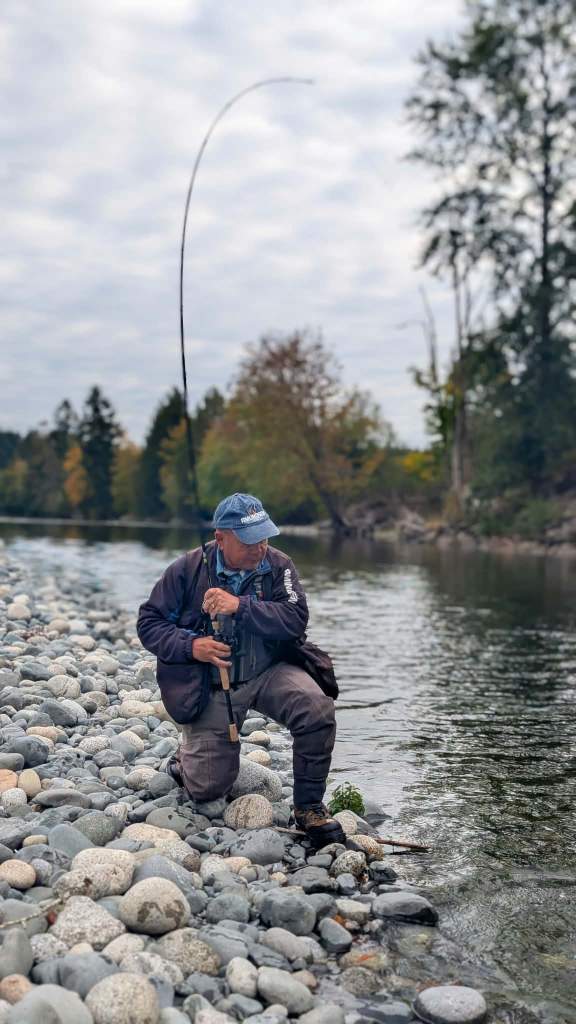
On my first day at the river, the water was low and very clear, and some salmon were already in the river. Usually, these conditions make salmon very cautious. I started by using an 8 mm bead, set the leader to 12 pounds, and made it 24 inches long. For two hours, I tried different colours and even switched to a 10 mm bead, but I still didn’t get any bites.
Next, I tried casting small 1/4-ounce twitching jigs in different colours, but still had no luck. Sometimes, you have to change your presentation to get results. So, I made the leader 12 inches longer, dropped the leader weight to 10 pounds, and used a larger 14 mm bead. My float-to-weight distance started at about 16 inches, keeping the bait above the river bottom. After a time without success, I then increased the distance so the weight tapped along the riverbed.
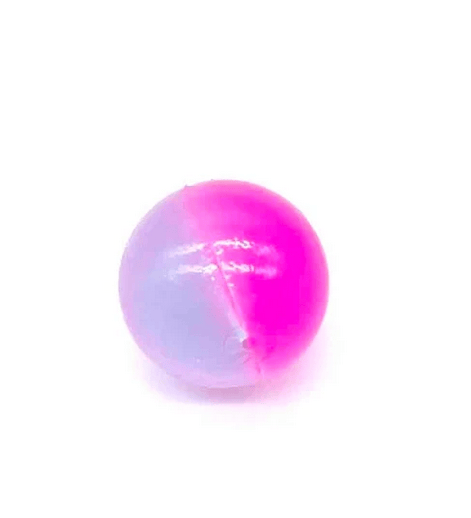
I switched to a bead called The Blue Goon from BnR Tackle because none of the usual colours were working.
BnR Blue Goon
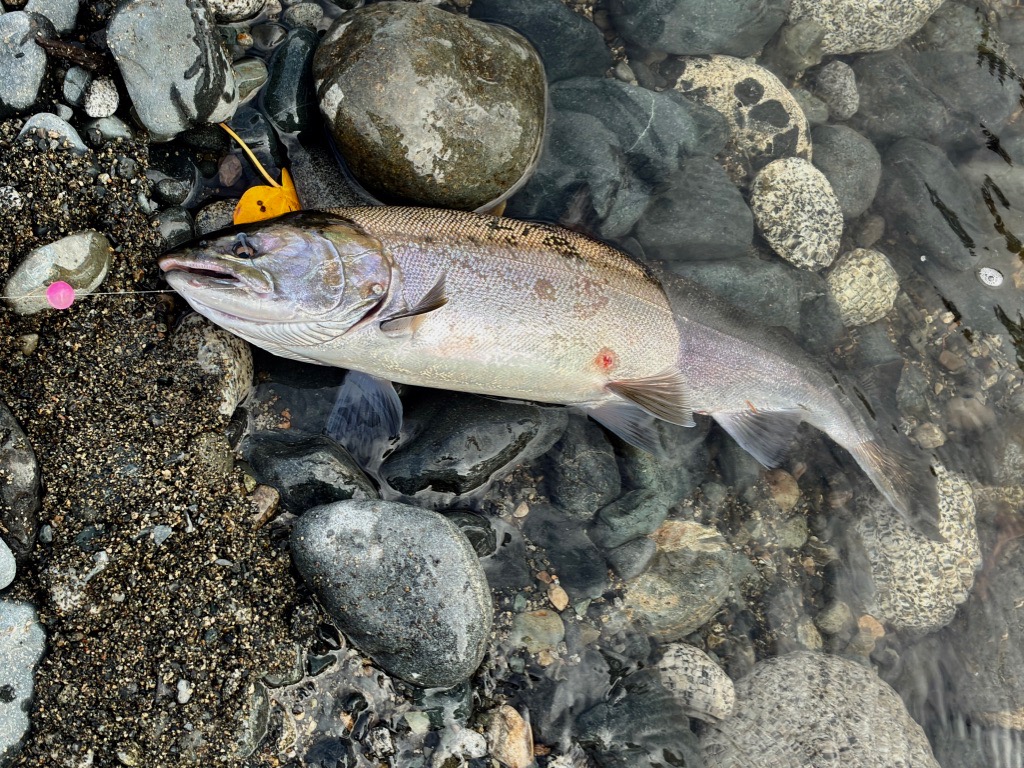
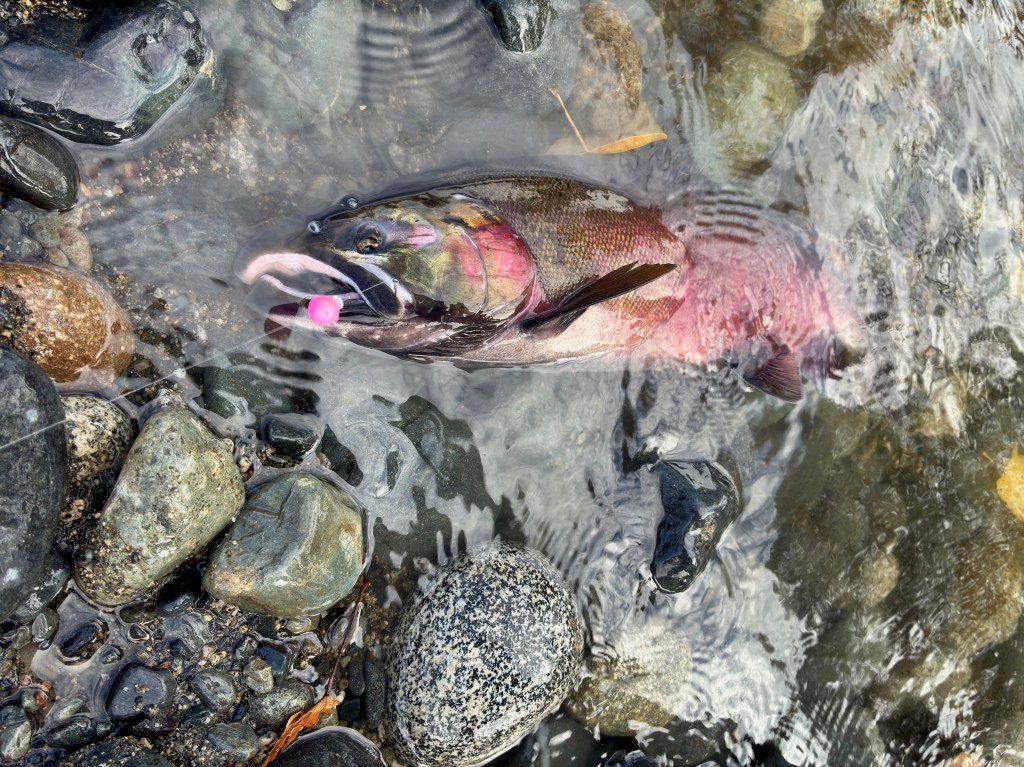
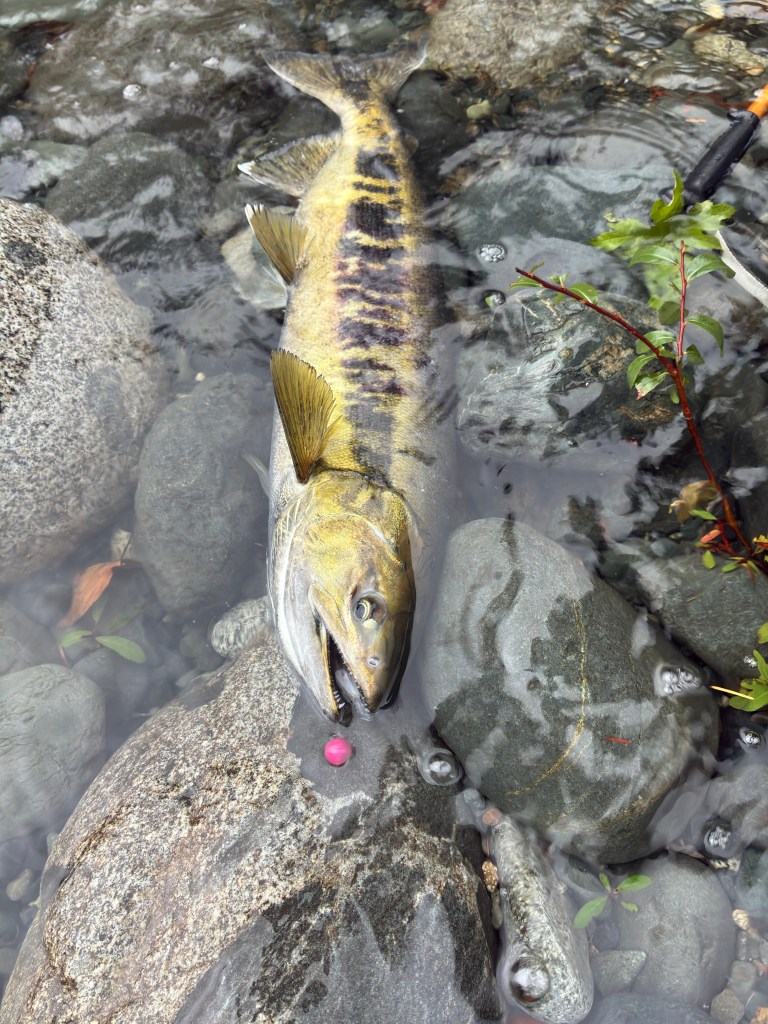
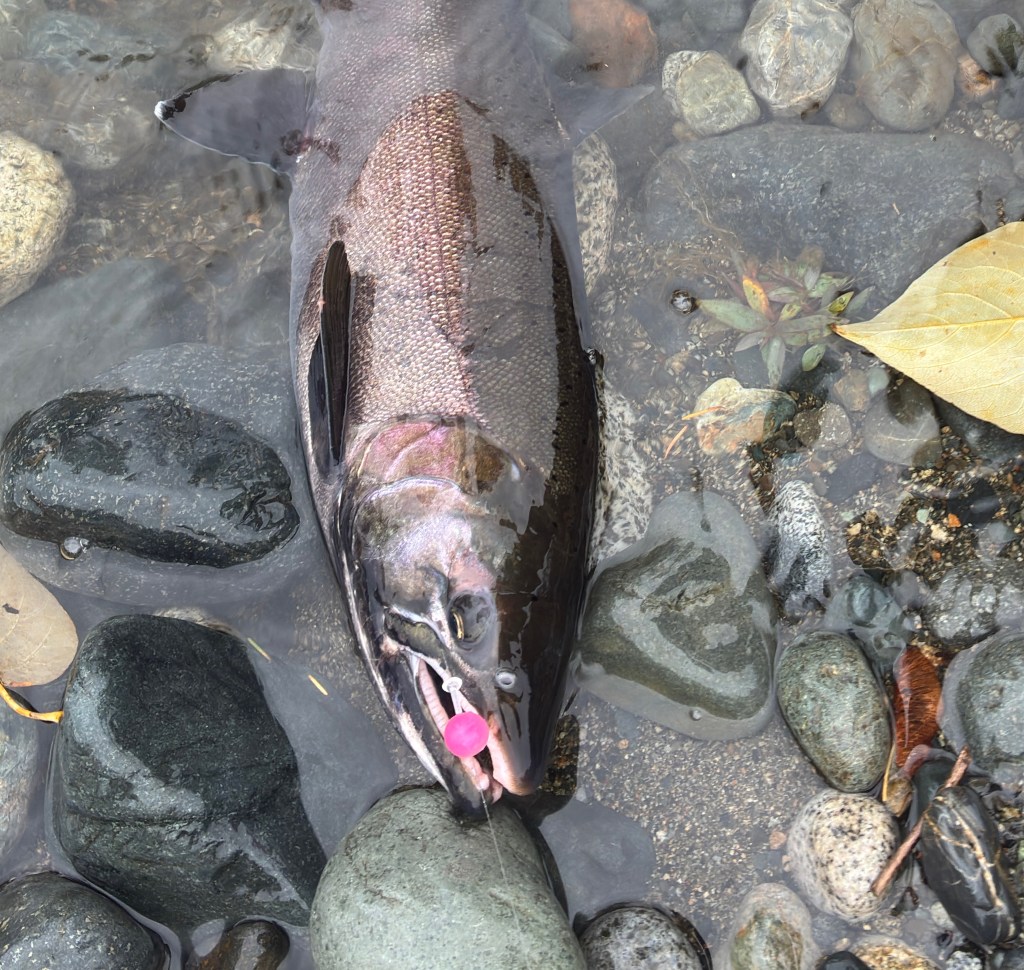
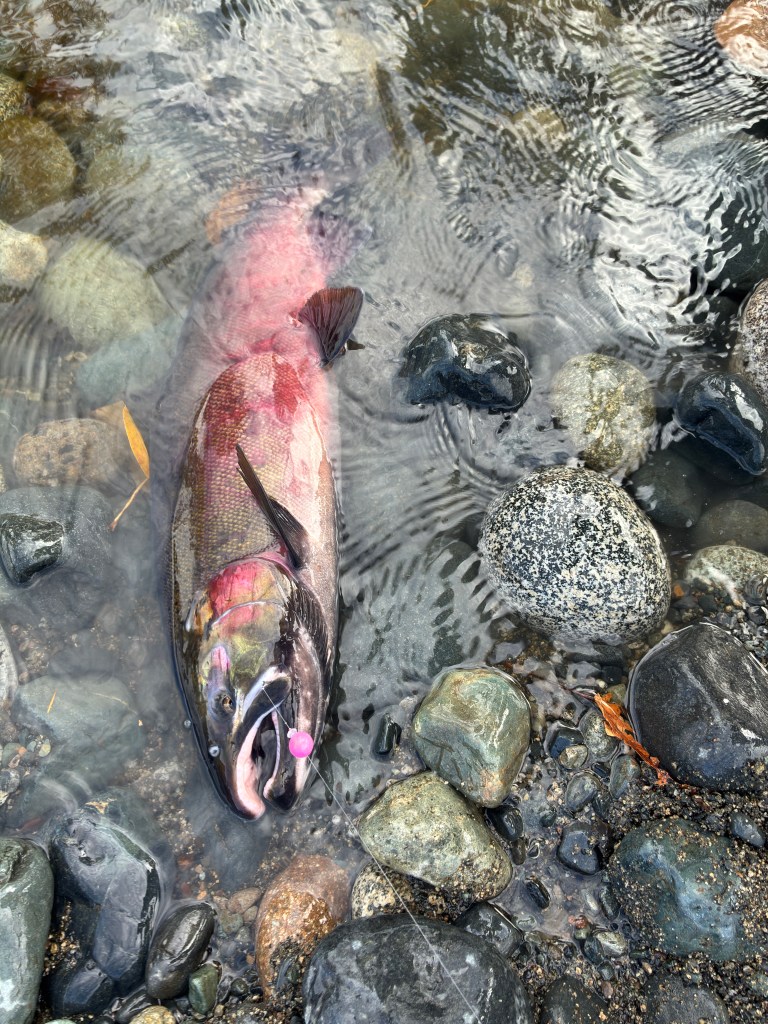
Within 40 minutes, I caught three coho salmon and one chum salmon, which wrapped up my day on the river.
If you can adapt and get creative, you’ll often find success.
Discover more from castingaline.ca
Subscribe to get the latest posts sent to your email.